

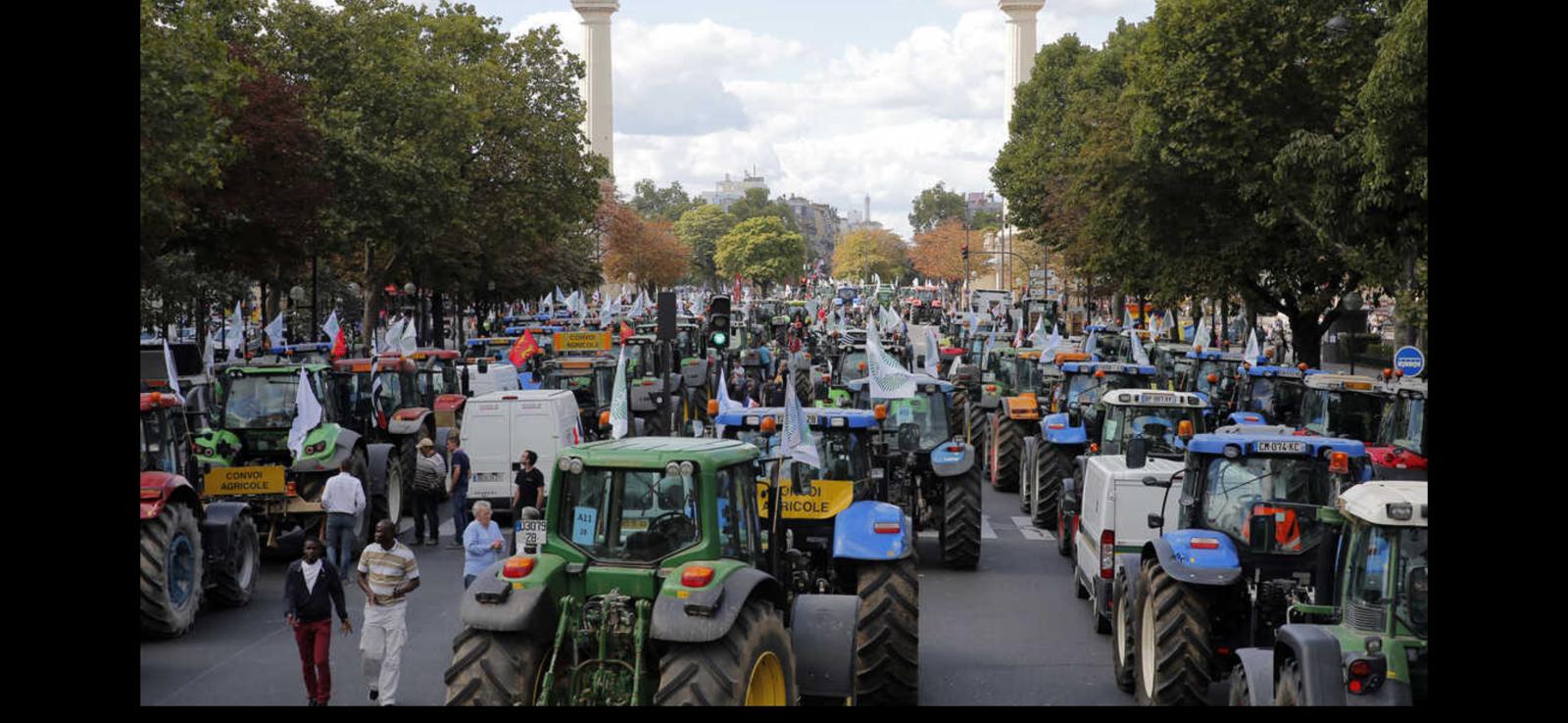
While European Union leaders speak about stability, cooperation, and the benefits of global trade, European farmers are taking to the streets in growing numbers. Recent protests in Brussels and across multiple member states reveal a deep conflict between EU economic policies and on-the-ground realities.
At the center of these tensions lies the trade agreement between the European Union and the Mercosur bloc, which includes countries such as Brazil, Argentina, Uruguay, and Paraguay. Officially presented as a strategic economic opportunity, the deal is seen by many European farmers as a direct threat to their survival.
Agricultural products from Mercosur countries are produced at significantly lower costs, under environmental and labor conditions that do not meet EU standards. While European farmers are burdened with strict regulations, high taxes, and costly environmental policies, imports from outside the EU would enter the market at prices they cannot compete with.
Farmers openly state what institutions avoid acknowledging: this is not fair competition, but a deliberate undermining of local agricultural production. High costs and bureaucratic pressure push farmers toward bankruptcy, while cheap imports are encouraged.
Protests have erupted simultaneously in France, Belgium, Spain, Italy, and beyond, highlighting the systemic nature of the issue. The message is consistent: decisions are made without real consultation, and the consequences are borne solely by those who produce food.
The key question is why the European Union continues to push this agreement despite internal opposition. The answer appears to lie in major economic interests, corporate lobbying, industrial exports, and geopolitical negotiations where agriculture becomes a bargaining chip.
Agriculture is not merely an economic sector; it is a strategic pillar. Without local production, states become dependent on imports. Without farmers, food security erodes, and economic dependency turns political.
The irony is striking: while the EU enforces strict environmental policies on its own farmers, it allows imports produced through deforestation, banned pesticides, and labor exploitation. Standards are strict internally and flexible externally.
For farmers, this is perceived as betrayal. They are asked to make sacrifices in the name of sustainability, yet lose their markets in the name of globalization. Protest becomes the only remaining form of dialogue.
What is unfolding today is not just an agricultural crisis, but a warning about how the European Union treats its own citizens. A system that sacrifices its productive base cannot remain stable in the long run.



0 Comments
No comments on this article yet. Be the first!