
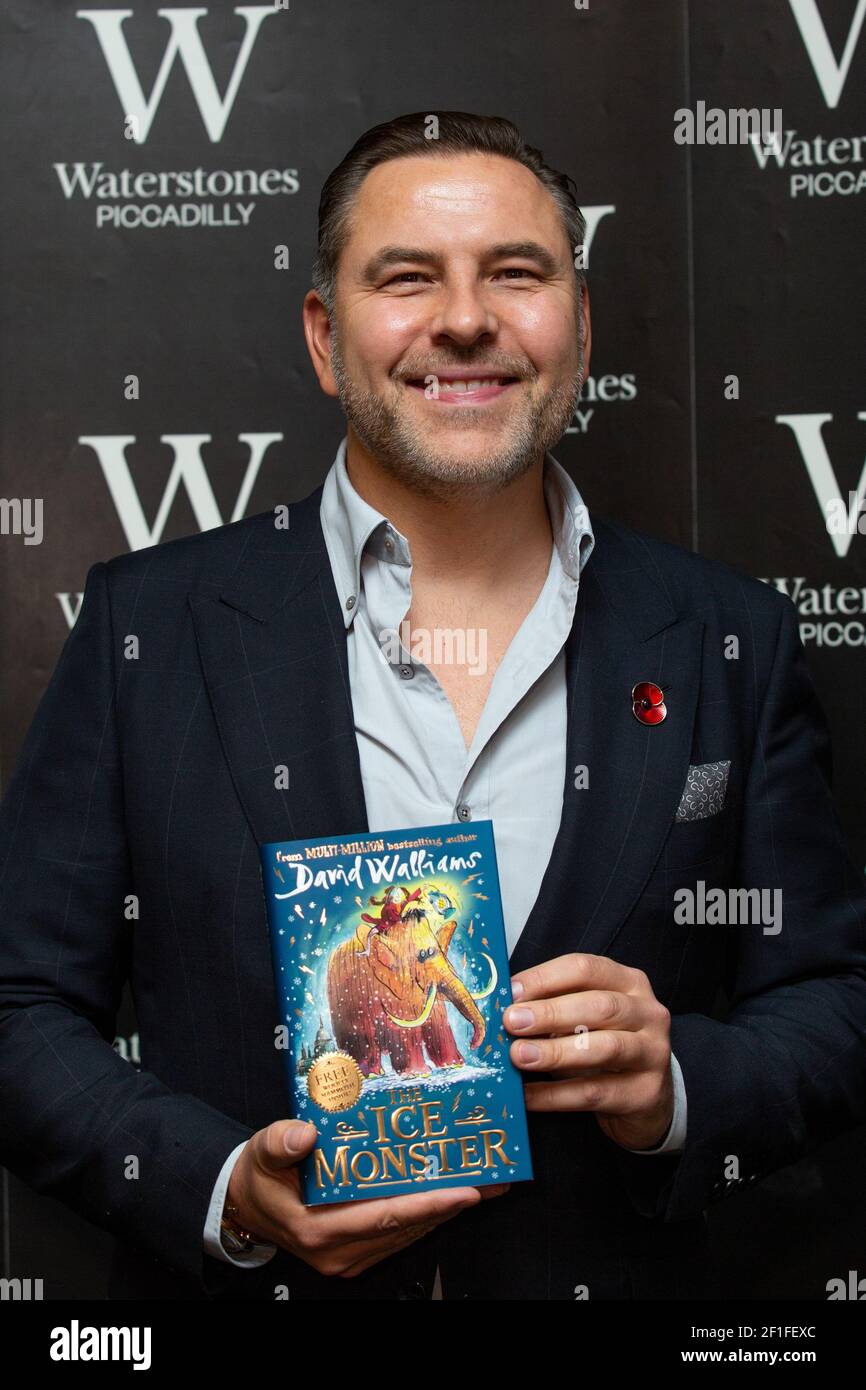
The decision to remove David Walliams from the program of a book festival organized by Waterstones, the largest bookstore chain in the United Kingdom, passed relatively quietly outside cultural circles. Yet this seemingly minor move reveals more about the direction of Western culture than many loud political debates.
David Walliams is not a marginal figure. He is one of the best-known and best-selling children's authors in the UK, with millions of copies sold, translated into dozens of languages, and a constant presence in schools, libraries, and educational programs. His removal from a book festival is not a logistical detail, but a symbolic decision.
There is no legal ruling against the author and no judicial sanction involved. The context relates to older controversies-statements and jokes considered offensive-periodically revived in an increasingly sensitive and risk-averse public climate. What mattered was not recent actions, but public perception and reputational risk.
This case is not an example of state censorship, but something more subtle: corporate self-censorship. A private cultural institution decides that association with an author may pose an image risk. Not because the law requires it, but because brand protection has become paramount in an environment shaped by rapid online reactions.
As a result, decisions move away from readers, critics, and educators, and into the hands of communication departments and risk managers. Culture begins to be filtered not by artistic value, but by perceived "safety."
Notably, Waterstones has not removed Walliams' books from sale. They remain on shelves. The message, however, is clear: an author may be commercially tolerated but symbolically sidelined; allowed to exist, but not to participate fully in the cultural public sphere.
In children's literature, the implications are particularly sensitive. Children do not choose books based on social controversies or cultural debates. They choose stories. Decisions driven by fear or excessive caution ultimately restrict access for young readers for reasons unrelated to the content itself.
The Walliams case raises a fundamental question: is culture still a space for creativity, imperfection, and human error, or is it becoming a sanitized environment where only those with spotless pasts are allowed? If every mistake or poorly judged joke becomes grounds for exclusion, the list of "acceptable" authors will quickly shrink.
More troubling is the precedent. Today it is a children's author. Tomorrow it could be a writer, a teacher, a journalist, or an artist. When cultural institutions are guided primarily by fear of backlash, culture ceases to be a space for dialogue and becomes a carefully sterilized product.
This is not a defense of David Walliams as an individual. It is an examination of the mechanism itself-a mechanism where fear of controversy determines who is visible and who is quietly removed. In societies that claim to value freedom of expression, this mechanism deserves far closer scrutiny.
The final question remains open: if major cultural institutions decide who is "safe" and who is "problematic," what remains of artistic freedom? And if the answer is "only what does not disturb," then the issue is no longer a single author, but the trajectory of culture itself.




0 Comments
No comments on this article yet. Be the first!