
In recent years, public discourse has begun to shift in a troubling direction. Terms such as "austerity," "collective effort," and "tightening the belt" have returned repeatedly in messages addressed to the population. Each time, the explanation is the same: there is no money, the situation is difficult, and people must understand and endure.
In this context, more and more citizens are making, consciously or not, a sensitive yet unavoidable comparison: life today versus life under communism. Not out of ideological nostalgia, nor from any desire to rehabilitate an oppressive regime, but from a basic need to understand the economic pressure felt on a daily basis.
Communism was a repressive system, devoid of fundamental freedoms, where shortages were real and constant. Shops were empty, choices were limited, and state control over individuals was total. Yet at the same time, there was job security, a degree of economic predictability, and the certainty that some form of income would always exist.
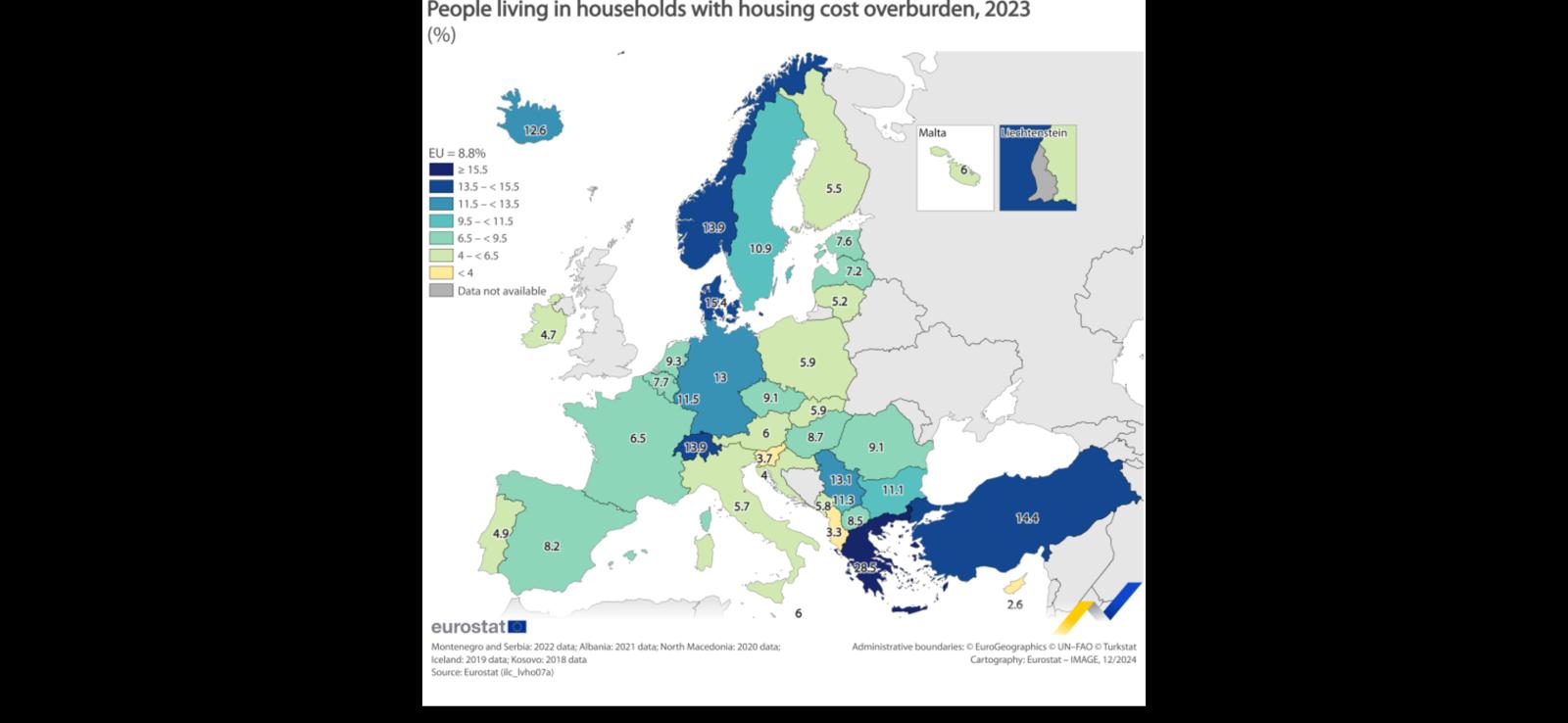
Today, the situation has reversed in a deeply paradoxical way. Stores are full, products are abundant, and freedom of movement and choice is complete. And yet, for a growing number of people, real access to these goods is becoming impossible. Not because of scarcity, but because of rising prices, higher taxes, and constantly increasing living costs.
Modern austerity does not manifest through empty shelves, but through empty wallets. Not through the absence of work, but through work that is poorly compensated relative to the cost of living. People work, yet merely survive. They pay more in taxes, but receive less in return.
The crucial difference is that, unlike in the past, this pressure is presented as inevitable and permanent. There is no clear horizon, no defined endpoint to the sacrifice. Austerity becomes a permanent condition, while responsibility is shifted almost entirely onto the citizen.
At the same time, the state does not appear to apply the same rules to itself. The administrative apparatus remains bloated, privileges are rarely questioned, and talk of reform often stops at the level of rhetoric. Sacrifice is demanded from below, not from above.
This leads to an uncomfortable but legitimate question: is this the progress that was promised? A society where abundance exists, but access does not? Formal freedom paired with constant economic constraint? A life where people no longer queue for products, but to pay their bills?
The comparison with communism is not praise for the past, but a warning about the present. When a significant portion of society begins to feel that life is harder in a so-called "free" system than it was under a controlled one, the problem is no longer ideological. It is deeply social and economic.
And if austerity becomes the rule rather than the exception, the real question is not how much people can endure, but who decided, and on whose behalf, that this model is acceptable.



0 Comments
No comments on this article yet. Be the first!