


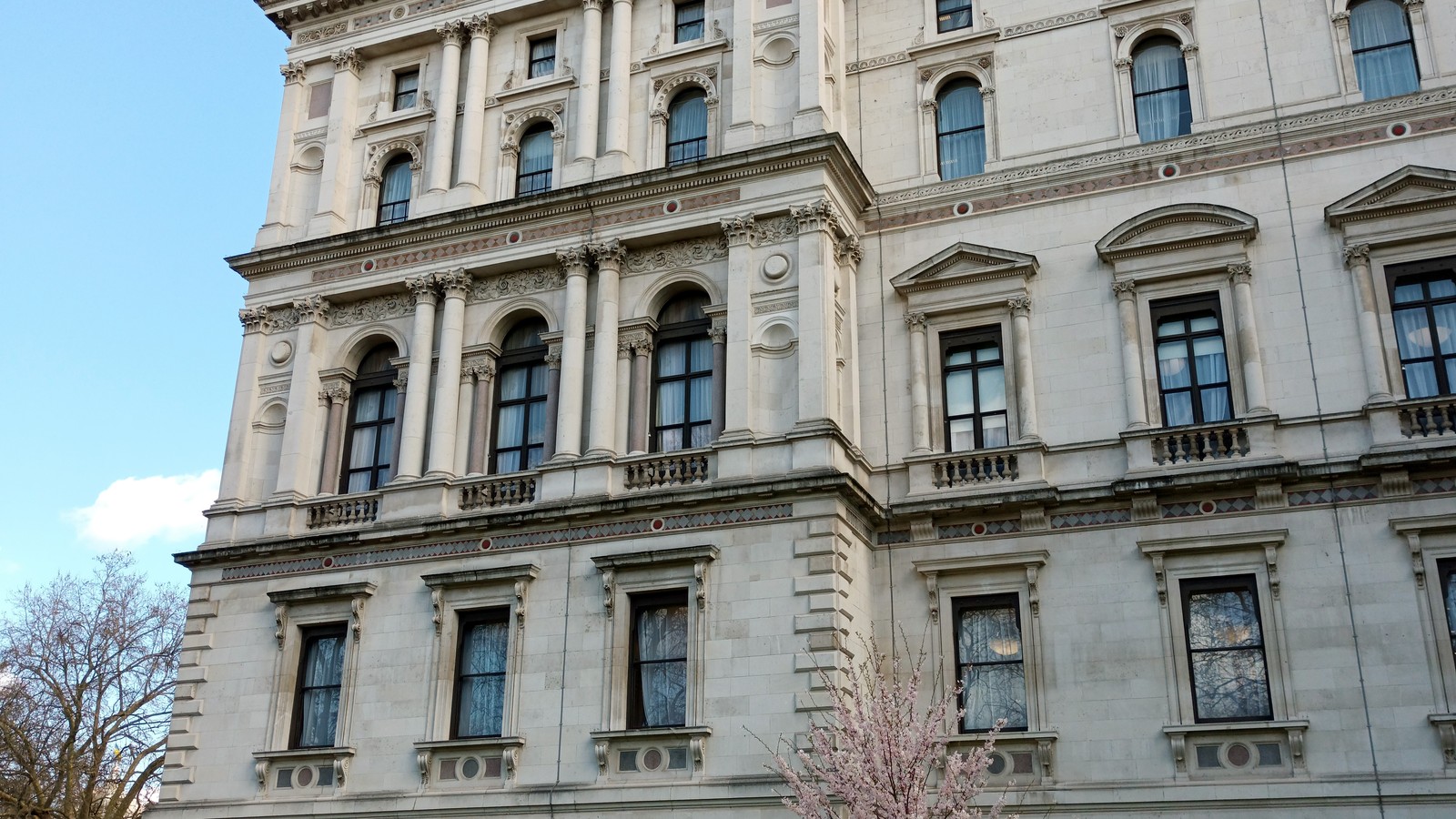
On Tuesday 17 November, the Foreign Office and Foreign Secretary Ed Miliband announced sanctions on eight Israeli construction, property and architecture firms that London links to the expansion of settlements in the occupied West Bank, and on Tzav 9, a group accused of blocking aid to Gaza. It is the first package since the pledge of 8 September and since the expansion of the human-rights sanctions regime, legislation laid on 13 October. The firms and the group have their UK assets frozen and their directors disqualified.
The official list is Har Hevron Development Company Ltd, Hemdat Shomron Ltd, S.A.G. (Velvel) Construction and Development Ltd, Lev HaHar Yazamut Ltd, Harey Zahav, Ariel Residential Judea and Samaria Ltd, Ami Gvirtzman Architects 2021 Ltd and Z.F. Building Company Ltd. The government says they helped plan, build, supply or market housing and public infrastructure in settlements. Hemdat Shomron is linked, among other places, to Einav and Dolev, and S.A.G. to Efrat, Shilo and Eli. London says the sanctions cut their flows of finance and their ability to support further building. It does not say the building sites have stopped.
Miliband called protection of the two-state solution the North Star of the government and said, of the E1 project: do not bid, do not build, and do not profit from the destruction of that solution. In the official note, the United Kingdom says settlements are a flagrant breach of international law and that more settlements have been approved in four years of this Israeli government than in the previous twenty. London separates trade with Israel inside the Green Line from activity in the settlements. Those lines are the British government’s position.
The announcement came just before the final deadlines for the E1 tender. In the same note, the project would cut across the heart of Palestine and risks separating the West Bank from East Jerusalem. The Times of Israel reports that, also on Tuesday, Attorney General Gali Baharav-Miara told the caretaker government to stop issuing E1 tenders until a new cabinet is sworn in. The deadline for 1,234 homes had been this Thursday and is now delayed at least until then. Hebrew outlets, cited by the paper, tie the halt to the limits on a caretaker government, not to a London announcement. Israeli diplomats told The Guardian the delay is not a response to the sanctions.
Foreign Minister Gideon Saar called the sanctions a hostile act against private, law-abiding companies and said Israel will not change its policy. It will look at new ways to strengthen communities in the West Bank and will answer with countermeasures, from a list not yet announced, according to his message as carried by The Times of Israel. CBC reports that the Palestinian Authority welcomed the decision and asked other states to follow.
London describes Tzav 9 as a movement whose stated mission has been to stop humanitarian aid entering Gaza and which has blockaded crossings, ports and roads, including in October. In the same statement, citing the United Nations, more than 150,000 tents and 300,000 tarpaulins bought by humanitarian partners sit outside Gaza, held by the Israeli authorities, and timber is blocked. After floods, nearly 4,000 households were left without shelter, and 1.4 million people are living in tents or makeshift shelters, again on the figures in the British note. CBC also carries the line from COGAT, the Israeli military agency that coordinates aid, which says it has a winter plan and that supplies and medicines continue to enter.
Separately, since September, the Foreign Office has been preparing legislation that would ban imports of settlement goods and advertising for properties there. It is not in force. CBC notes that last year’s sanctions on ministers Itamar Ben-Gvir and Bezalel Smotrich were taken with partners, while Tuesday’s package on the companies was announced by London alone.
Source consulted: U.K. sanctions Israeli companies involved in building illegal settlements in West Bank.





0 Comments
No comments on this article yet. Be the first!