
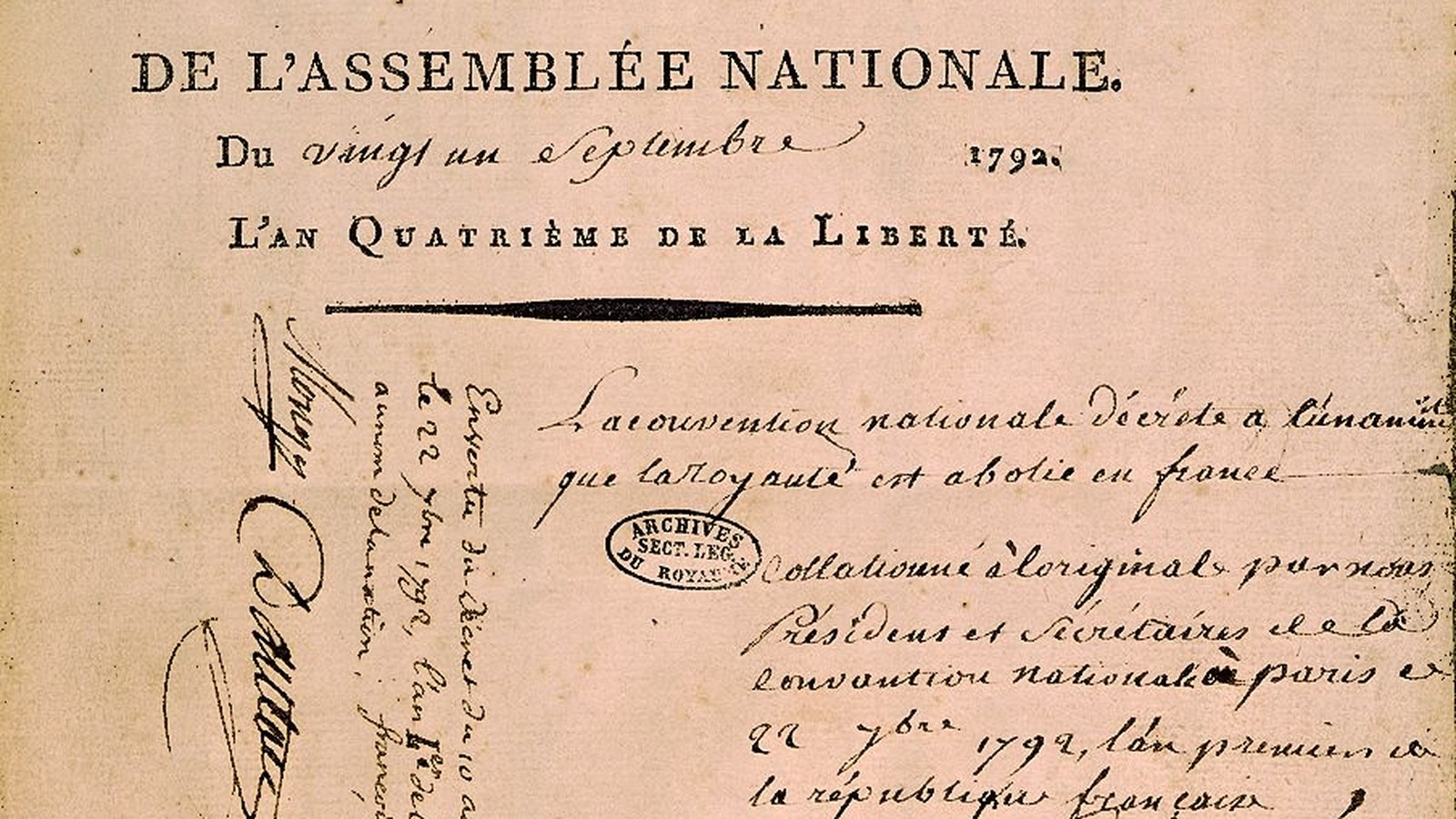
21 September 2026 marks 234 years since France’s National Convention abolished the monarchy. The assembly, elected after the 10 August 1792 insurrection that led to the suspension of King Louis XVI, first met on 20 September; the next day it decreed that royalty would no longer be the country’s form of government.
The wording recorded in the debate was that the National Convention decreed the abolition of royalty in France. Britannica notes that among the Convention’s early acts were the formal abolition of the monarchy on 21 September and the establishment of the republic on 22 September.
22 September was later used as the beginning of Year I of the Republic. That is why the abolition of the monarchy and the proclamation of the republican order are often tied to two consecutive days, which should not be collapsed into a single moment.
The decision came during a radical stage of the Revolution, not at its outset. The constitutional monarchy had already been emptied of power after 10 August; the 21 September vote confirmed, by assembly, a rupture already produced in the streets and in the institutions.
The change did not end political instability. France passed through war, the Terror, the Directory, the Consulate and the Empire, and the monarchy was later restored for a period. The Convention itself governed until October 1795.
Anniversary coverage does not compress the whole Revolution into one date. The abolition vote, the republican calendar and the proclamation of the new order remain distinct elements, with separate sources and wording.
No contemporary ceremonies or unconfirmed commemorative programmes are invented. The 234-year marker stays with the 1792 calendar and the distinction between 21 and 22 September.
Image: National Convention decree abolishing royalty, 21 September 1792, Archives nationales, public domain, Wikimedia Commons.
Source consulted: National Convention — Encyclopaedia Britannica.








0 Comments
No comments on this article yet. Be the first!