


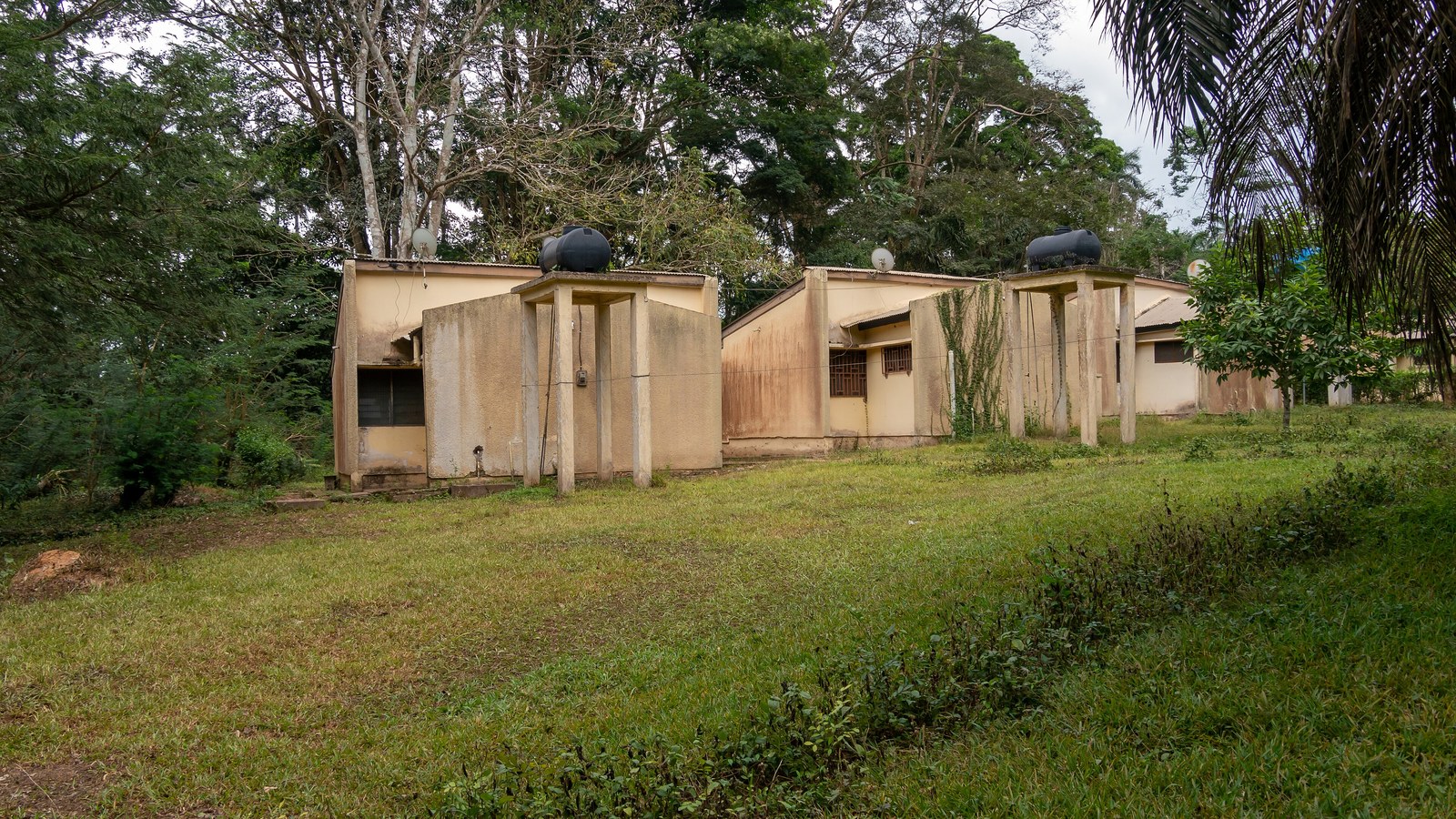
The Supreme Military Council of Nigeria resumed its meeting in Ghana on 5 January 1967 and continued and concluded discussion of the remaining subjects on the agenda. The Council reached agreement on all the items. On the powers and functions of the Federal Military Government it reaffirmed its belief in the workability of the existing institutions subject to necessary safeguards.
A statement of the Council, issued with the communique, reorganizes the Army: it is to be governed by the Supreme Military Council, whose Chairman will be known as Commander-in-Chief and Head of the Federal Military Government. There will be a Military Headquarters on which the Regions will be equally represented, headed by a Chief of Staff. In each Region there shall be an Area Command under an Area Commander, corresponding with the existing Regions. All matters of policy, including appointments and promotions of persons in executive posts in the Armed Forces and Police, shall be dealt with by the Supreme Military Council. During the period of the Military Government, Military Governors will have control over their Area Commands in matters of internal security.
The following appointments must be approved by the Supreme Military Council: diplomatic and consular posts; senior posts in the Armed Forces and the Police; and super-scale Federal Civil Service and Federal Corporation posts. Any decision affecting the whole country must be determined by the Supreme Military Council. Where a meeting is not possible, such a matter must be referred to Military Governors for comment and concurrence.
On displaced persons the Council agreed to set up a committee to look into rehabilitation and recovery of property. The Military Governor of the East assured the Council that the order that non-Easterners should leave the Eastern Region would be reviewed with a view to its being lifted as soon as practicable. Staff and employees of Governments and Statutory Corporations who have had to leave their posts as a result of recent disturbances are to continue to be paid their full salaries up to 31 March 1967, provided they have not found alternative employment.
The Council agreed that the Ad Hoc Committee on the constitutional future of the country should be resumed as soon as practicable and that the unanimous recommendations of that committee in September 1966 will be considered at a later meeting. Future meetings of the Council are to be held in Nigeria at a venue to be announced later. The members express profound regret for the bloodshed of the past year and avow to do all in their power to ensure there is no recurrence. They place on record their appreciation and gratitude for the constructive initiative and assistance of the Chairman of the National Liberation Council and of the Government and people of Ghana.
This instrument is not the 1967 proclamation of the Republic of Biafra, nor a later implementing decree issued in Lagos.
Image: Aburi Botanical Gardens, Ghana; Matti Blume, 29 January 2023; CC BY-SA 4.0, Wikimedia Commons. Cropped to 16:9.
Source consulted: Aburi Accord. Treaty text: Final Aburi Communique, Supreme Military Council of Nigeria, 5 January 1967.







0 Comments
No comments on this article yet. Be the first!