
Farmers across the European Union faced diverging price trends in the second quarter of 2026, with average agricultural output prices falling while the prices of goods and services used in agricultural production increased.
According to data published by Eurostat, the average price of agricultural output in the European Union was 5.8% lower in the second quarter of 2026 than during the same period in 2025. It was the third consecutive quarter in which agricultural output prices recorded a year-on-year decline.
At the same time, input prices moved in the opposite direction. The average price of agricultural inputs — goods and services consumed in agricultural production and not related to investment — increased by 4.7% compared with the second quarter of 2025. These inputs include important costs for farms such as energy, fertilisers and feedingstuffs.
The increase followed a period of relative stability in input prices throughout 2025 and into the first quarter of 2026. The combination of lower agricultural output prices and higher input prices can place additional pressure on farmers' margins.
The figures do not, however, mean that every farmer in the European Union automatically experienced lower income. Conditions vary according to the type of agricultural product, country, individual farm costs and production volumes.
Differences between Member States were considerable. Eurostat reported year-on-year decreases in average agricultural output prices in 20 EU countries for which data were available. Denmark recorded the sharpest decline, with agricultural output prices falling by 17.2%. Ireland followed with a decrease of 16.2%. Prices fell by 14.5% in both Latvia and Estonia and by 14.2% in both Luxembourg and Lithuania. These declines were substantially larger than the EU average fall of 5.8%.
Price developments also differ considerably between categories of agricultural products. Eurostat's agricultural price indices measure changes in prices received by farmers for their output and prices paid for goods and services required for agricultural production. Comparing the two provides an indication of the price environment in which European agriculture operates, but it is not a direct measure of farm profitability. The profitability of an individual agricultural business also depends on production volumes, productivity, subsidies, contracts, fixed costs and many other factors.
The second-quarter figures nevertheless highlight an important trend. At aggregate EU level, agricultural producers simultaneously faced lower output prices and higher prices for inputs used in production. Energy, fertilisers and animal feed can represent significant components of farm expenditure, meaning changes in their prices can have substantial economic consequences.
The figures are also relevant to the future development of food prices. Agricultural output prices represent one component of the food supply chain, but changes are not automatically passed on to consumers in the same proportion. Processing, transport, energy, distribution, storage and retail costs all contribute to the final price paid in shops.
A 5.8% decline in agricultural output prices therefore does not mean consumer food prices should automatically fall by the same amount. Similarly, the 4.7% increase in input prices should not be interpreted as an equivalent increase in every farm's total costs. Eurostat's indicators are averages measuring aggregate price developments.
The latest figures nevertheless show an unfavourable divergence between the two components during the second quarter of 2026. While agricultural output prices declined for a third consecutive quarter, input prices began rising following the period of relative stability seen previously. Developments over the coming quarters will show whether this divergence persists or whether agricultural output and input prices begin moving in the same direction again.
Source consulted: Agricultural output prices fall as input costs rise
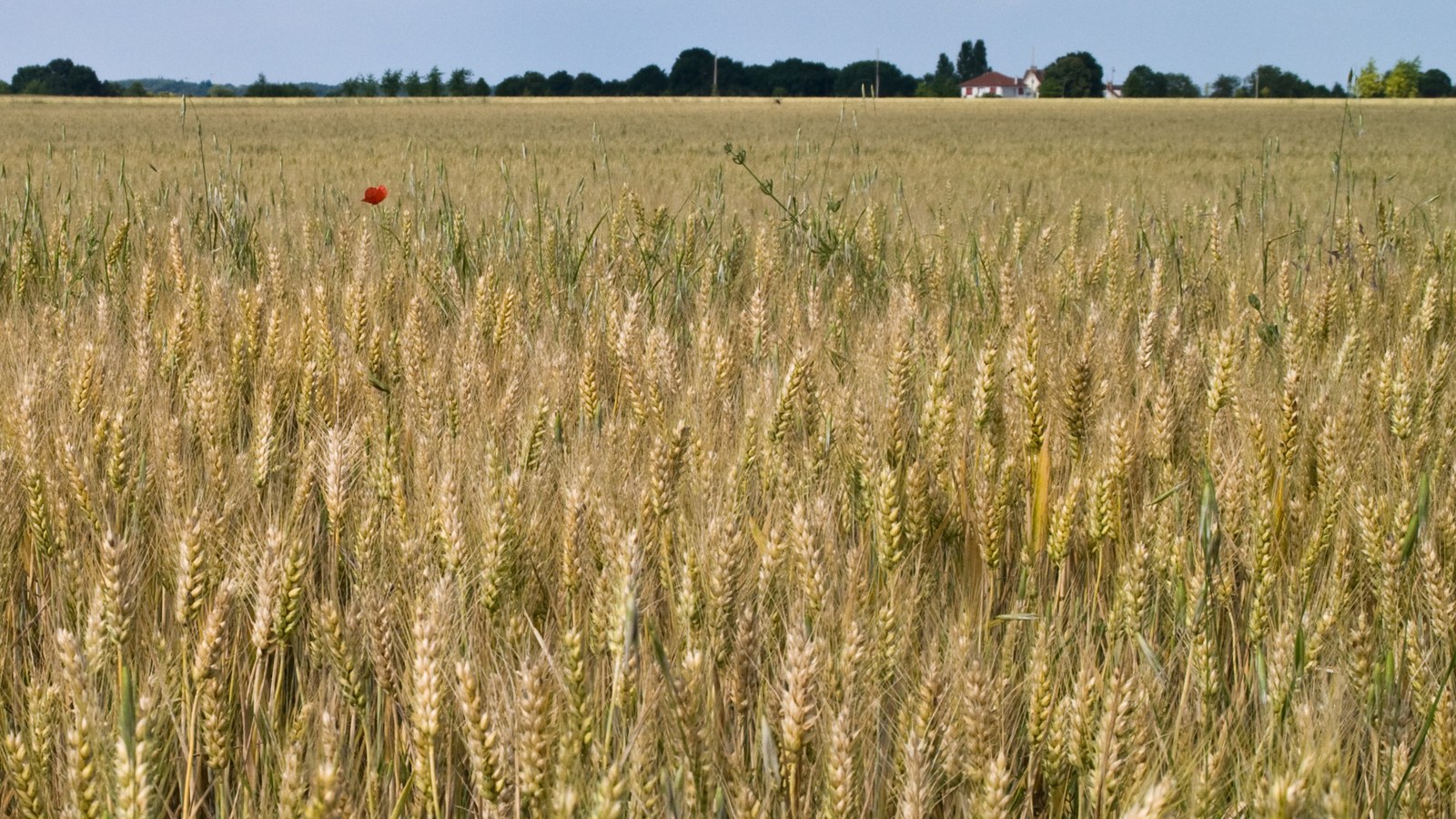
Photo: Myrabella, wheat field in Seine-et-Marne, France, 28 June 2009. Wikimedia Commons, CC BY-SA 3.0.







0 Comments
No comments on this article yet. Be the first!