


On Friday, a European official cited by AFP said Europe will be represented at future talks on Ukraine by five countries — France, Germany, the United Kingdom, Poland and Italy — plus representatives of the European Commission and the European Council. The same official said the format was validated by EU heads of state or government at the informal summit in Dublin. The report is from AGERPRES.
European Council President Antonio Costa named the same five states, members of the “Coalition of the Willing” that backs Ukraine, alongside officials of the 27-nation bloc. “Europe must speak with one clear voice and united voice in all discussions that shape the future of Ukraine and the security of our continent. And this is ultimately a team effort,” he said at the end of the EU leaders’ meeting in the Irish capital, according to Al Jazeera. The United Kingdom has not been a member state since 2020, so the team mixes EU countries, a country outside the Union and the institutions.
The stake, in the Dublin reporting, is not to be left outside a process backed by the United States. This week in Abu Dhabi, representatives of the United Kingdom, Germany, Italy and the EU were at the Russian-American talks. AGERPRES writes that Moscow and Kyiv spoke of some progress, with no positive signal on the essential issues, territory among them. After Thursday’s talks in Moscow with Vladimir Putin, US envoys said Europe would join later rounds; the Kremlin replied that no decision had been made, Al Jazeera reports.
Also on Friday, the Kremlin said Russia would be open to European countries taking part if they are ready to contribute to the peace process, according to AGERPRES. German Chancellor Friedrich Merz called the comments “the same old game” and repeated the message he attributed to an understanding between Europe and the United States: “There will be no talks about Ukraine without Ukraine and no talks about Europe without Europe. Moreover, there is no need for talks about European security architecture. We already have that.”
The EU’s foreign policy chief, Kaja Kallas, said Russia’s requests to discuss security architecture risk shifting attention from the need for a ceasefire. Latvian Prime Minister Andris Kulbergs called these talks “a trap”. On Thursday in Dublin, leaders from Poland, the Baltic states and the Nordic countries had warned against possible conversations with the US or Russia on this subject, according to a diplomat and a European official cited by AGERPRES. Leaders of 40 countries, at the European Political Community summit, signed a declaration: any issue that affects European security is decided with Europeans involved.
The format announced on Friday is a team, not a single envoy. Italian Prime Minister Giorgia Meloni had argued for one voice, on the grounds that too many groupings are discussing the issue separately. Kallas claimed the role: she represents Europe in foreign and security policy, and added that the Russians do not want her, but that Europeans do not choose who speaks for Russia. Al Jazeera writes that she does not have unanimous support and is seen by many as uncompromising toward Moscow. US envoy Jared Kushner had said, after Abu Dhabi, that if Europe could name one person, that would be a bigger achievement than getting the Russians to include them in the negotiations.
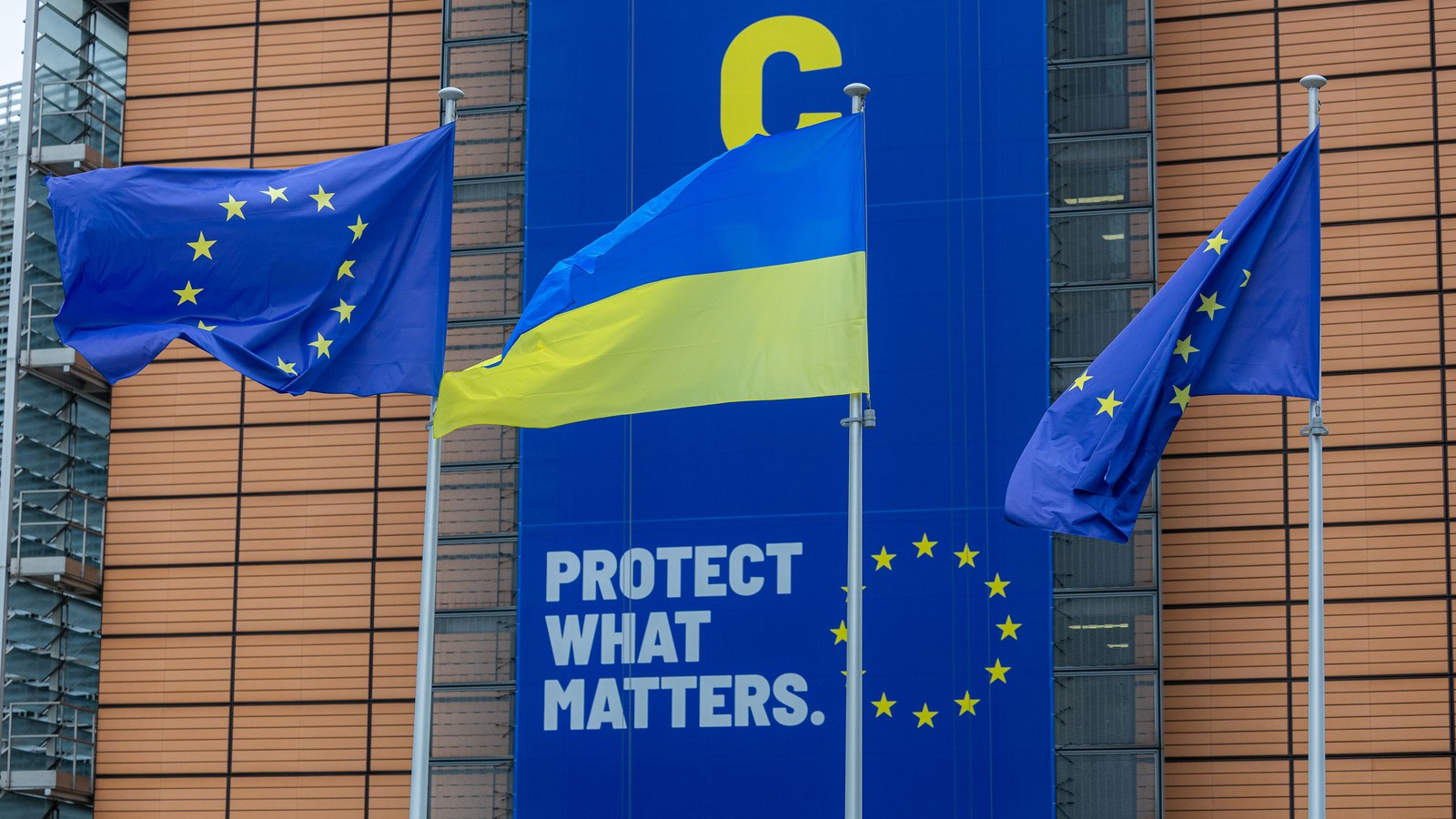
Image: Wikimedia Commons — the Ukrainian flag in front of the Berlaymont, seat of the European Commission, on Ukrainian National Day; photograph by Xavier Lejeune, European Commission audiovisual service (CC BY 4.0). It is not from the Dublin summit.
Sources consulted: Five countries and the European Union will represent Europe in the talks on Ukraine — AGERPRES; EU agrees on five countries to represent Europe in Ukraine peace talks — Al Jazeera.






0 Comments
No comments on this article yet. Be the first!