


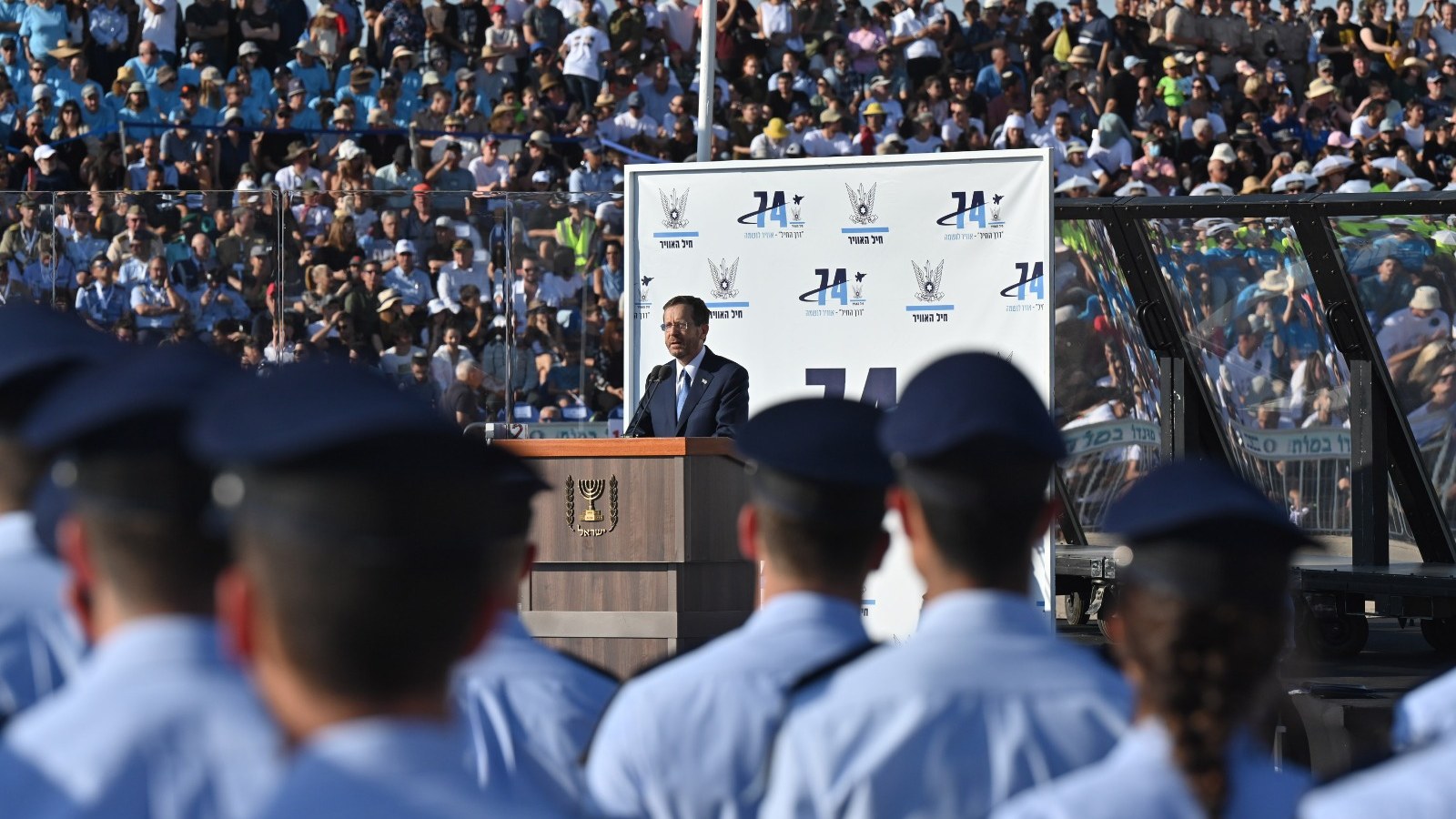
Israeli President Isaac Herzog must decide who gets the first attempt at forming a government after an inconclusive election left both Benjamin Netanyahu and rival Gadi Eisenkot short of a clear Knesset majority.
Herzog said he will task a candidate on Sunday. Eisenkot secured endorsements from 67 of 120 lawmakers, against 46 for Netanyahu — but part of that tally comes from Arab-led parties that Eisenkot has ruled out bringing into government.
Consultations with party leaders ended Thursday. Herzog said that while the numbers may look clear, “mutual vetoes between the blocs and within the blocs themselves” make it hard to tell who can actually build a stable coalition.
Netanyahu’s religious-nationalist alliance holds 53 seats; Eisenkot’s four Jewish-led parties hold 48; Arab-led parties hold 19. No bloc reached the 61 seats needed for a majority government.
Eisenkot would need ultra-Orthodox parties United Torah Judaism and Shas to reach 61. UTJ has signalled its support could be available for the right price, but Shas endorsed Netanyahu. Netanyahu would need to lure an opposition party to his side.
Another option discussed is a national unity government with a rotating premiership that excludes Arab-led parties. Many Netanyahu rivals have ruled out serving under him. Before the October 27 vote, reports suggested the president favoured such a deal to avoid another election.
Once nominated, a candidate has 28 days to form a coalition, extendable by 14. If that fails, a second nominee is chosen. If a third attempt also collapses, the Knesset is dissolved and a new election is called within 90 days, with Netanyahu remaining caretaker prime minister.
Image: President Isaac Herzog (Wikimedia Commons, CC BY-SA 3.0).
Sources consulted: Israel’s largely ceremonial president faces a choice that could shape its future — Washington Post.








0 Comments
No comments on this article yet. Be the first!