


Teachers, doctors, nurses and information-technology specialists are among the professionals hardest to recruit in Europe, Capital reports, following an OECD analysis carried by Euronews. The data are from 2024 for most countries and cover 27 European states, including Norway, Switzerland, Turkey and the United Kingdom.
The OECD indicator compares occupations inside each country. A positive score means a relative shortage, a negative score a surplus. It does not count vacancies or missing workers. On average, teaching is the hardest occupation to fill, followed by health professionals and information and communications technology professionals. At the other end, employers find it easier to recruit labourers, elementary workers, food-preparation assistants, sales workers and assemblers.
Health professionals are hard to recruit in 23 of the 27 countries, and health-related associate occupations in 21. Teachers are hard to find in 21 countries. In Germany, Greece, Italy, Norway, Spain and Turkey, the OECD treats the education situation as broadly in balance. Among the five hardest occupations, teachers appear in 13 countries, and health and IT specialists in 12 each.
Capital writes that labourers are easy to recruit in 21 countries, food-preparation assistants in 17, and primary-education workers in 16. The same account gives the exceptions: in Norway, labourers are the hardest category to recruit; in Spain, food-preparation assistants; in France, primary-education workers. For IT, the OECD sees a balanced market in Denmark, Finland, Germany, the Netherlands, Norway and Sweden, and a relative surplus in Austria, Switzerland and the United Kingdom.
Paul De Raeve and Manuel Ballotta, of the European Federation of Nurses Associations, told Euronews that health systems are failing to keep nurses on the front line. Dr Ole Johan Bakke, president of the Standing Committee of European Doctors, said doctors cover the staff shortage with excessive hours. Daniel Wisniewski, of the European Federation of Education Employers, said the teacher shortage is about the attractiveness of the profession, not only about posts left empty.
Capital’s headline says Romania’s situation differs from the European trend. In the text, the article gives no occupation and no score for Romania. Euronews, in the piece Capital follows, does not single out Romania in the figures cited here either.
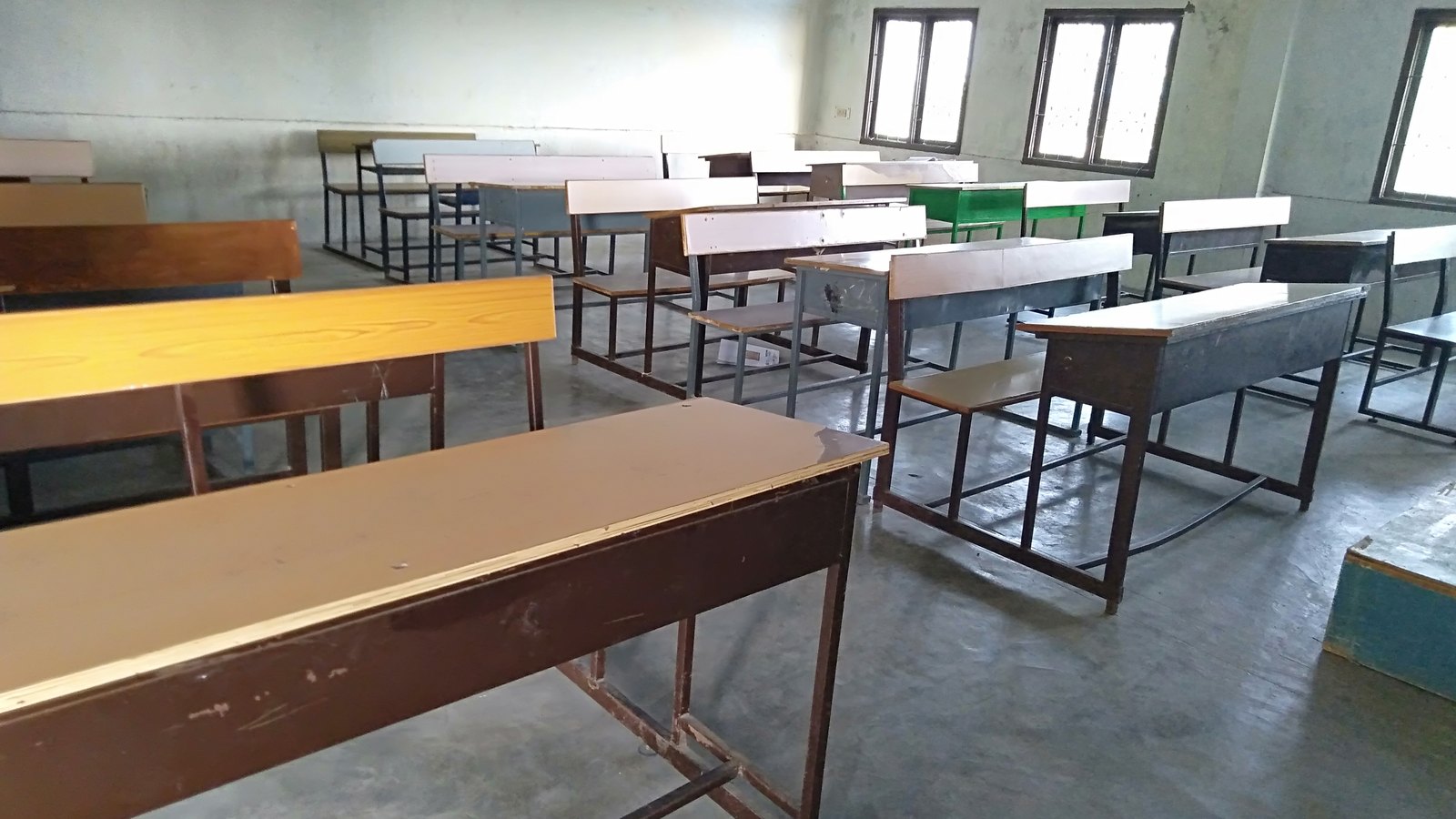
Image: Wikimedia Commons — an empty college classroom, 18 January 2019 (Saral Shots, CC0). The photo is not from the OECD report.
Sources consulted: Shortage jobs in Europe — Capital; Which jobs are hardest to fill in Europe — Euronews.






0 Comments
No comments on this article yet. Be the first!