


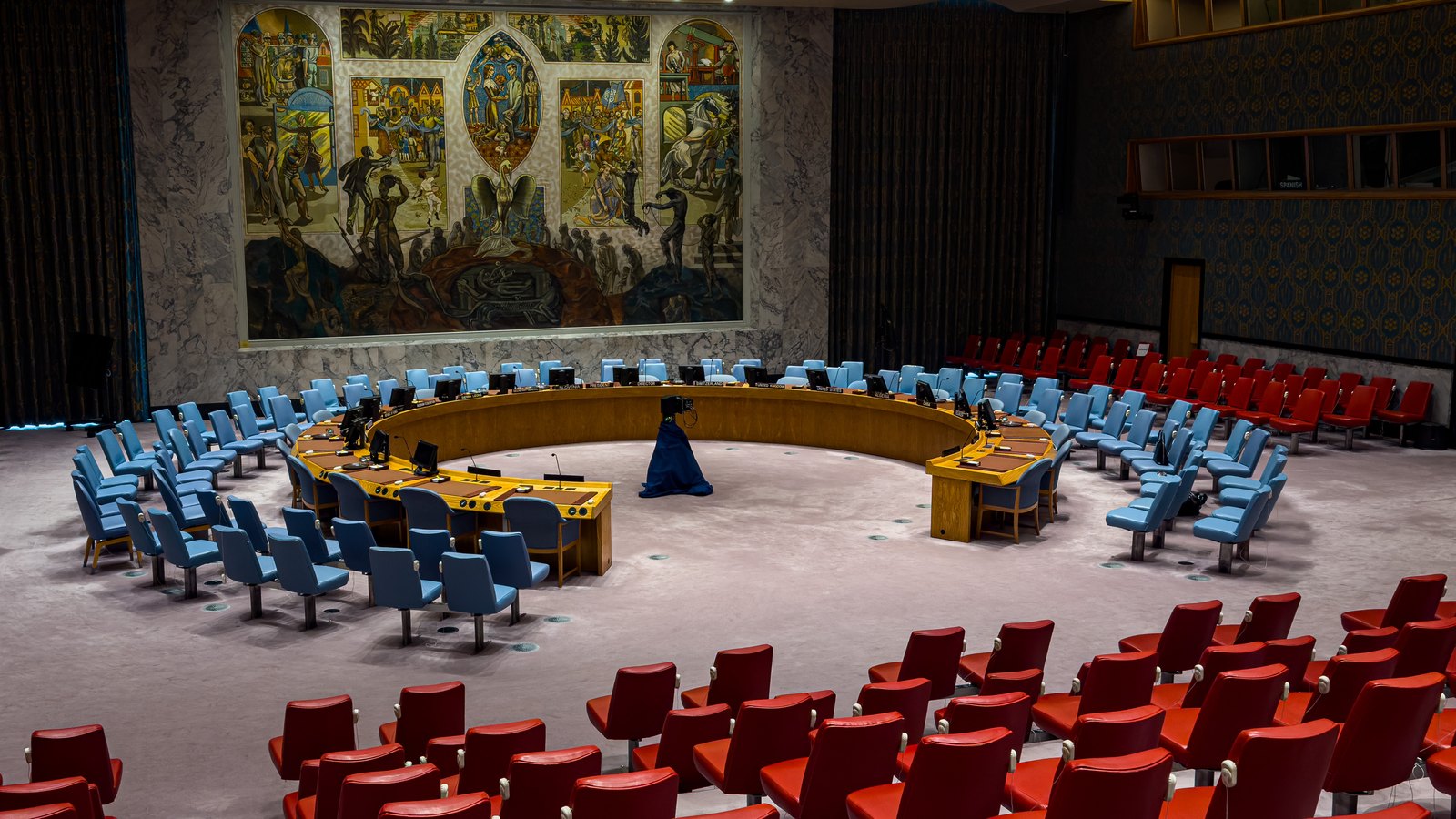
The Security Council met on Friday, 13 November 2026, at Bahrain’s request, on “the situation in the Middle East.” Nearly nine months after Israeli and US strikes on Iran opened a regional war, the Gulf is still on a knife edge, UN News reported. Iran has all but closed the Strait of Hormuz, which carried a fifth of the world’s oil before the conflict.
The war began on 28 February. Iran then hit US military targets and other sites in six Gulf states and in Jordan. In March the council adopted resolution 2817, condemning Iran’s attacks and its threats to navigation. China and Russia abstained. The text, drafted by Bahrain for the Gulf Cooperation Council and Jordan, passed with 13 votes and does not mention the US-Israeli strikes, Security Council Report noted.
A 60-day US–Iran ceasefire, mediated by Pakistan in June, expired in August without a peace deal. Fighting has continued since at a lower intensity. Security Council Report says the United States has kept a naval blockade of Iranian ports while also facilitating commercial transits through Hormuz, where attacks on ships have not stopped.
Mohamed Khaled Khiari, a UN assistant secretary-general, told the council that tensions around Hormuz and Bab al-Mandab threaten peace, regional stability and the global economy. As of 11 November, the International Maritime Organization had recorded 134 confirmed incidents in Hormuz and the wider Middle East maritime area. Twenty-five seafarers have been killed; others are injured or missing. October had the most incidents against commercial ships since February. Energy exports have largely resumed, including by other routes, but volumes remain below pre-war levels.
Transits through Hormuz are about 65 percent below the pre-conflict level, according to UK Maritime Trade Operations. Traffic through Bab al-Mandab is down by roughly a quarter since the Houthis announced a blockade of Saudi-linked shipping in July, UN News reported. Khiari said there have been no recent reports of attacks on commercial vessels in the Red Sea, but clashes around the strait and threats to freedom of navigation remain.
Jasem Mohamed Albudaiwi, secretary-general of the Gulf Cooperation Council, condemned attacks on commercial ships and tankers in Hormuz and rejected any attempt to close the strait, block navigation or impose transit fees. He called for an immediate, unconditional halt to Iranian attacks on the Gulf states and Jordan, and to Houthi attacks on Saudi Arabia and commercial vessels. He cited resolutions 2722 of 2024 and 2817.
The council has not agreed on a further step. On 7 April, China and Russia vetoed a Bahraini draft on navigation through Hormuz. In May, a demining text from Bahrain and the United States was not put to a vote, because of the same opposition. After meeting Qatar’s prime minister, Mohammed bin Abdulrahman Al Thani, on 9 November, Donald Trump said he did not consider further military action necessary for now. The two sides remain far apart: Iran has set seven conditions for reopening Hormuz, including an end to the war on all fronts, a lifting of the US naval blockade and the release of frozen assets. The United States wants limits on Iran’s nuclear programme in any deal from the start and has called Tehran’s demands unrealistic, Security Council Report said.
Image: Wikimedia Commons — the Security Council chamber (Jdforrester, CC BY 4.0). The photo shows the room, not the 13 November 2026 meeting.
Sources consulted: Security Council live: fragile calm in the Gulf — UN News; Khiari’s remarks to the Security Council — DPPA; Briefing on the situation in the Gulf — Security Council Report; Albudaiwi’s briefing to the Security Council — Gulf Cooperation Council.






0 Comments
No comments on this article yet. Be the first!