
Today, 11 September 2026, marks 100 years since Italian anarchist Gino Lucetti attempted to assassinate Benito Mussolini, leader of Italy’s Fascist regime, by attacking the vehicle in which he was travelling through Rome.
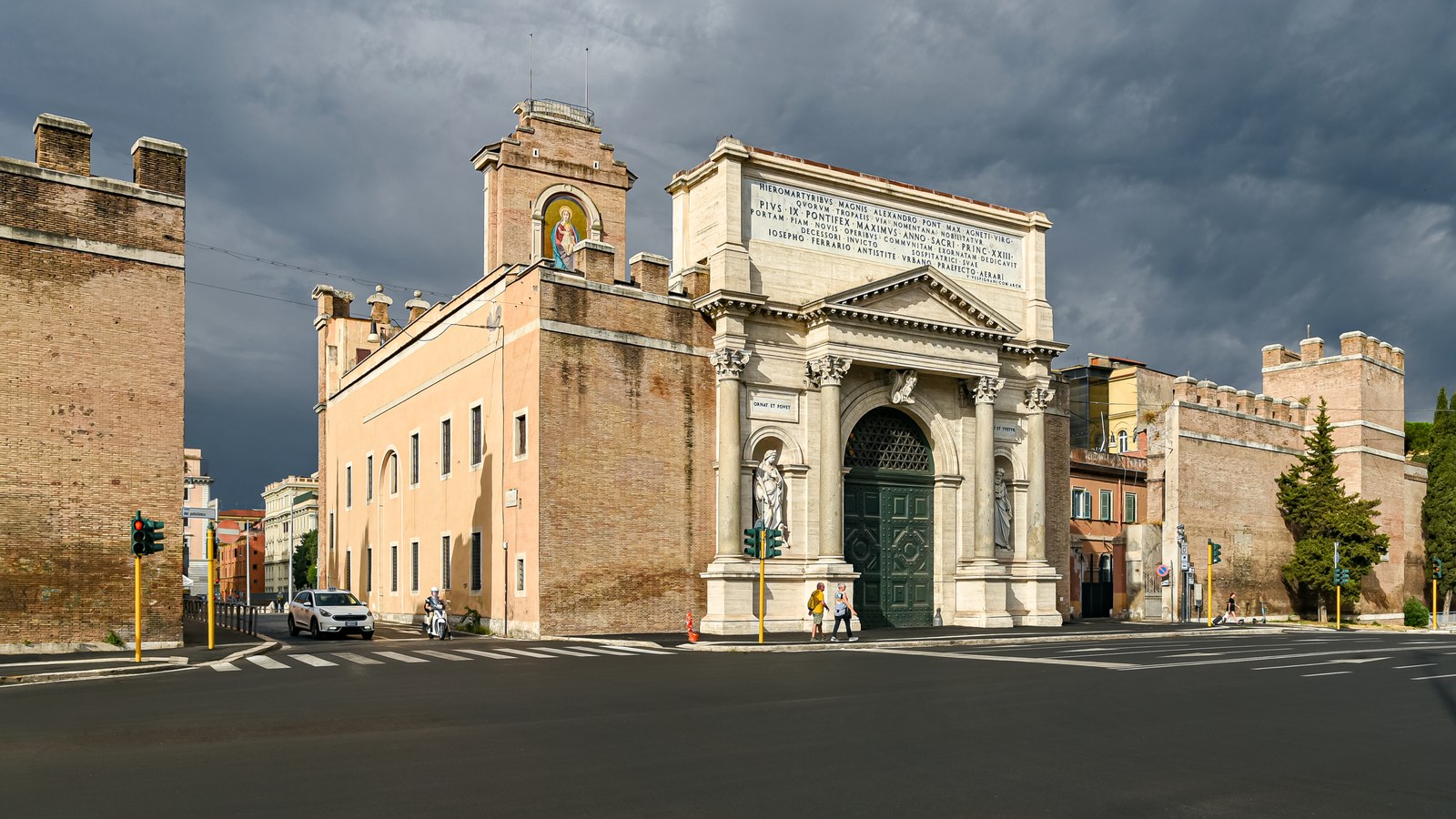
The attack took place on the morning of 11 September 1926, in the Porta Pia area. Lucetti threw an explosive device towards Mussolini’s car. The assassination attempt failed: the device did not kill the Fascist leader, and Mussolini escaped unharmed. The explosion did, however, injure people nearby. Lucetti attempted to escape but was captured and arrested.
The incident became one of several assassination attempts targeting Mussolini during the years in which the Fascist regime was consolidating its control over Italy. This article sets out documented historical facts; it does not present political violence as heroism.
Who was Gino Lucetti?
Gino Lucetti was born in 1900 in Carrara, Tuscany, an area also known for a strong anarchist tradition. He worked as a labourer and became associated with the Italian anarchist movement. His political life developed during an extremely turbulent period. After the First World War, Italy experienced social conflict, political instability and violent confrontation between Fascists, socialists, anarchists and other groups.
Benito Mussolini and the National Fascist Party exploited this instability. Following the March on Rome in October 1922, King Victor Emmanuel III appointed Mussolini prime minister. Over the following years, Italy’s parliamentary system was progressively transformed into a Fascist dictatorship. Political opposition was restricted, the press came under increasing control, and violence and repression became instruments of the regime. Against this background, Lucetti became a radical opponent of Fascism.
The 11 September 1926 attack
On the morning of 11 September, Lucetti positioned himself along the route taken by Mussolini’s vehicle in Rome. As the vehicle passed nearby, he threw an explosive device towards it. The explosion failed to injure Mussolini. The attack caused panic and injured people in the area, but Lucetti’s main objective failed. Authorities captured him shortly afterwards.
For the Fascist regime, assassination attempts also carried political value. They could be presented to the public as evidence of threats against the state and used to justify additional repressive measures against opponents.
1926: a year of attempts against Mussolini
Lucetti’s attack was not an isolated incident. Mussolini was targeted in several assassination attempts during 1926. In April, Irishwoman Violet Gibson fired at Mussolini in Rome. The bullet slightly wounded him on the nose. Lucetti’s attack followed in September. On 31 October 1926, Mussolini was again targeted, this time in Bologna. A young man, Anteo Zamboni, was accused of firing at the Fascist leader. Zamboni was immediately attacked and killed by Fascists in the crowd. The exact circumstances of that incident subsequently remained a subject of historical debate.
The series of attacks occurred as the Fascist regime was moving from authoritarian rule towards an increasingly comprehensive dictatorship.
Consolidating the dictatorship
During 1925 and 1926, Mussolini and the Fascist regime accelerated the destruction of democratic institutions and political opposition. Following the assassination attempts of 1926, the regime introduced additional repressive measures. Opposition parties were dissolved. The anti-Fascist press was suppressed. Opposition deputies lost their parliamentary mandates. A special tribunal for offences against the state was established. The regime also expanded mechanisms for monitoring and repressing political opponents. Italy was becoming a dictatorship controlled by the National Fascist Party and Mussolini.
The assassination attempts were not the sole cause of this transformation. The dismantling of democratic government had already begun. The attacks did, however, provide the regime with a context it used to accelerate and justify repression.
Lucetti’s fate
Following his arrest, Gino Lucetti was tried by the Fascist authorities. In June 1927 the Special Tribunal for the Defence of the State sentenced him to 30 years in prison. He remained imprisoned for many years and became a symbol of resistance to Mussolini among some anarchist and anti-Fascist circles — without the assassination attempt itself being described here as a heroic act.
His life ended during the Second World War. In 1943, following the collapse of Mussolini’s regime and Lucetti’s release from detention, he died during the war. Historical sources agree on the year and that the death occurred after his release, on the island of Ischia, but they differ on secondary details, including the exact date and which bombardment caused it.
Mussolini in 1926
Benito Mussolini had become head of the Italian government in 1922. Initially, he governed within the existing institutions of the Italian monarchy. Gradually, however, the Fascist regime dismantled democratic mechanisms and concentrated political power. By 1926, Mussolini stood at the centre of an authoritarian political system rapidly developing into a dictatorship.
In subsequent years, the regime intensified propaganda, social control and the militarisation of society. Fascist Italy invaded Ethiopia in 1935 and increasingly aligned itself with Adolf Hitler’s Nazi Germany. Italy entered the Second World War on the Axis side in 1940. Mussolini was removed from power in July 1943. After later leading the German-backed Italian Social Republic in northern Italy, he was captured and executed by Italian partisans in April 1945.
100 years later
A century later, Gino Lucetti’s assassination attempt remains an important episode for understanding the political atmosphere of Italy in 1926. The event cannot be separated from the violent confrontation between Fascism and its opponents or from Italy’s rapid transformation into a dictatorship. The attack did not injure Mussolini and did not halt the consolidation of the regime. Instead, 1926 became one of the decisive years in the destruction of political opposition and the construction of the Fascist state.
One hundred years later, the Porta Pia attack remains both an episode in the history of Italian anti-Fascism and part of the broader history of the rise of European dictatorships between the two world wars.
Source consulted: Biblioteca Franco Serantini, Gino Lucetti file. Context: Encyclopaedia Britannica, Benito Mussolini.
Photo: Jorge Franganillo, Porta Pia, Rome, 3 September 2022. The image shows the location of the attempt, not the 1926 attack. Flickr / Wikimedia Commons, CC BY 2.0.









0 Comments
No comments on this article yet. Be the first!