
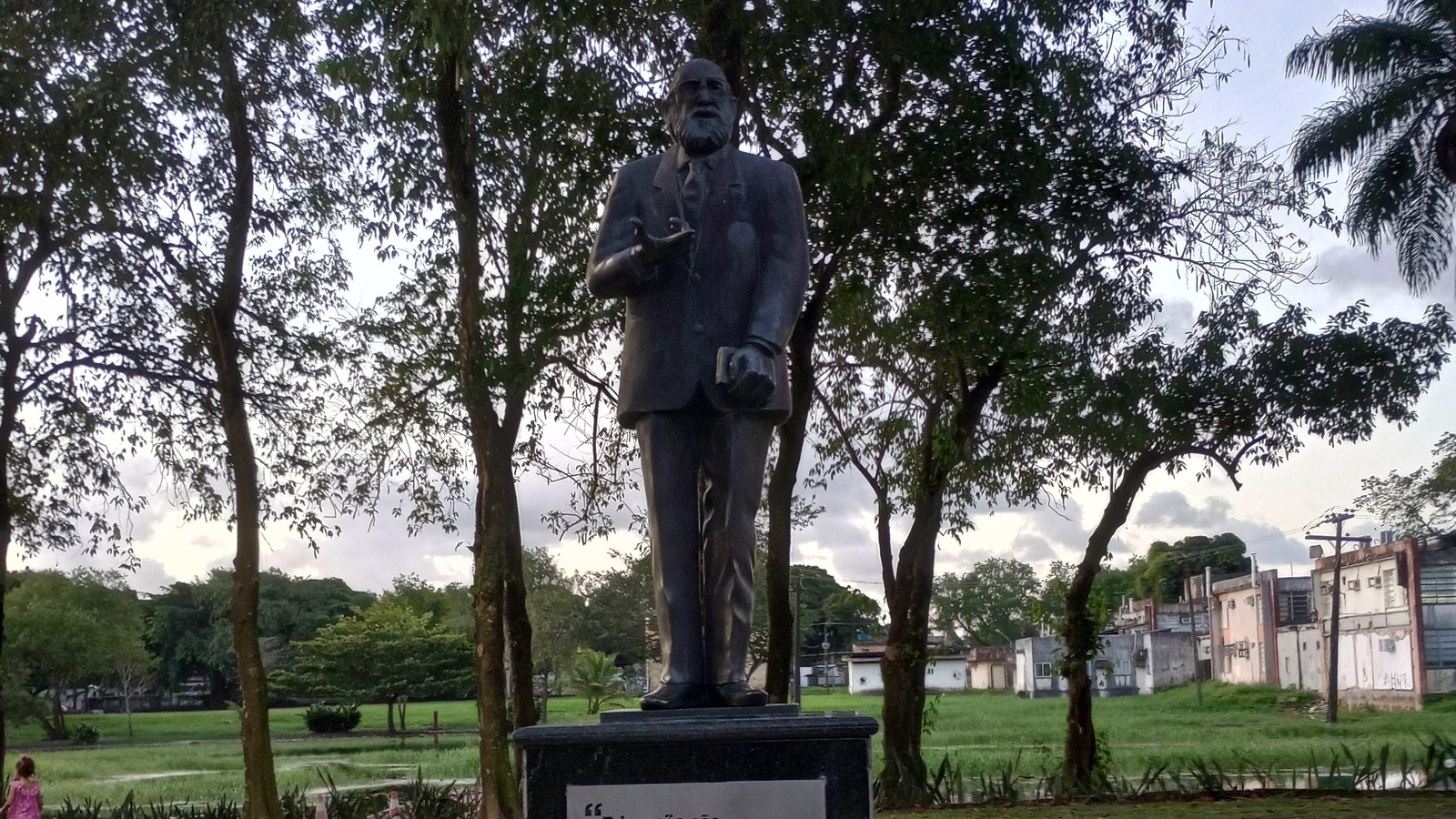
Paulo Freire was born on 19 September 1921 in Recife, in north-eastern Brazil. He died on 2 May 1997 in São Paulo. Between those dates he became one of the most frequently cited educators of the twentieth century, tying literacy to dialogue and to the social conditions of the people who learn.
Childhood in the depression years showed him hunger and interrupted schooling. The experience is not a textbook legend, nor a single explanation of the method. Freire argued that the illiterate adult is not an empty vessel: education should start from the community’s words and problems, not from an abstract alphabet handed down from above.
The 1963 experiment at Angicos, in Rio Grande do Norte, worked with several hundred adults and adolescents in culture circles on a short programme. Claims about “40 hours” belong to that setting and to the political boasts of the time. They are not a universal guarantee that literacy arrives in two weeks.
After the 1964 military coup he was briefly imprisoned, then lived in exile, including in Chile. Pedagogy of the Oppressed, written in 1968 and published in English in 1970, brought him worldwide fame. He criticised “banking education”, in which the teacher deposits knowledge, and called for a relationship of dialogue.
The ideas inspired educators and social movements. They were also banned or attacked, from apartheid South Africa to school disputes in the United States. Critics objected to the political orientation and to the difficulty of transplanting the method into other systems. Influence and dispute travel together.
He returned to Brazil after the amnesty and worked in administration and in the Workers’ Party. The later title of patron of Brazilian education is a public honour, not a scientific verdict on every page.
The 105th anniversary is a chance to read the context, not to reduce the work to a slogan. Recife, Angicos, exile and the 1970 book are landmarks. The rest — exact hours, numbers made literate, today’s applications — needs sources and qualification.
Image: statue of Paulo Freire, UFPE campus, Recife / Wikimedia Commons. A contemporary monument, not the culture circles at Angicos. Cropped to 16:9.
Source consulted: Paulo Freire | Encyclopaedia Britannica; Paulo Freire | Internet Encyclopedia of Philosophy.
0 Comments
No comments on this article yet. Be the first!