
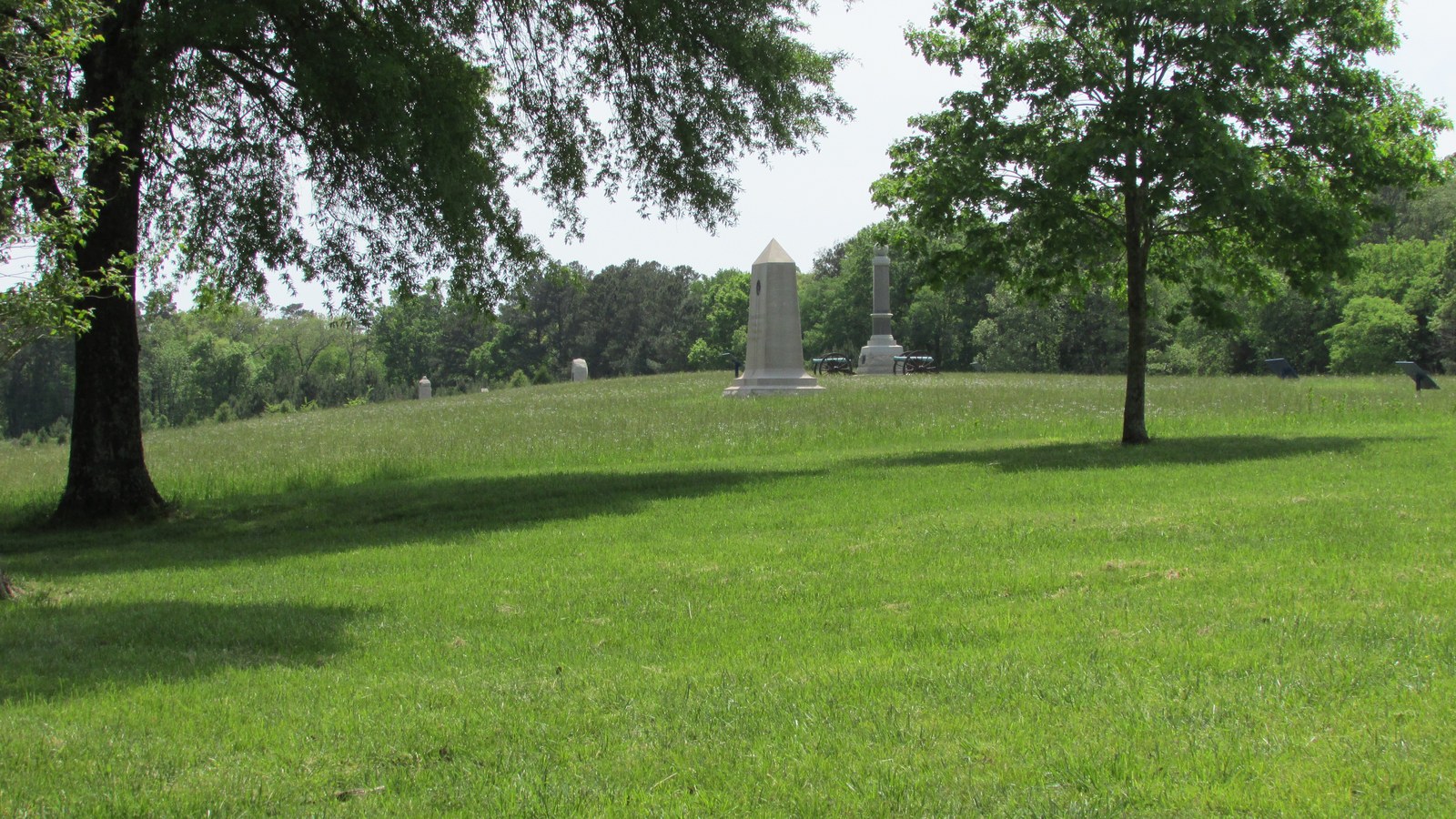
On 19–20 September 1863, in the woods by Chickamauga Creek in north-western Georgia, the Army of the Cumberland met Braxton Bragg’s Confederate forces. The battle followed William Rosecrans’s forcing of the abandonment of Chattanooga; Bragg gathered reinforcements to cut the road back to the city.
Poor visibility and incomplete information made coordination hard. Units entered the fighting in succession. On 20 September a gap accidentally opened in the Union line was exploited by troops led, in that sector, by James Longstreet.
Part of the Union army withdrew towards Chattanooga. George H. Thomas’s stand on Snodgrass Hill delayed the advance and earned him the nickname “Rock of Chickamauga.” The Confederate tactical victory did not mean the destruction of the opposing army.
The human cost was extremely high for both sides. Figures differ from one study to another; this article treats them as estimates, not a single ledger. Chattanooga remained the campaign’s objective.
In the following months the Union reopened supply lines and won the battles for the city. Chickamauga remains an example of the gap between success on the field and the strategic result.
The national military park preserves the ground. The 163rd anniversary marks the start of the battle, not a “solution” to the Civil War.
Image: Chickamauga military park / Wikimedia Commons. The ground today, with monuments, not a reconstruction of the battle. Cropped to 16:9.
Source consulted: The Chickamauga Campaign | National Park Service; Battle of Chickamauga | American Battlefield Trust.







0 Comments
No comments on this article yet. Be the first!