


Folha republishes, on 18 October 2026, the front page of Folha da Manhã from 19 October 1926. An Italian leaves a ship, in Rio, without permission. The police had kept him on board. He fooled the guard. The paper’s guess: a cable, or the gangway. The city, stirred. The police, through the hotels. That is the news of then. It is not the biography of now.
The name, in the reprinted clip: Count Francesco Frola, former parliamentarian, journalist, antifascist ideas. The source cited then: O Globo. Treccani: born, probably, in Turin, 28 June 1886. His father, Secondo, a deputy, then mayor. Law in Turin. Socialist deputy, Turin constituency, 1920. The mandate ends with the dissolution of the Chambers, 1921, and is not renewed. “Count”, in Folha. The encyclopedia does not start there. Two labels, one man.
At the end of July, Treccani writes, he emigrates to France. Toulouse, a bank for Italian workers, then Paris, Corriere degli Italiani. Invited to São Paulo to edit La Difesa. The fascist government presses. The Brazilian authorities bar his entry. Italian citizenship, withdrawn; property, seized by decree of 30 September 1926. He nonetheless “riuscì tuttavia a penetrarvi clandestinamente”. Folha, a day later, describes the escape. Treccani, over the decades, calls it an entry. The same gap between ship and quay.
A study of Frola’s exile names the ship: Ipanema, legal embarkation on 15 September 1926, after interventions in Marseille. First call, Santos, blocked at Italy’s request. Second, Rio. Letters, from on board, to the president of the republic, to São Paulo, to the press, to the masons. That is historiography. It is not the 1926 telegram. Folha does not name the ship in the reprinted text.
After the landing, Treccani: propaganda again. 1927, the antifascist league. 1929, France, as a correspondent. The Brazilian visa, refused. Argentina, 1930. Folha, in 1926, stops at the hotels. The search, the present tense of that month. We do not know, from the clip, whether they found him that night.
Until a biography, what remains is a presumed cable and a front page. After a biography, what remains is a stateless man on a quay. Between them, a newspaper that, a hundred years on, prints the escape again, not the landing.
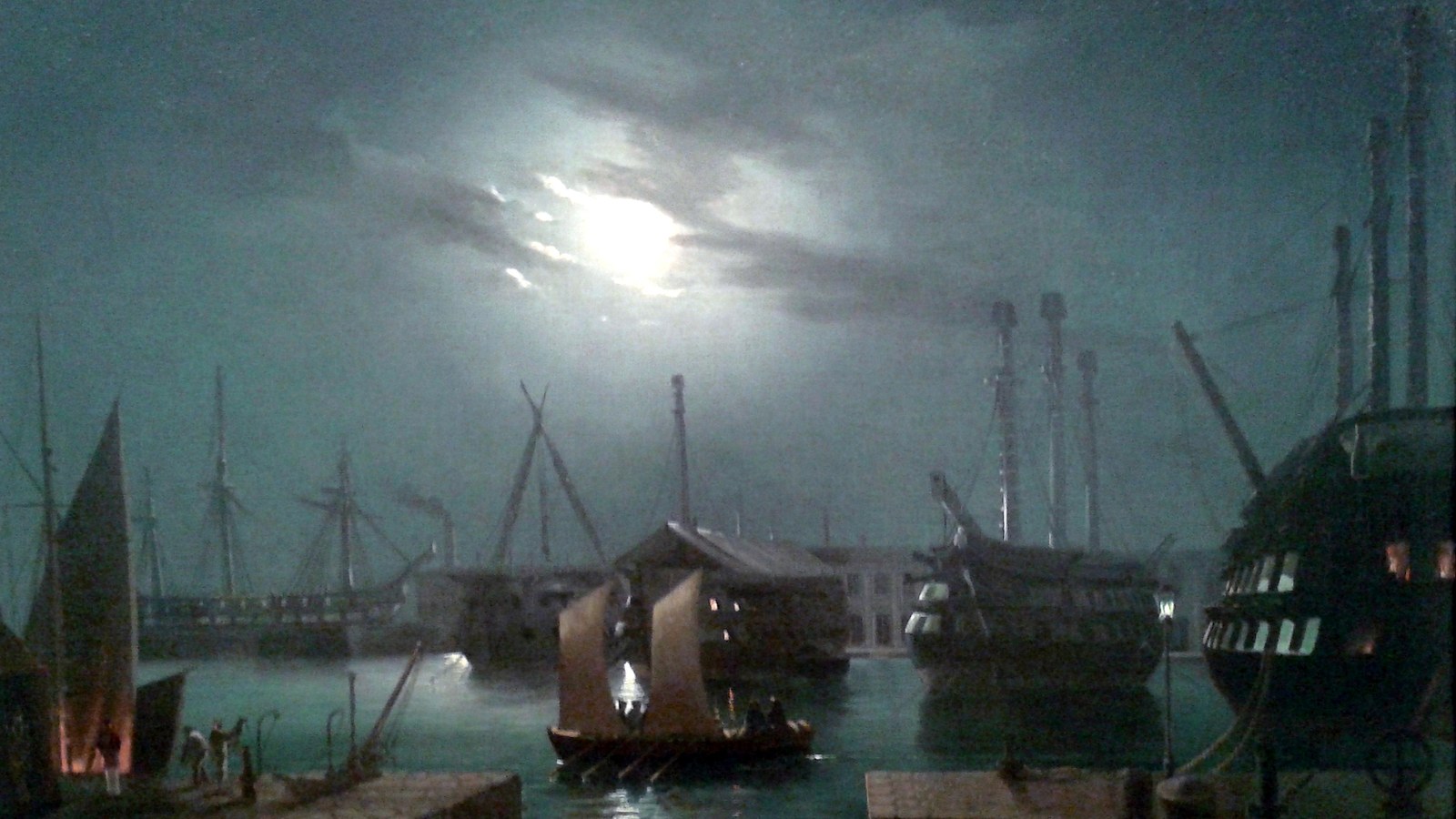
Image: Eduardo de Martino, Porto à noite, MASP, public domain, Wikimedia Commons. The painting is a night harbour, not the 1926 ship Ipanema.
Sources consulted: 1926: Italian former parliamentarian flees ship to land in Brazil — Folha; FROLA, Francesco — Dizionario Biografico degli Italiani, Treccani.








0 Comments
No comments on this article yet. Be the first!