
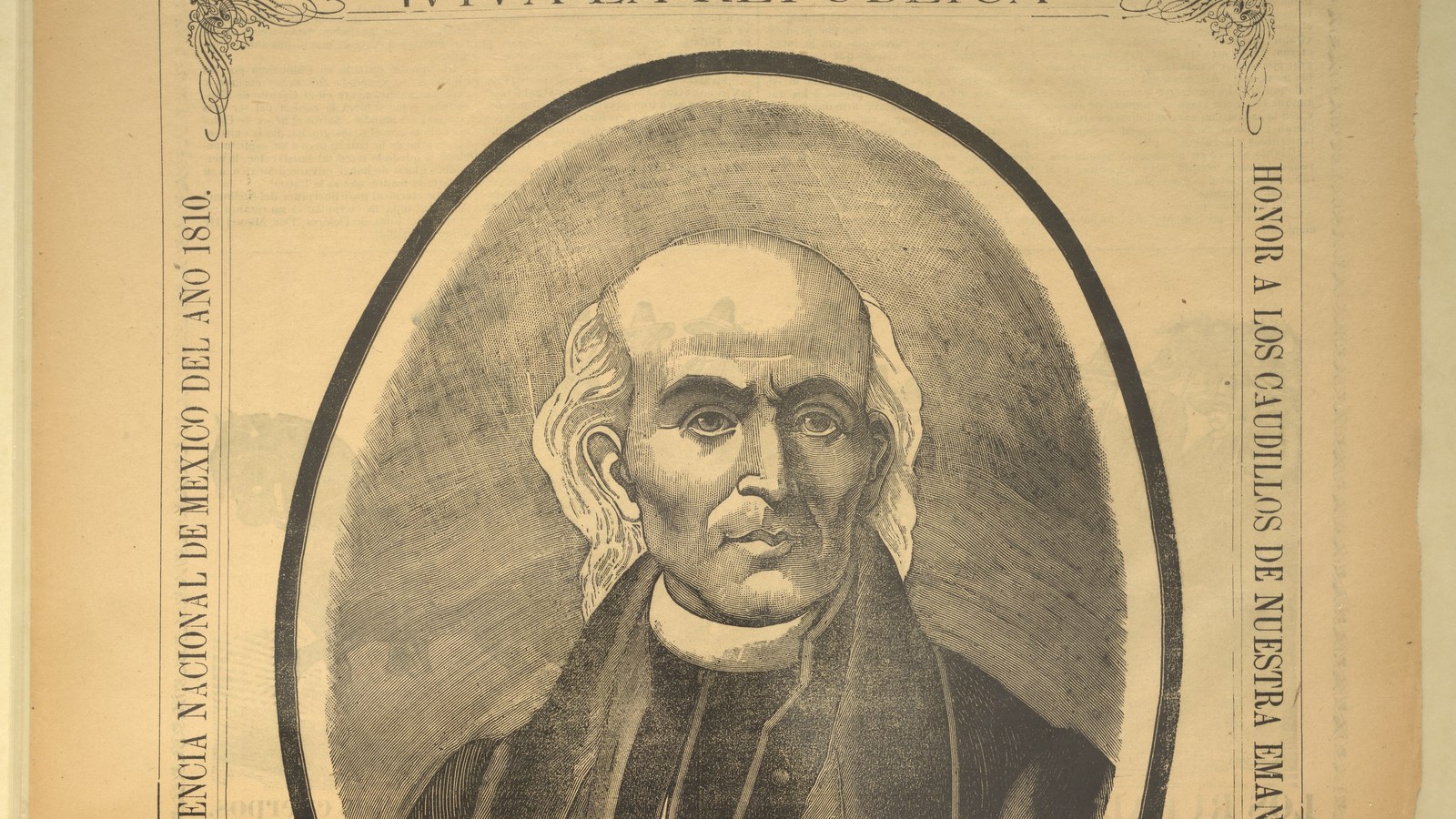
Early on 16 September 1810, the priest Miguel Hidalgo y Costilla called his parishioners in Dolores to rise against Spanish rule. The moment entered history as the Grito de Dolores — the Cry of Dolores — and is commemorated today as the beginning of Mexico’s struggle for independence.
Today, 16 September 2026, marks 216 years since that event.
At the beginning of the nineteenth century, the territory of modern Mexico formed part of the Viceroyalty of New Spain. Colonial society was shaped by social and racial hierarchies, while events in Europe profoundly destabilised Spanish authority. Napoleon’s invasion of Spain and the crisis of the monarchy created conditions in which demands for autonomy and independence gained strength.
Miguel Hidalgo y Costilla was the parish priest of Dolores, near Guanajuato. The Library of Congress records that he was involved in a group seeking independence from Spain, later known as the Querétaro conspiracy.
In September 1810, Spanish authorities discovered the plot. Facing arrest, the conspirators were forced to act earlier than planned.
On the morning of 16 September, Hidalgo called people to action. His speech was not preserved in a definitive contemporary transcript, so the exact wording attributed today to the famous Grito de Dolores must be treated cautiously. What is clear is that the appeal became the symbolic beginning of the insurgency.
Hidalgo and his supporters moved towards San Miguel and then Guanajuato. The movement quickly attracted thousands of people, particularly Indigenous and mestizo supporters. Within a short time, the revolt had grown into a huge but loosely organised military force.
The first months brought both victories and considerable violence. Insurgent forces captured Guanajuato and advanced towards the centre of New Spain. In October 1810 they approached Mexico City, but Hidalgo decided against launching the decisive assault on the capital and withdrew.
The movement then suffered defeats. Hidalgo and other leaders were captured in 1811. Hidalgo was executed in July 1811 and did not live to see final independence.
The struggle continued after his death. José María Morelos became one of the principal leaders of the next phase, and the conflict passed through several political and military transformations.
Mexico did not become independent in 1810. This distinction is essential. The 16 September anniversary marks the beginning of the struggle, not the legal completion of independence.
After roughly eleven years of war and political change, independence was secured in 1821. The Treaty of Córdoba was signed on 24 August 1821, and the entry of the Army of the Three Guarantees into Mexico City on 27 September symbolised the triumph of the independence movement.
Nevertheless, Mexico celebrates Independence Day on 16 September, the date associated with the Grito de Dolores and the beginning of the uprising.
The modern ceremony has its own tradition. On the evening of 15 September, Mexico’s president ceremonially recreates El Grito from the National Palace in Mexico City, with celebrations continuing on 16 September. This should not be confused with a claim that Hidalgo’s historical appeal occurred on the evening of the 15th; the historical event is associated with the morning of 16 September.
Miguel Hidalgo became one of the foundational figures of Mexican national identity and is often called the Father of the Nation. Yet Mexican independence resulted from a long process involving many leaders and communities.
Two hundred and sixteen years after the Cry of Dolores, 16 September remains one of the most important dates in Latin American history. It marks the moment when a local uprising began to develop into a struggle that, more than a decade later, would end Spanish rule over Mexico.
The anniversary is not merely historical. Each year, millions of Mexicans at home and across the diaspora mark the occasion with ceremonies, parades, flags and cultural events.
On 16 September 1810, independence was still far away. But Hidalgo’s appeal created a symbol powerful enough that, more than two centuries later, the date continues to define Mexico’s national celebration.
Image: public-domain portrait of Miguel Hidalgo y Costilla, Wikimedia Commons. Not a contemporary photograph of the 1810 event. Cropped to 16:9.
Source consulted: Today in History — September 16 | Library of Congress.



0 Comments
No comments on this article yet. Be the first!