
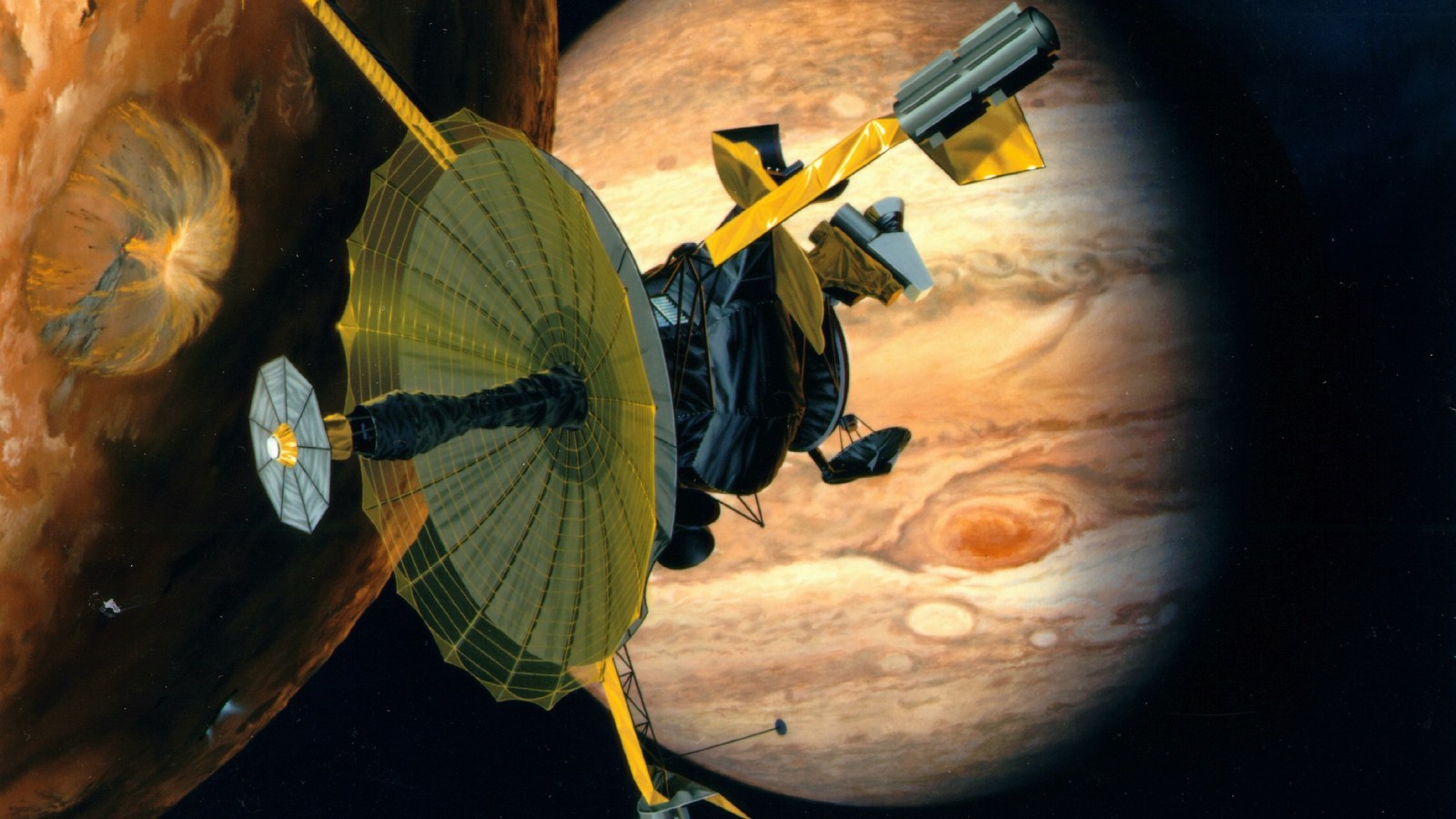
21 September 2026 is 23 years since the Galileo mission ended. NASA sent the spacecraft into Jupiter’s atmosphere on 21 September 2003, after almost 14 years in space, so it would not later strike the moon Europa and carry terrestrial microbes.
Galileo launched on 18 October 1989 from the payload bay of shuttle Atlantis (STS-34). It began orbiting Jupiter in December 1995. It was the first craft to orbit an outer planet. It completed 34 orbits. The primary mission ended in 1997 and was extended three times.
It was also the first to drop an entry probe into an outer planet’s atmosphere, imaged the asteroids Gaspra and Ida, and watched comet Shoemaker-Levy 9 hit Jupiter. Radio signals took about 52 minutes to reach Earth on impact day.
Results include evidence of a salty ocean under Europa’s ice, Io’s volcanism, and data on Ganymede, Callisto and the magnetosphere. NASA does not claim it found life; it speaks of a possibly favourable environment under the ice.
Images and data remain in use for research. Mission artwork is NASA/JPL’s, not photographs taken from Earth in 2003.
The anniversary is of a controlled end, not an accidental crash. Planetary protection was the stated reason for the manoeuvre.
Image: artist’s concept of Galileo beside Io and Jupiter / NASA, public domain. Mission artwork, not a photograph of the 21 September 2003 manoeuvre. Cropped to 16:9.
Source consulted: Galileo | NASA Science; Galileo | NASA Jet Propulsion Laboratory.







0 Comments
No comments on this article yet. Be the first!