
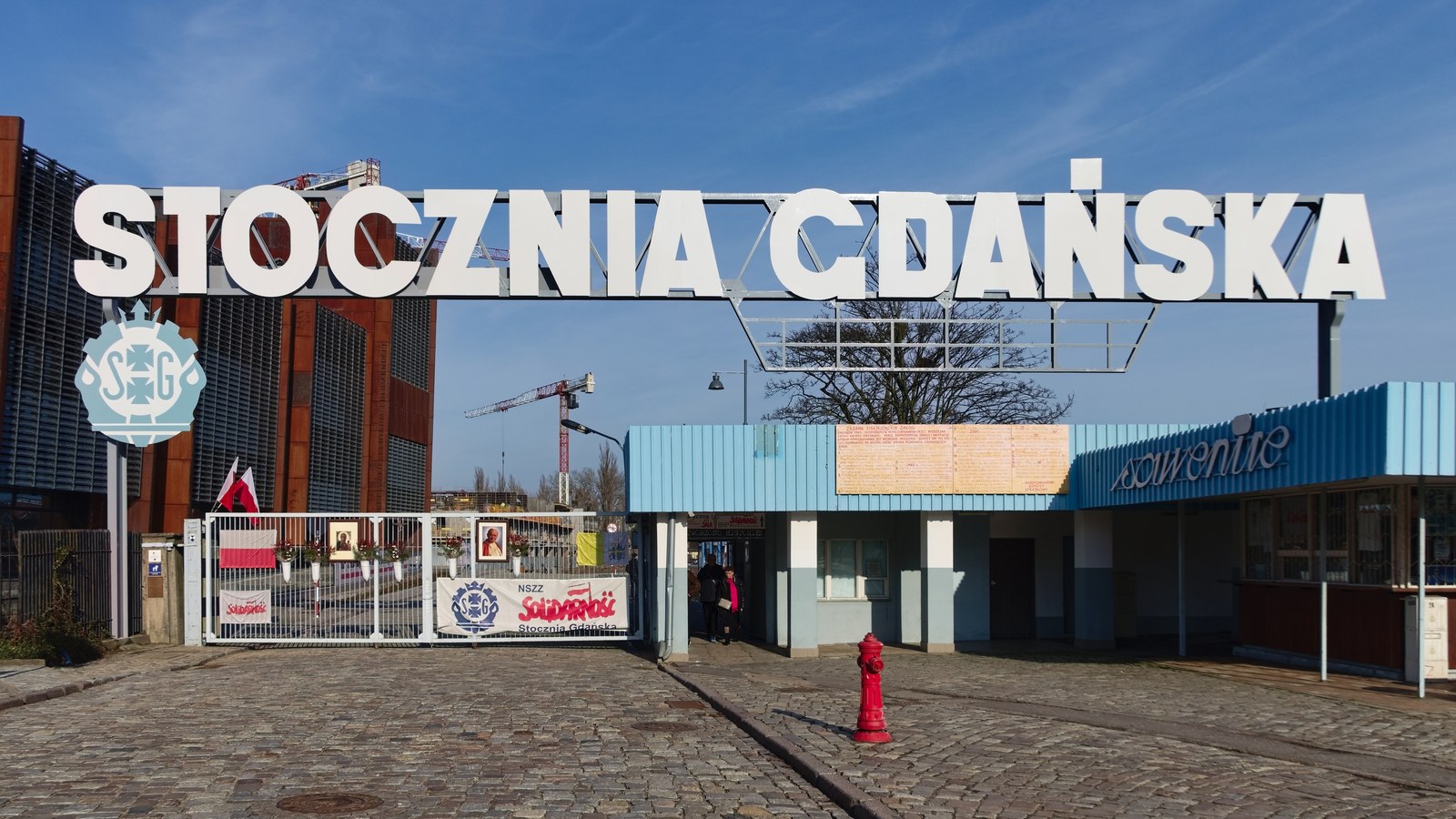
17 September 2026 marks 46 years since the meeting in Gdańsk at which representatives of Inter-Enterprise Founding Committees decided to create a single nationwide independent union, rather than a federation of local bodies. The name adopted was Niezależny Samorządny Związek Zawodowy Solidarność — the Independent Self-Governing Trade Union “Solidarity”.
The decision followed the strikes of summer 1980 and agreements signed with the communist authorities in Szczecin, Gdańsk and other industrial centres. On 31 August, strikers at the Gdańsk shipyard had secured recognition of the right to independent unions. 17 September was the moment regional initiatives chose a common identity.
According to the European Solidarity Centre, the name was proposed by Karol Modzelewski. A national coordinating commission was formed, chaired by Lech Wałęsa, an electrician at the shipyard and one of the strike leaders. Legal registration came later, on 10 November 1980; it should not be confused with the Gdańsk founding date.
Solidarity was more than a conventional trade union. A social movement of workers, intellectuals, civic activists and Catholic believers gathered around it. In a state where public organisations were controlled by the party, an independent union broke the monopoly on representation.
Membership grew rapidly. Estimates for 1981 speak of around 10 million people in a country with about 12 million wage earners — figures of scale, not a day-by-day census. The authorities imposed martial law on 13 December 1981. Leaders were arrested, legal activity was suspended and the organisation continued underground.
The Round Table talks of 1989 returned Solidarity to public life and opened the way to the partially free elections of June. The result accelerated Poland’s political change and influenced the collapse of communist regimes in Central and Eastern Europe.
The 17 September anniversary marks the moment trade-union initiatives united in a national institution. It does not reduce the history of 1980–1989 to a single day, nor treat the strikes, arrests and martial law as a cost-free symbol.
Photo: Adrian Tync, Wikimedia Commons, CC BY-SA 4.0. Gate No. 2, Gdańsk Shipyard, 2024. A contemporary view of the site, not a photograph of the 17 September 1980 meeting. Cropped to 16:9.
Source consulted: How Did Solidarność (Solidarity) Come To Be? (European Solidarity Centre); 44. rocznica powołania NSZZ „Solidarność” (Komisja Krajowa).

0 Comments
No comments on this article yet. Be the first!