
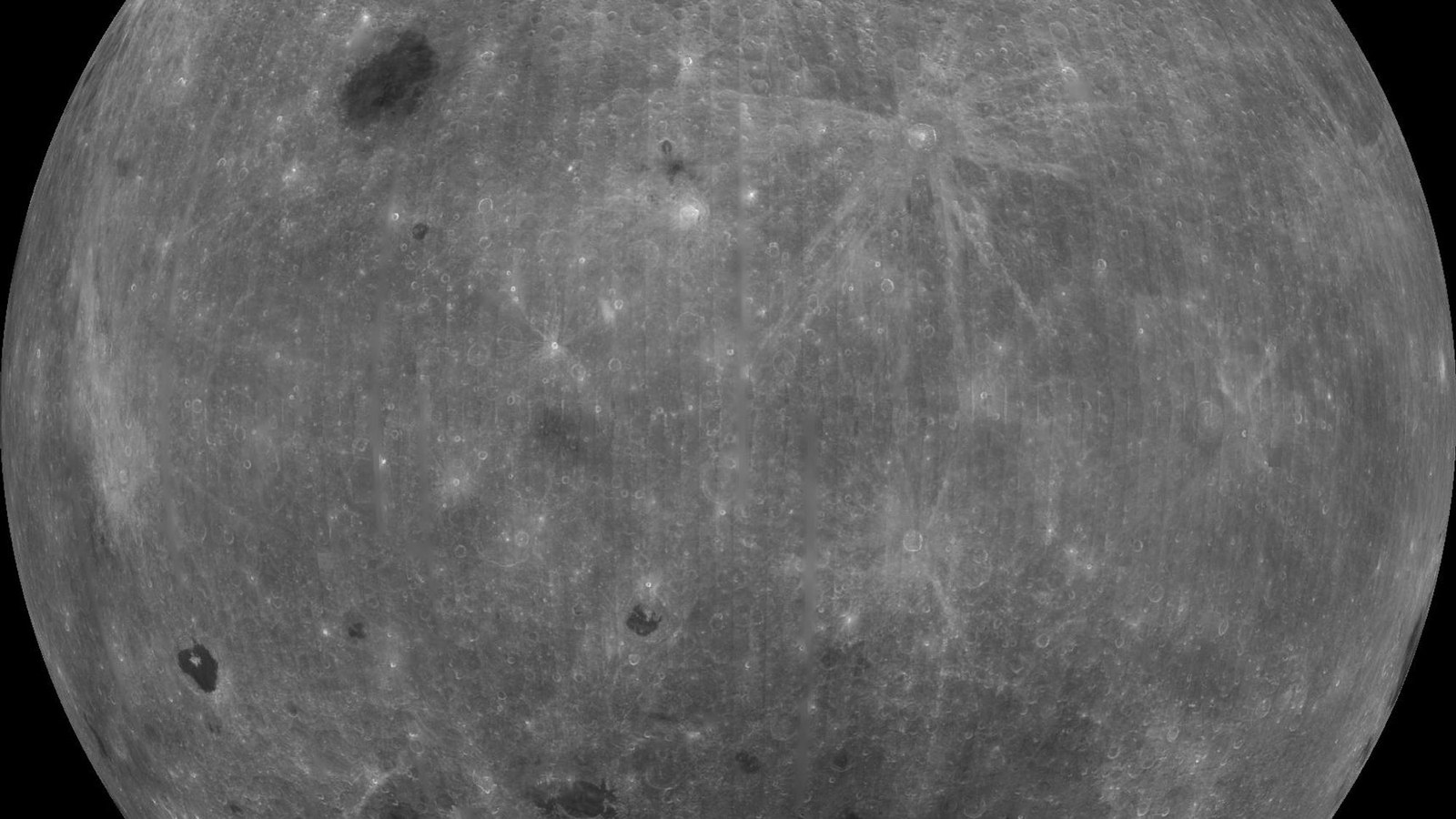
On 18 September 1977, two weeks after its 5 September launch, NASA’s Voyager 1 pointed its imaging system back towards Earth. From more than 11 million kilometres away it recorded the planet and the Moon as distinct objects in the same frame — a perspective ground telescopes cannot offer in the same form.
The mission, launched shortly after its twin Voyager 2, was designed to use a rare alignment of the outer planets to study Jupiter and Saturn. The 18 September frame belongs to the beginning of the journey, not to the planetary encounters that later made the two probes famous.
The image NASA released is a processed composite. The large difference in brightness between Earth and the Moon required processing so that both bodies would be visible. Calling it “a single raw frame” without that explanation is misleading: the familiar version is the product of combined exposures.
The photograph should not be confused with the “Pale Blue Dot” of February 1990, also from Voyager 1 but from an incomparably greater distance, in which Earth appears as a point in a sunbeam. The 1977 frame shows the Earth–Moon system to scale, not a pixel in the void.
After this look back, the spacecraft returned detailed observations of Jupiter, Saturn and their moons, then continued towards the outer Solar System. The image has both technical value — a test of the camera and of geometry — and symbolic value: a measure of the inhabited world’s place, seen from outside.
Forty-nine years after it was made, NASA still holds the resource in its science archives. The anniversary belongs to a mission photograph, not to an artwork detached from the flight context. Distance, date and processing details are on the official image page, not in popular caption lore.
Image: NASA/JPL, first picture of Earth and the Moon in a single frame, 18 September 1977 (PIA00304). U.S. government public domain. Processed composite. Cropped to 16:9.
Source consulted: First Picture of the Earth and Moon in a Single Frame | NASA Science; Voyager 1 | NASA Science.








0 Comments
No comments on this article yet. Be the first!