
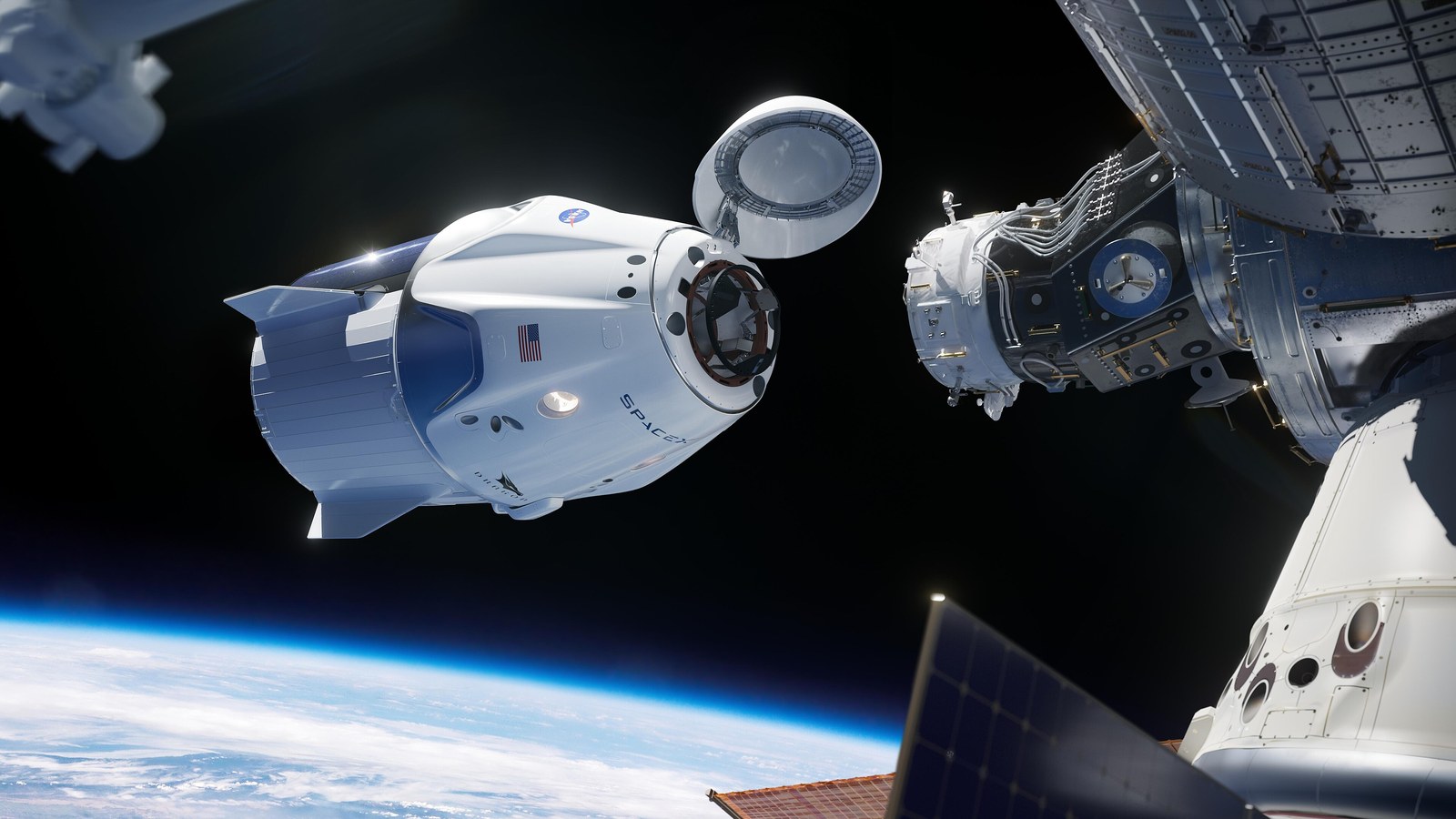
18 September 2026 marks five years since the Inspiration4 splashdown. The Crew Dragon Resilience capsule returned to the Atlantic off Florida on the evening of 18 September 2021. The crew — Jared Isaacman, Sian Proctor, Hayley Arceneaux and Chris Sembroski — flew without a government-agency astronaut aboard.
Launch had been on 15 September from Kennedy Space Center. The flight lasted about three days, in an orbit higher than the ISS. In place of the docking adapter the capsule carried a transparent cupola. Measurements of spaceflight’s effects on the body were also taken aboard.
The mission was presented as the first orbital flight with an all-civilian crew, in the project’s own wording. The four had trained; “civilian” does not mean unprepared. Isaacman paid SpaceX for the flight and tied it to fundraising for St. Jude Children’s Research Hospital, where Arceneaux worked as a physician assistant and where she had been treated as a child for bone cancer.
Arceneaux was described as the first person with an internal prosthesis to reach space. Proctor was announced as the first Black woman to pilot a spacecraft. Those formulas belong to the mission’s communication; this article repeats them as such, without turning them into an Olympic medal table.
Splashdown, around 7:06 p.m. Eastern Time, ended the flight. Recovery teams took the capsule. SpaceX images remain copyrighted; this article’s cover does not claim to be that splashdown.
Five years on, Inspiration4 remains a landmark of orbital access beyond astronaut corps and a point of debate about cost, risk and accessibility. It is not a chronicle of later commercial launches.
The reference date is 18 September 2021, the return, not only the 15 September lift-off.
Image: NASA/SpaceX, a Crew Dragon capsule. Wikimedia Commons, public domain. Not a photograph of the 18 September 2021 Inspiration4 splashdown. Cropped to 16:9.
Source consulted: St. Jude Children’s Research Hospital — Inspiration4; NASA — Commercial human spaceflight.







0 Comments
No comments on this article yet. Be the first!