
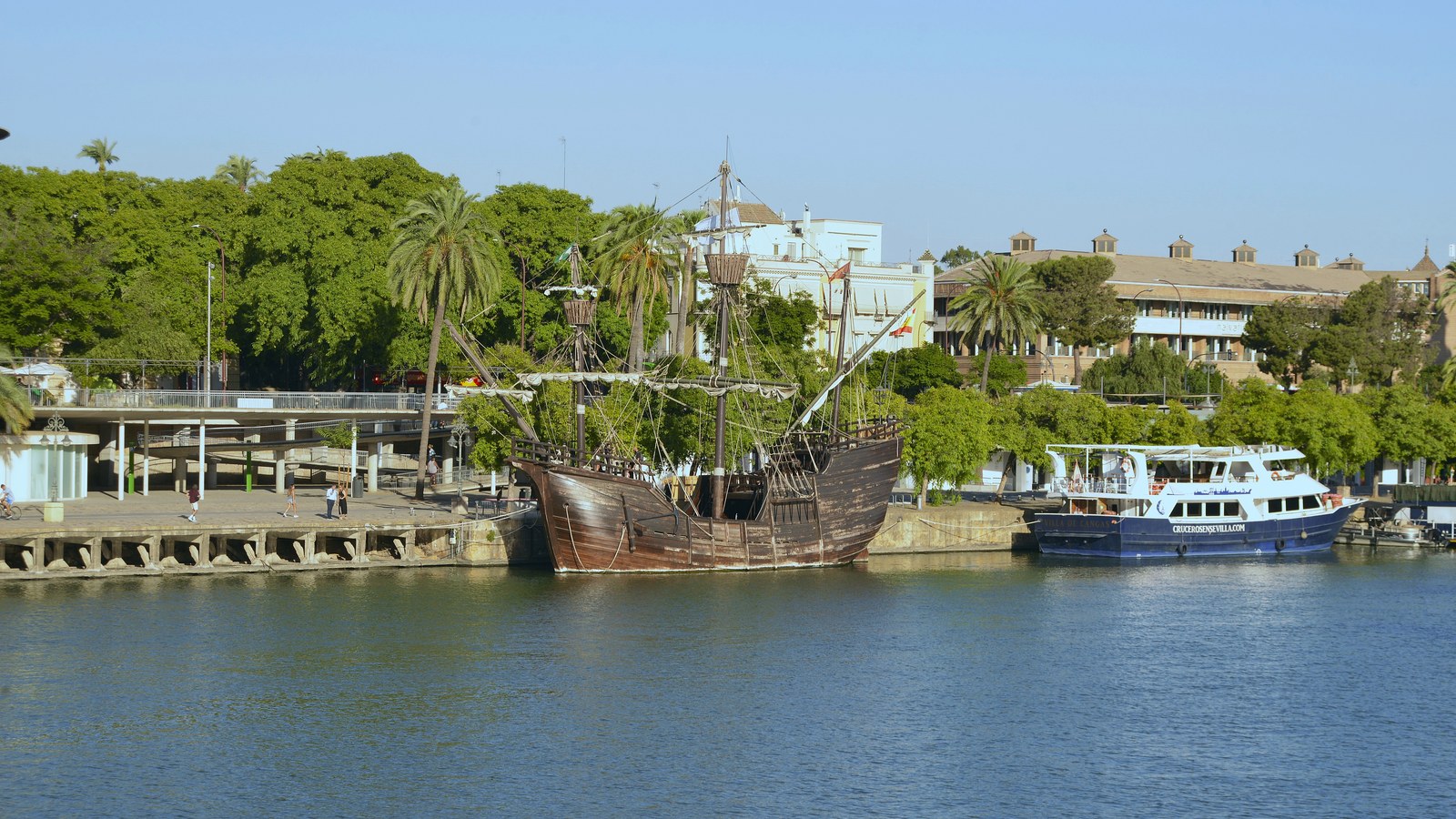
On 20 September 1519 five ships left Sanlúcar de Barrameda for the Atlantic. The expedition had left Seville on 10 August and come down the Guadalquivir; putting to sea is today’s date, not the river departure. The ships were Trinidad, San Antonio, Concepción, Victoria and Santiago.
Ferdinand Magellan, a Portuguese in the service of the Spanish Crown, sought the Moluccas by the west. The fleet crossed the Atlantic, probed the South American coast, found the passage now called the Strait of Magellan and entered an ocean the commander named the Pacific.
The road meant hunger, disease, mutiny, wreck and clash. Magellan died in April 1521 on Mactan, in today’s Philippines. He did not personally complete the circumnavigation.
Juan Sebastián Elcano took Victoria through the last stage. On 6 September 1522 the ship returned to Sanlúcar with a small share of those who had left, after the Indian Ocean and the Cape of Good Hope.
The first circumnavigation showed the link between oceans and the scale of the planet. It was also part of European imperial expansion. The human cost and conflict with local populations are not a footnote.
The 507th anniversary separates the Sanlúcar departure from the myth that Magellan finished the circuit. Victoria finished it, under Elcano.
Image: replica of the nao Victoria / Wikimedia Commons. A contemporary museum ship, not the vessel that returned in 1522. Cropped to 16:9.
Source consulted: Ferdinand Magellan | Encyclopaedia Britannica; First voyage around the world, Magellan-Elcano route | UNESCO.




0 Comments
No comments on this article yet. Be the first!