
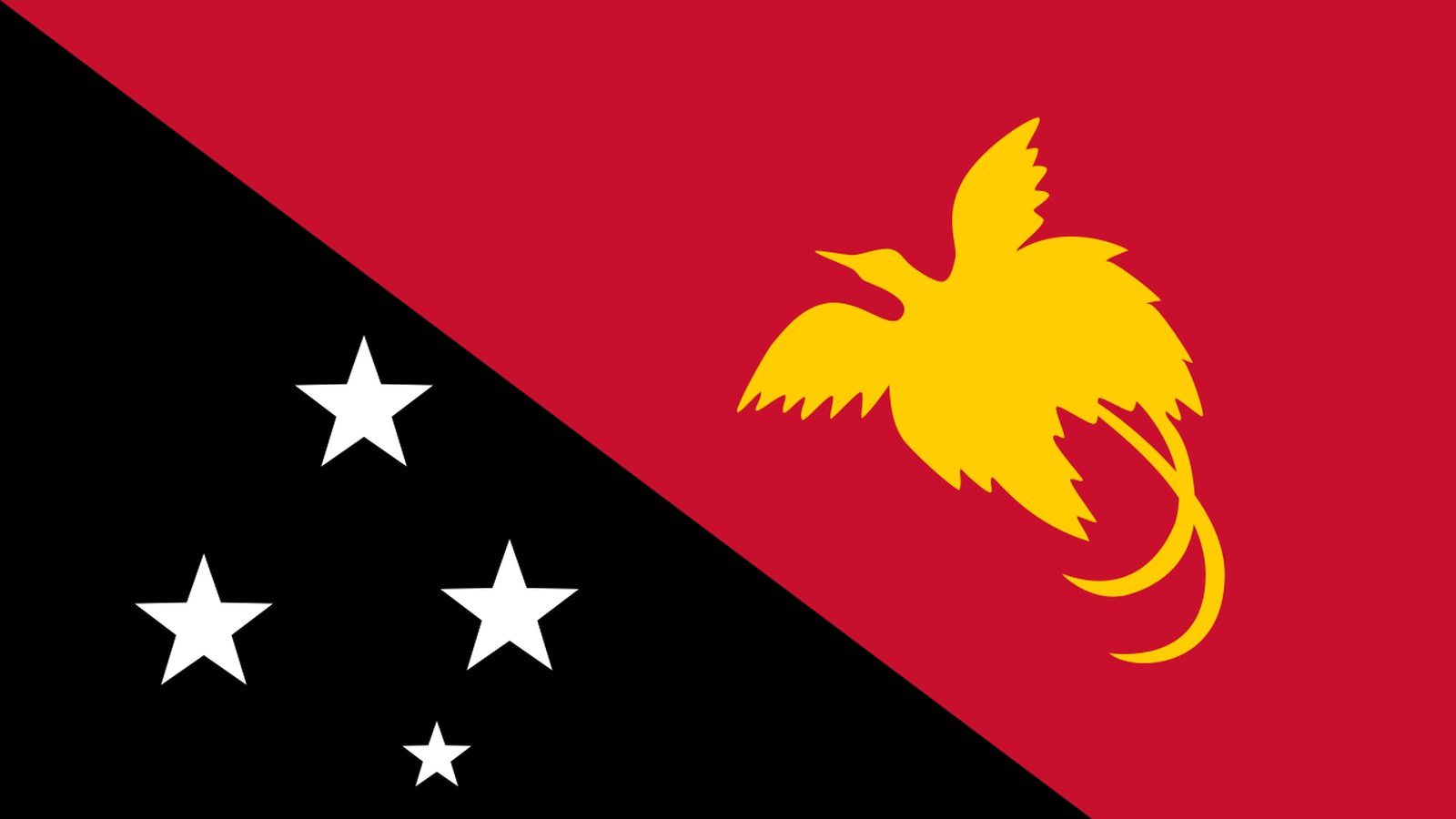
On 16 September 1975, Papua New Guinea became an independent and sovereign state, bringing Australian administration to an end. Today, 16 September 2026, the country marks 51 years of independence.
Papua New Guinea’s Constitution is explicit: the document adopted by the Constituent Assembly on 15 August 1975 was to come into effect on “Independence Day, that is 16 September 1975”.
The country’s Department of Foreign Affairs confirms the same chronology. Papua New Guinea achieved self-government on 1 December 1973 and independence on 16 September 1975.
The political history of the territory is complex. Papua and New Guinea had different colonial experiences involving Britain, Germany and Australia. After the Second World War, the two territories were administered together by Australia.
The path towards independence was gradual. Local participation in political institutions increased, and elections in 1972 led to the formation of a government headed by Michael Somare.
Somare became one of the foundational figures of independence and the first prime minister of the independent state.
On 1 December 1973, Papua New Guinea became self-governing. Australia nevertheless retained responsibilities in certain areas, including external affairs, until full independence.
In 1974, the House of Assembly supported the move towards independent nationhood. In 1975, 16 September was set as the date.
The Constitution was adopted on 15 August 1975 and came into effect on Independence Day.
On the evening of 15 September 1975, the Australian flag was lowered during a ceremony in Port Moresby. Australian and Papua New Guinean sources preserve one of the symbolic statements associated with Sir John Guise: the flag was being lowered, “not torn down”, a phrase intended to emphasise the peaceful character of the transition.
At one minute past midnight, according to official commemorative speeches from the Papua New Guinea Government, independence became a reality and the new state entered a new era.
On the morning of 16 September, Papua New Guinea’s flag was raised at Independence Hill in Waigani, Port Moresby, during the official ceremonies.
The new state was extraordinarily diverse. Papua New Guinea is known for one of the greatest concentrations of linguistic and cultural diversity on Earth, with hundreds of languages and numerous distinct communities.
That diversity has been both a source of identity and a challenge for building the institutions of a modern state.
Papua New Guinea remained a constitutional monarchy within the Commonwealth, with the monarch as head of state represented by a governor-general. Political power is exercised through a parliamentary system.
The independence of 1975 should not be presented as the result of a war of liberation. The transition from Australian administration to independence took place through a political and constitutional process.
The relationship with Australia remained highly important after independence in areas including development, trade, security and regional cooperation.
On 10 October 1975, less than a month after independence, Papua New Guinea became a member of the United Nations.
The early years of the new state were devoted to building institutions, administration and a shared national identity in a society of exceptional diversity.
The country also had to manage strong regional differences. Bougainville developed a distinct political history and, decades later, experienced conflict and a peace process that led to its current autonomous status.
This anniversary article should not turn the contemporary situation in Bougainville into a political prediction. Any reference to current negotiations must be separately verified at publication time.
In 2025, Papua New Guinea marked its golden jubilee — 50 years of independence. In 2026, the 51st anniversary continues the story of national unity in one of the world’s most diverse societies.
Authorities in Port Moresby explicitly state that 16 September 2026 marks 51 years of independence.
More than half a century after raising its own flag, Papua New Guinea remains one of the Pacific’s most important island states, with significant natural resources but also major challenges in infrastructure, public services and development.
The 16 September anniversary is not merely a commemoration of the end of Australian administration. It marks the beginning of a national experiment: building a common state for hundreds of communities, languages and traditions.
In 1975, the independence leaders inherited an extraordinarily diverse territory and young institutions. In 2026, Papua New Guinea celebrates 51 years as a sovereign state.
The date remains written into the constitutional text itself: 16 September 1975 — Independence Day.
Image: the flag of Papua New Guinea, public domain. A national-flag image, not a photograph of the 16 September 1975 ceremony. Cropped to 16:9.
Source consulted: Papua New Guinea | Australian Government DFAT; Constitution of Papua New Guinea | Constitute Project.


0 Comments
No comments on this article yet. Be the first!