
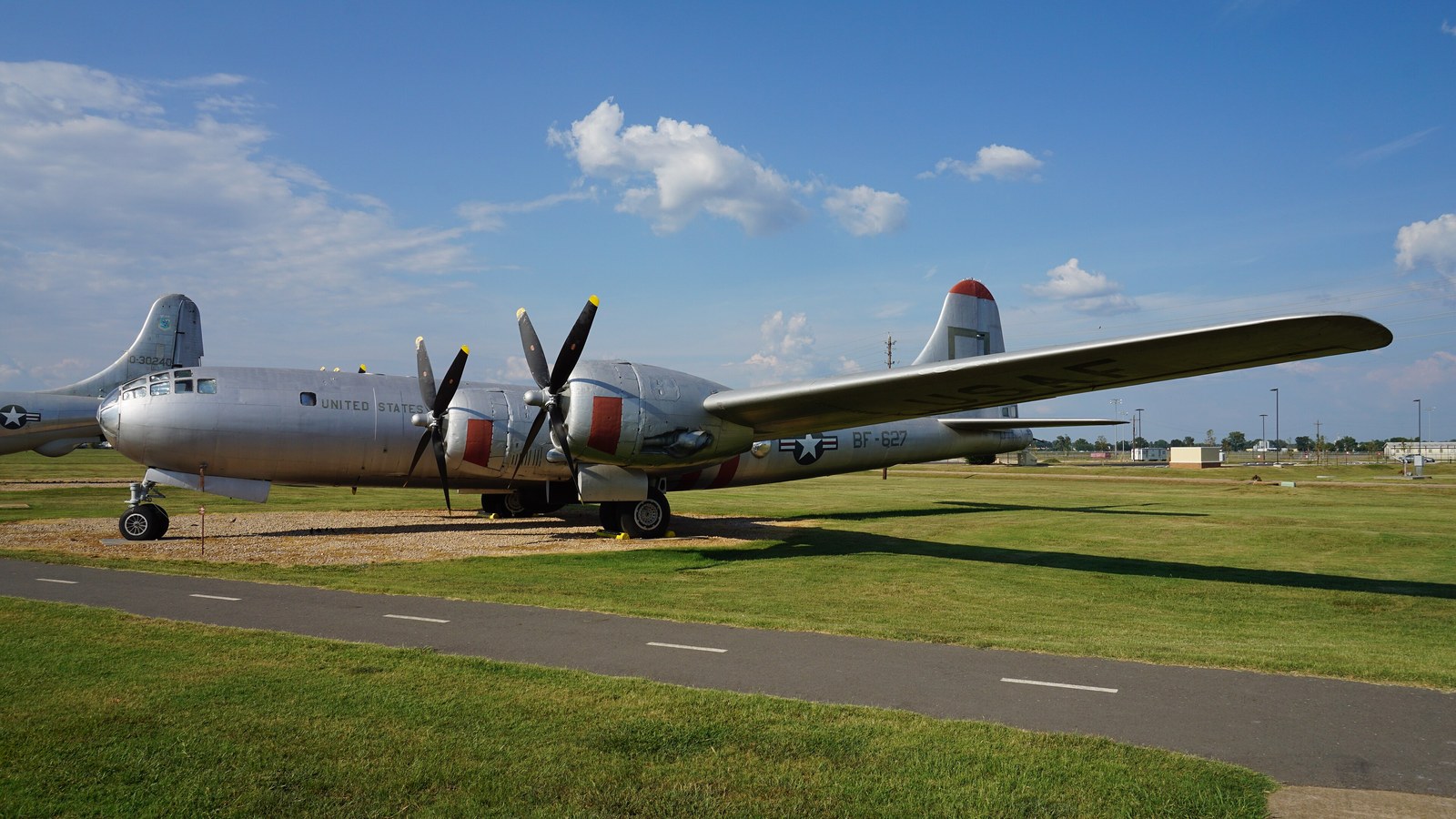
21 September 2026 marks 84 years since the Boeing B-29 Superfortress first flew. The National Museum of the U.S. Air Force records that the prototype took off on 21 September 1942, during the accelerated wartime programme.
The type combined, for its era, pressurised crew compartments, remotely controlled guns and long range. The programme was expensive and hit technical faults. Figures differ by variant; a production B-29 is not a “Silverplate” aircraft modified for nuclear weapons.
The bomber was used mainly in the Pacific. B-29s dropped the atomic bombs on Hiroshima and Nagasaki in August 1945 — a central and tragic fact in the type’s history, not a performance footnote.
After the war the B-29 stayed in service and flew in the Korean War. Examples are kept in museums; very few still fly. A museum photograph is not the 1942 prototype.
An account of the engineering does not separate it from the dead. Speed or bomb-load figures are those the museum cites for the model on display, not an average B-29.
The source is the National Museum of the USAF fact sheet. No aviation glory without consequences.
Image: Michael Barera, B-29 Superfortress at Barksdale Global Power Museum, 2015, CC BY-SA 4.0, Wikimedia Commons. Not the prototype of 21 September 1942.
Source consulted: Boeing B-29 Superfortress — National Museum of the USAF.









0 Comments
No comments on this article yet. Be the first!