
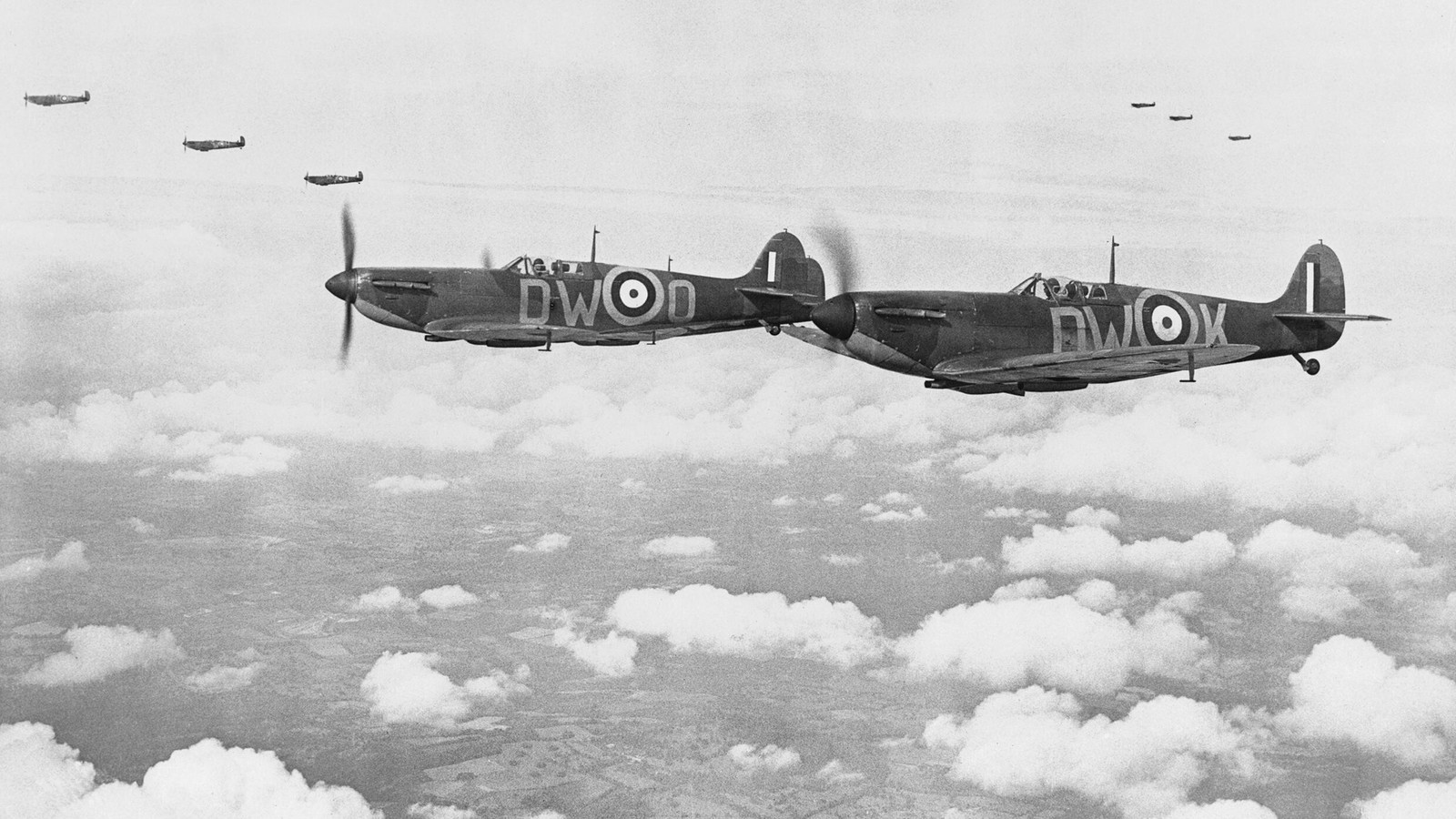
On 15 September 1940, the sky above Britain became the scene of one of the most important air battles in history.
Nazi Germany dominated much of Europe. France had fallen only months earlier, and Britain remained the principal European adversary still at war against Adolf Hitler's regime.
For any invasion of the British Isles, Germany needed something essential: air superiority. Standing in the Luftwaffe's way was the Royal Air Force — specifically RAF Fighter Command.
On 15 September 1940, the Luftwaffe launched massive attacks against south-east England and London. The RAF responded in force. The outcome would turn the date into a symbol of British resistance.
Today, 15 September 2026, marks 86 years since that day.
Europe in the summer of 1940
To understand the importance of 15 September, the situation in Europe in the summer of 1940 must be kept in view. Nazi Germany had won an impressive series of victories. Poland had been defeated in 1939. In 1940 German forces occupied or defeated Denmark, Norway, the Netherlands, Belgium, Luxembourg and France.
The Allied evacuation from Dunkirk saved a large part of the British army, but the equipment left behind was enormous. Britain was in an extremely difficult position.
Britain refuses to surrender
The government led by Winston Churchill nevertheless refused to make peace with Hitler. Germany began preparations for a possible invasion of Britain. The German plan was known as Operation Sea Lion.
Crossing the English Channel with an invasion army would have been extremely dangerous while the RAF still controlled or contested the air. Before an invasion, the Luftwaffe had to neutralise RAF Fighter Command.
The Battle of Britain begins
The Royal Air Force treats the official period of the Battle of Britain as 10 July to 31 October 1940. It was the first major battle in history fought primarily and decisively in the air.
The Luftwaffe attacked convoys, airfields, radar stations, infrastructure, factories and later cities. The RAF had to prevent Germany from gaining air superiority.
German numerical advantage
The Luftwaffe possessed a much larger air force. The RAF states that, at the height of the confrontation, Fighter Command had about 749 fighter aircraft available, while the Luftwaffe had about 2,550 aircraft.
The Luftwaffe figure included different categories of aircraft and must not be read as if all 2,550 were fighters identical to the 749 British machines.
Spitfire and Hurricane
Two aircraft became the symbols of British defence: the Supermarine Spitfire and the Hawker Hurricane. The Spitfire would become probably the best-known British aircraft of the war. The Hurricane, however, was also an essential part of Fighter Command's strength and accounted for a very large share of RAF engagements and victories.
The Battle of Britain cannot be reduced to “Spitfire versus the Luftwaffe”. The reality was far more complex.
The invisible weapon: radar
One of Britain's major advantages was the integrated air-defence system associated with Air Chief Marshal Hugh Dowding. The system combined Chain Home radar, ground observers, command centres, raid intelligence, communications and RAF squadrons.
Known as the Dowding System, it allowed Fighter Command to learn where German formations were approaching and to send aircraft where they were needed. The Royal Air Force describes it as the world's most advanced air-defence network of its time, the first early-warning radar network of its kind.
Germany changes its targets
In August and early September 1940, the Luftwaffe had heavily attacked RAF airfields and Fighter Command infrastructure. The pressure on the British had become very severe.
German strategy then shifted, and the Luftwaffe began to concentrate attacks increasingly on London. That change gave some RAF airfields and installations a chance to recover, repair infrastructure and reorganise units.
15 September 1940
On Sunday, 15 September 1940, the Luftwaffe launched two massive air attacks against London and south-east England. RAF Fighter Command sent large numbers of squadrons to intercept. Fighting continued throughout the day.
The Luftwaffe is repelled
The German attacks failed to destroy Fighter Command. On the contrary, the RAF intercepted German formations and inflicted significant losses. The Royal Air Force describes 15 September as a decisive defeat for the Luftwaffe. That is why the date later became Battle of Britain Day.
Historical sources give differing figures for the exact losses on that day. During the war the RAF claimed a much higher number of German aircraft destroyed than later research confirmed. Modern estimates differ on the precise total. The confirmed RAF message remains clear: the Luftwaffe suffered losses serious enough for the day's operation to be judged a failure.
Hitler postpones the invasion
On 17 September 1940, only two days after the fighting of 15 September, Hitler postponed Operation Sea Lion. The plan to invade Britain was never carried out.
15 September alone did not make invasion impossible. The decision followed a wider campaign and Germany's failure to gain the air superiority required. The day was nevertheless a decisive moment.
The battle did not end on 15 September
The Battle of Britain did not end on 15 September. Fighting continued. The RAF considers that the battle ran until 31 October 1940. 15 September is commemorated because it was one of the most important days of the campaign.
544 members of 'The Few' were killed
Victory came at a very high cost. The Royal Air Force records that 544 Fighter Command aircrew were killed during the Battle of Britain. The RAF states that about 2,945 aircrew fought the Luftwaffe within the force known as 'The Few'. A further 312 RAF personnel were killed on the ground, as stations were often bombing targets.
'The Few'
The pilots became known as The Few. The phrase is associated with Winston Churchill's speech of 20 August 1940, in which he stressed the enormous debt the British people owed to the relatively small number of aircrew defending the country's skies.
Not only the British
The Battle of Britain was an international victory. The RAF states that roughly a fifth of its aircrew in the campaign were not British. Aviators came from Poland, Czechoslovakia, Canada, New Zealand, Australia, South Africa, Belgium, France, Ireland, the United States and other countries.
Among the best-known units was No. 303 Polish Squadron. Polish pilots already had combat experience after the invasion of Poland and the campaign in France. No. 303 Squadron became one of Fighter Command's most effective units during the battle.
Not only the pilots won the battle
The RAF today stresses the difference between 'The Few' and 'The Many'. Behind the pilots stood mechanics, radar operators, controllers, communications staff, members of the Women's Auxiliary Air Force, observers, firefighters, medical personnel, factory workers, maintenance staff and countless civilians. Without that infrastructure, the aircraft could not have kept fighting.
A battle for information
RAF success was not only the product of aircraft speed and pilot skill. Britain had a highly effective system of detection, command, control and communications. Radar information was combined with ground observation. That allowed the RAF to save fuel, aircraft and pilots: instead of constant patrols, aircraft could be scrambled when an attack was detected.
Nazi Germany's first major military defeat
The Royal Air Force describes the Battle of Britain as Nazi Germany's first major military defeat. The Luftwaffe failed to destroy Fighter Command, to gain air superiority, or to create the conditions needed for an invasion. Britain remained in the war.
Why it mattered so much
Had Britain been forced out of the war in 1940, the course of the European conflict might have been radically different. The British Isles would later become a base for Allied operations, a logistics centre, an air base, a launch point for bombing campaigns and, in 1944, one of the main platforms for preparing the Normandy landings.
It cannot be demonstrated that without the RAF's victory Germany would have won the war. The accurate formulation is that the victory had major strategic consequences for the later course of the war.
The Blitz continued
Victory in the Battle of Britain did not mean the end of bombing. Germany continued its campaign against British cities. The period known as The Blitz caused enormous destruction and tens of thousands of civilian casualties. London was one of the principal targets.
How Battle of Britain Day emerged
15 September was chosen to commemorate the decisive moment of the campaign. According to the Royal Air Force, the first official commemorative service took place in 1943, and Westminster Abbey has hosted the Battle of Britain commemoration annually since 1944.
86 years later
Today, 15 September 2026, marks 86 years since the confrontation of 1940. The day remains an important point in the calendar of the Royal Air Force, of veterans and of British military history. It commemorates not only military victory, but also the sacrifice of those who fought, died, maintained the aircraft, operated the radar systems and defended the civilian population.
Spitfire and Hurricane remain symbols
More than eight decades after the war, the Spitfire and the Hurricane remain two of the most recognisable British symbols of the Second World War. The Royal Air Force preserves the memory of the campaign through the Battle of Britain Memorial Flight, which operates historic aircraft and takes part in commemorations, events and flypasts.
A victory of technology and organisation
The Battle of Britain is sometimes reduced to spectacular dogfights between pilots. RAF victory was made possible by the combination of people, aircraft, radar, intelligence, command, logistics, industry and organisation. The Dowding System allowed a numerically inferior force to use its resources more efficiently.
Conclusion
On 15 September 1940, the Luftwaffe tried to strike Britain decisively. RAF Fighter Command responded. The attacks were repelled. Two days later, Hitler postponed the invasion plans.
The battle would continue until the end of October, but Germany failed to gain the air superiority it needed. For Britain, 15 September became Battle of Britain Day.
Eighty-six years on, the day recalls not only Spitfires and Hurricanes or the air battles over London. It recalls the thousands of people who made the defence of the country possible, and the moment when the offensive of a force that had conquered much of Europe was stopped in the skies of Britain.
Source consulted: Royal Air Force — Battle of Britain; RAF — The Battle of Britain: 85 years of the past still shaping our future.
Photo: Supermarine Spitfire Mark Is of No. 610 Squadron (Biggin Hill) in 'vic' formation, 24 July 1940. RAF official photographer / Imperial War Museums (CH 740). Public domain.




0 Comments
No comments on this article yet. Be the first!