
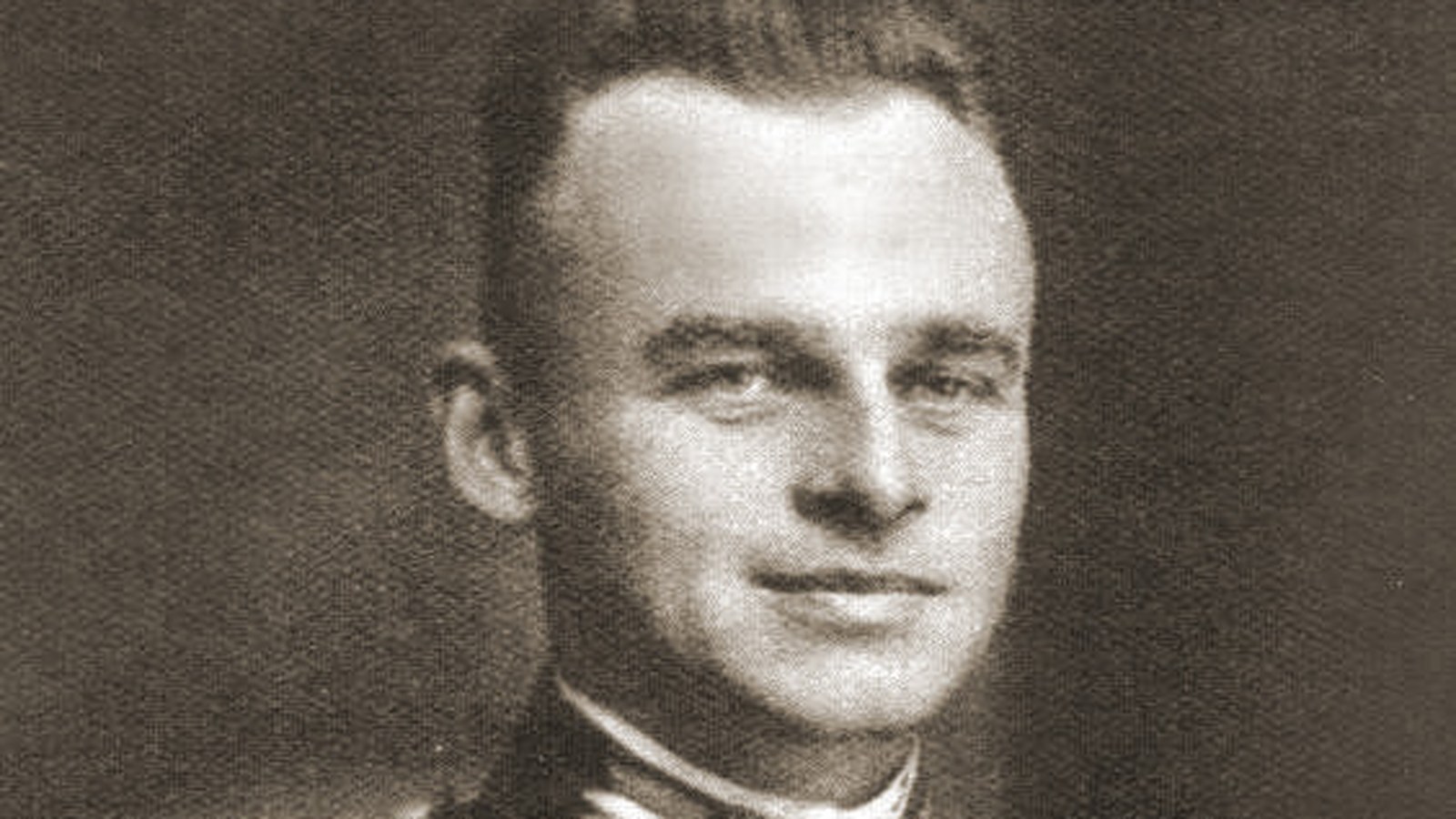
On 19 September 1940, Witold Pilecki allowed himself to be caught in a German roundup in Warsaw’s Żoliborz district. It was not a chance trap: the Polish resistance officer’s mission was to reach Auschwitz, see what was happening there and send word out.
He used the identity of Tomasz Serafiński. The transport reached Auschwitz on the night of 21–22 September; he was registered as prisoner 4859. The decision is often called voluntary, but it should be read as a clandestine operation at a time when knowledge of the camp was still fragmentary, not a complete picture of extermination.
Inside he helped form a network known as the Union of Military Organisation: aid for prisoners, morale, and reports smuggled to the Polish underground and, through it, to the Allies. This is not a cinematic escape story; it is intelligence work under terror.
Pilecki escaped in April 1943 with two other prisoners and wrote detailed reports. After the war Poland’s communist regime arrested him, tried him politically and executed him in 1948. The conviction was annulled after the fall of communism, and his memory was publicly restored.
The 86th anniversary belongs to resistance and the Holocaust, not to adventure heroes. The information he sent accumulated over time; it should not be read backwards as if, in September 1940, everything was already known.
The Auschwitz-Birkenau Memorial and Poland’s Institute of National Remembrance hold the file, the prisoner photograph and the reports. This text stays with the mission’s calendar and with the limits of what could be known then.
Image: Witold Pilecki, officer portrait / Wikimedia Commons, public domain. A period photograph, not the Żoliborz arrest and not the camp. Cropped to 16:9.
Source consulted: Witold Pilecki and resistance in the camp | Auschwitz-Birkenau Memorial; The Witold Pilecki portal | Institute of National Remembrance.



0 Comments
No comments on this article yet. Be the first!