
Amy Jade Winehouse was born in London on 14 September 1983. Today, 14 September 2026, she would have turned 43. She lived to 27. The main discography released in her lifetime is just two studio albums — enough, even so, to make her known around the world.
Winehouse brought together jazz, soul, R&B, pop and echoes of the 1950s and 1960s. The voice was immediately recognisable. The lyrics, personal and contemporary, dealt with relationships, break-ups, vulnerability and, at times, self-destruction — without this article quoting any copyrighted lines.
Childhood and the first album
She was born in north London, in a family where music mattered. She spent a period at Sylvia Young Theatre School and, from her teens, sang and wrote, with a clear interest in jazz. We do not repeat tabloid school anecdotes here: serious biographies place her young on London’s jazz scene.
In 2003 came Frank, the debut. British critics noted the voice and the jazz influence. It was the start of a reputation, not yet the international breakthrough.
Back to Black and a night of five Grammys
That came in 2006, with Back to Black. Songs that remain widely known include Rehab, Back to Black, You Know I'm No Good, Love Is a Losing Game and Tears Dry on Their Own. The sound recalled soul, 1960s girl groups and Motown, while the writing belonged to an artist of the 2000s.
At the 50th Grammy Awards in 2008, Winehouse won five prizes in a single night: Record of the Year and Song of the Year for Rehab, Best New Artist, Best Female Pop Vocal Performance (also Rehab) and Best Pop Vocal Album for Back to Black. That is not her entire Grammy tally: in 2012, after her death, the duet Body and Soul with Tony Bennett won Best Pop Duo/Group Performance.
Camden, fame and 23 July 2011
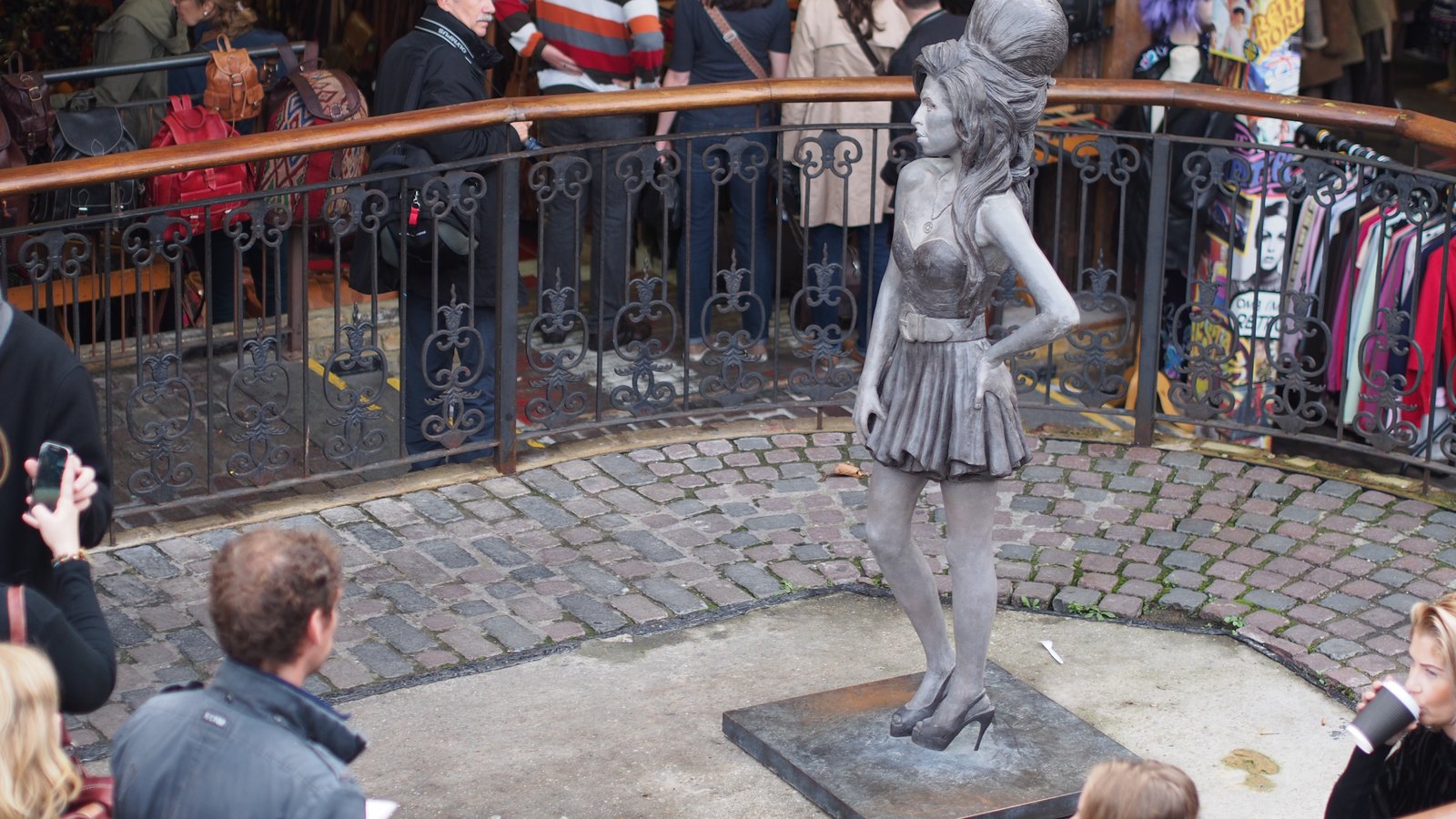
Winehouse remained closely tied to Camden, in north London. A bronze statue now stands in Stables Market, made by Scott Eaton and unveiled on 14 September 2014 — the day she would have turned 31, and the foundation’s third birthday, the Amy Winehouse Foundation confirms.
Success brought tabloid obsession with her private life. She struggled publicly with addiction, which sometimes overshadowed talk of the music. There is no place here for sensational detail. She died on 23 July 2011 at her home in Camden, aged 27. The official inquest recorded a verdict of misadventure: death was the unintended consequence of alcohol poisoning.
14 September: birth, last recording, foundation
Her last recording was with Tony Bennett, Body and Soul, at Abbey Road Studios in March 2011. The track was released on 14 September 2011, when she would have turned 28. Associated proceeds supported the Amy Winehouse Foundation, launched in the United Kingdom the same day by family and friends.
The foundation now works with children and young people: self-esteem, resilience, informed choices, emotional wellbeing, and education about alcohol and drugs. The legacy is not only sales. She showed that a contemporary artist could have massive international success with jazz, soul and classic R&B. After her death came the collection Lioness: Hidden Treasures (2011), drawn from existing recordings. Her image stayed at 27; the music moved on. Each 14 September, her birthday is also tied to the foundation’s work.
Photo: the bronze statue of Amy Winehouse at Stables Market, Camden, sculpted by Scott Eaton and unveiled in 2014. Photograph: Neil Crump, October 2014, Wikimedia Commons, CC BY 2.0. This is not a photograph of the singer.
Source consulted: Amy Winehouse Foundation; Body and Soul — Tony Bennett; Camden statue; Grammys: 50th Annual Grammy Awards.







0 Comments
No comments on this article yet. Be the first!