


An Australian survey links burnout to workplace “system friction,” not only to the person who tires. ABC reported it on Monday, 19 October. The “State of Workplace Burnout” report is from the Infinite Potential think tank, with Beyond Blue and the University of Technology Sydney. 999 respondents. It is not a diagnosis and not medical advice.
WHO treats burnout as an occupational phenomenon, not a disease: exhaustion, cynical distance from the job, reduced professional efficacy. All three, says study author John Chan. Exhaustion alone is not enough. Paula Brough of Griffith University, who did not work on the survey, warned that the sample is small and the reported level a little higher than she would expect, but that a link to the work environment is not new.
Chan puts the gap between low-burnout and high-burnout organisations on bad process and bad technology. Anna Stephens of UTS talks of clumsy online systems, bureaucracy, unclear instructions and pointless meetings. In the survey data, that friction means 84% higher odds of burnout. Without job security, 68% of respondents report burnout, against 20% of those who feel very secure.
Amlan Sharma, a 38-year-old occupational therapist, describes high demand, time pressure, interruptions. He moved to self-employment and cut his hours. “I’m not the problem,” he says. His story is illustration, not a statistic. Brough notes that public-facing and high-risk industries, from bus drivers to emergency crews, usually show higher rates; the survey does not break out by sector.
Fragmentation of the day, switching meetings without control, is a second thread. Daily hassles, “red tape,” can grind without reaching the burnout end. A high workload, Brough says, does not automatically get there if support and control are present. The ABC piece carries a note: general information, not professional advice for anyone’s case.
The research moves the talk off individual “resilience” onto the office. It remains a survey of 999 people, not a census. WHO has not changed the definition. Employers, in Chan’s words, hold the environment; people still need to speak when the process is broken. That is the authors’ conclusion, not a sick-leave instruction.
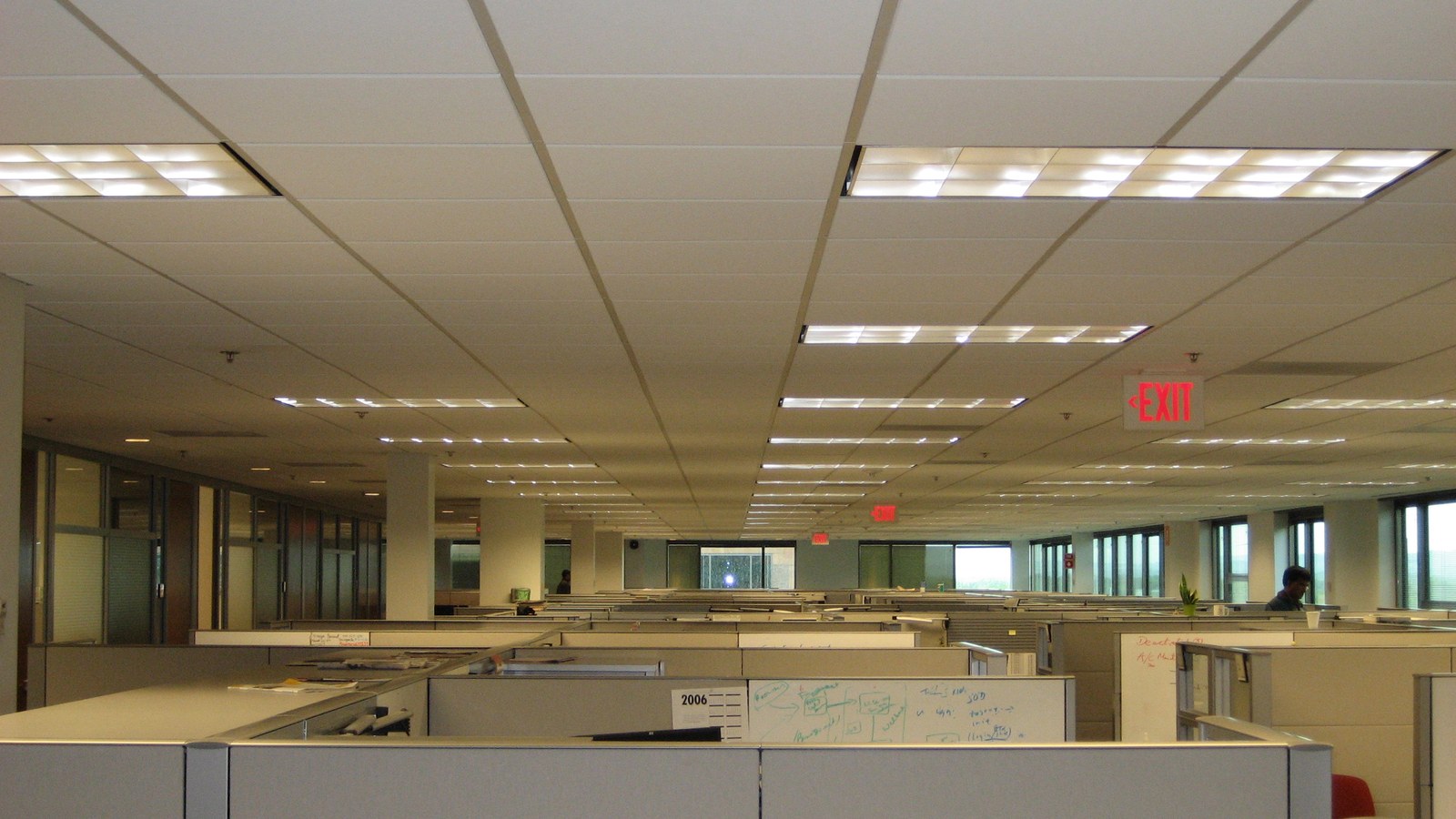
Image: Larsinio, cubicle land, public domain, Wikimedia Commons; an archive office, not a 2026 survey workplace.
Sources consulted: Survey suggests one-third of us are burnt out - ABC News; Burn-out an occupational phenomenon - World Health Organization.











0 Comments
No comments on this article yet. Be the first!