


In London, Moscow and Washington, on 10 April 1972, the Convention on the Prohibition of the Development, Production and Stockpiling of Bacteriological (Biological) and Toxin Weapons and on their Destruction (Biological Weapons Convention / BWC) opens for signature. Depositaries: the United States, the United Kingdom and the Russian Federation (successor to the USSR). Languages: Chinese, English, French, Russian and Spanish.
The BWC bans development, production, acquisition, transfer, stockpiling and use of biological and toxin weapons. It is the first multilateral disarmament treaty to ban an entire category of weapons of mass destruction. It enters into force on 26 March 1975 after 22 ratifications, including the three depositaries; duration is unlimited.
Negotiated in Geneva (1969–1972) after the NPT; the British proposal to separate chemical from biological, U.S. support after Nixon ended the offensive program (1969) and identical U.S.–Soviet drafts in August 1971 open the way. It supplements the 1925 Geneva Protocol, which banned use but not possession.
At documentation: 189 parties, 109 historical signatories. It lacks formal verification and a strong secretariat; notable violations include the Soviet program and Ba’athist Iraq. Review Conferences supplement the interpretation of its 15 articles.
The official text is published by the UN / UNODA; Article VI (complaint to the Security Council) has been invoked only once, by Russia in 2022.
The Biological Weapons Convention of 10 April 1972 remains the global norm against biological weapons, despite the absence of a CWC-style verification regime.
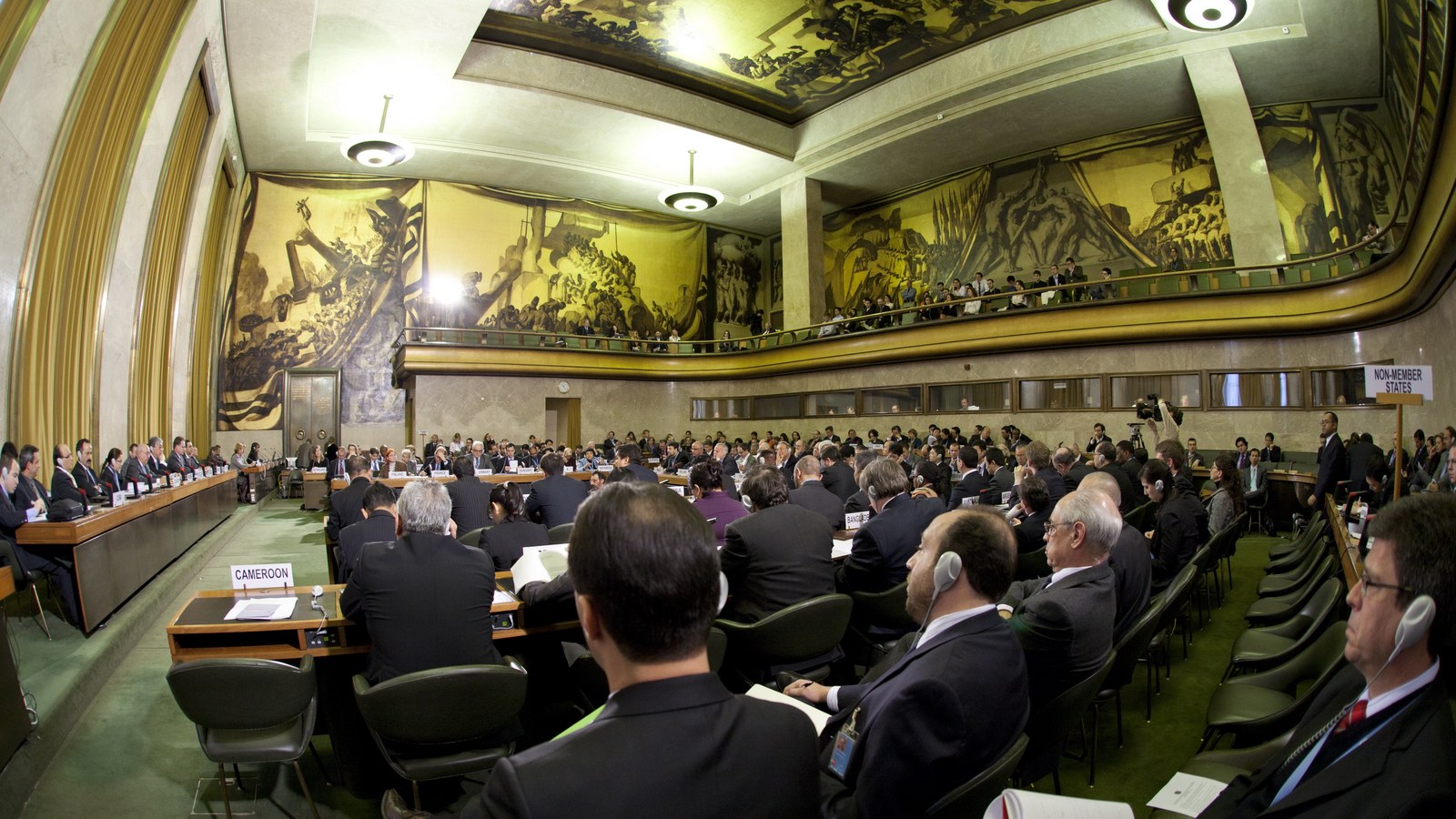
Image: Palais des Nations / disarmament; Wikimedia Commons. Cropped to 16:9.
Source consulted: Biological Weapons Convention. Treaty text: Biological Weapons Convention (UNODA).











0 Comments
No comments on this article yet. Be the first!