


On 2 December 1997, in Dhaka, the National Committee on Chittagong Hill Tracts, on behalf of the government of the People’s Republic of Bangladesh, and the Parbatya Chattagram Jana Sanghati Samiti, on behalf of the inhabitants of the region, concluded the Chittagong Hill Tracts Accord, in four parts (A, B, C, D). The instrument is framed in Bengali; the Bengali date is 18 Agrahayan 1404. Signatures: Abul Hasanat Abdullah, Convenor of the National Committee, and Jyotirindra Bodhipriya Larma, President of the PCJSS. The framework: the Constitution of Bangladesh, and full and firm confidence in the sovereignty and integrity of Bangladesh. Part A, point 4: the agreement comes into effect from the date of signing and remains valid until all the steps are executed.
Part A recognises the need to protect the characteristics of the Chittagong Hill Tracts as a tribal inhabited region and to attain its overall development. Concerned acts, rules and regulations are to be changed as soon as possible. An Implementation Committee: a member nominated by the Prime Minister as Convenor, the Chairman of the Task Force, and the President of the PCJSS.
Part B amends the 1989 Hill District Local Government Council Acts for Rangamati, Bandarban and Khagrachhari: the name becomes Hill District Council, the three-year term becomes five years, and a “non-tribal permanent resident” is a person who is not a tribal but has legal land in the hill district and generally lives there at a specific address. No land within the hill district, including land suitable for settlement, shall be settled, leased, purchased, sold or transferred without prior approval of the Council, except reserved forests, the Kaptai Hydroelectricity Project, Bethbunia Earth Satellite Station, state-owned industries and factories, and lands recorded in the name of government. The Council appoints Hill District Police of the rank of Sub-Inspector and below, with priority to tribals. Added functions include land and land management, local police, tribal law and social justice, environment, local tourism and jhum cultivation.
Part C: a Regional Council of 22 members including the Chairman, elected indirectly by the Hill District Councils. The Chairman must be a tribal, with status equivalent to a State Minister. Two-thirds of the members are tribal: five Chakma, three Marma, two Tripura, one Murung and Tanchangya, and one from the Lusai, Bawm, Pankho, Khumi, Chak and Khiyang tribes; six non-tribal members, plus women’s seats. Tenure of five years. The Council coordinates the three districts, general administration, law and order, disaster relief, NGOs, tribal laws and social justice, and licences for heavy industry. The government shall consult the Council on laws regarding the CHT. Until elections, an interim Regional Council.
Part D: repatriation of tribal refugees from India’s Tripura State, begun on 28 March 1997 under the 9 March 1997 package, shall continue; the Task Force shall rehabilitate internally displaced tribal people. A Land Commission headed by a retired justice, with no appeal. Within 45 days the PCJSS shall submit lists of all its members, including the armed ones, and the arms in its possession; amnesty, withdrawal of cases, and Taka 50,000 to each returning family. Temporary camps of the military, Ansar and Village Defence Party shall be taken back by phases to permanent installations, except the BDR and the permanent cantonments (the three district headquarters plus Alikadam, Ruma and Dighinala). A ministry on Chittagong Hill Tracts Affairs, with a Minister from among the tribals and an Advisory Council that includes the Chakma, Bohmang and Mong Rajas.
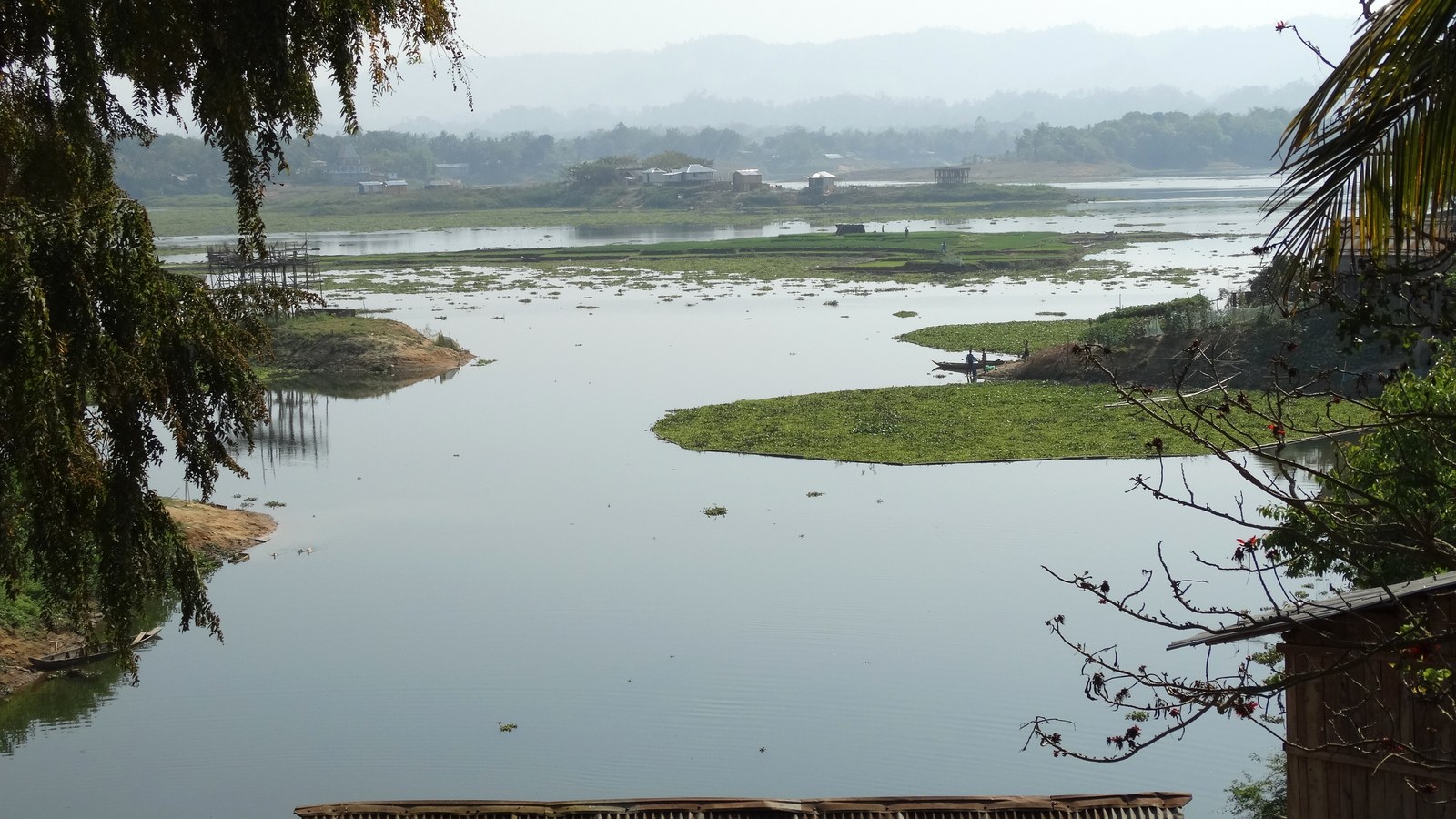
Kaptai Lake at Rangamati, in the Chittagong Hill Tracts. The region of the Accord, not the signing hall. Wikimedia Commons, CC BY-SA 2.0, Adam Jones.
For context: Chittagong Hill Tracts Peace Accord. The text: UN Peacemaker, Chittagong Hill Tracts Accord.











0 Comments
No comments on this article yet. Be the first!