


On 26 November 1968, the United Nations General Assembly adopted, by resolution 2391 (XXIII), the Convention on the Non-Applicability of Statutory Limitations to War Crimes and Crimes Against Humanity. Article V opens it for signature until 31 December 1969; the UN Treaty Collection notes that it was open from 16 December 1968. English, French, Spanish, Russian and Chinese, equally authentic. Depositary: the Secretary-General. Article VIII: it enters into force on the ninetieth day after the deposit of the tenth instrument of ratification or accession. Entry into force: 11 November 1970. It is not the 1974 European Convention on the same subject.
The preamble: none of the solemn declarations, instruments or conventions relating to the prosecution and punishment of war crimes and crimes against humanity made provision for a period of limitation. Those crimes are among the gravest in international law. The application of municipal limitation rules for ordinary crimes prevents prosecution and punishment. The Convention affirms in international law the principle that there is no period of limitation, and seeks its universal application.
Article I: no statutory limitation shall apply, irrespective of the date of commission. War crimes as defined in the Charter of the International Military Tribunal, Nuremberg, of 8 August 1945, particularly the grave breaches enumerated in the Geneva Conventions of 12 August 1949. Crimes against humanity, whether in time of war or of peace, as defined in that Charter; eviction by armed attack or occupation and inhuman acts resulting from the policy of apartheid; and the crime of genocide as defined in the 1948 Genocide Convention, even if such acts do not constitute a violation of the domestic law of the country in which they were committed. Article II: the Convention applies to representatives of State authority and private individuals who, as principals or accomplices, participate in or who directly incite others to the commission of those crimes, or who conspire to commit them, irrespective of the degree of completion, and to representatives of State authority who tolerate their commission.
Article III: domestic measures, legislative or otherwise, to make possible extradition in accordance with international law. Article IV: measures, in accordance with constitutional processes, to ensure that statutory or other limitations shall not apply to the prosecution and punishment of the crimes in articles I and II and that, where they exist, such limitations shall be abolished. Article IX: after ten years from entry into force, a request for revision may be addressed to the Secretary-General; the General Assembly shall decide upon the steps, if any, to be taken. Article X: the Secretary-General shall inform States of signatures, instruments and the date of entry into force.
It bears the date of the adopting resolution.
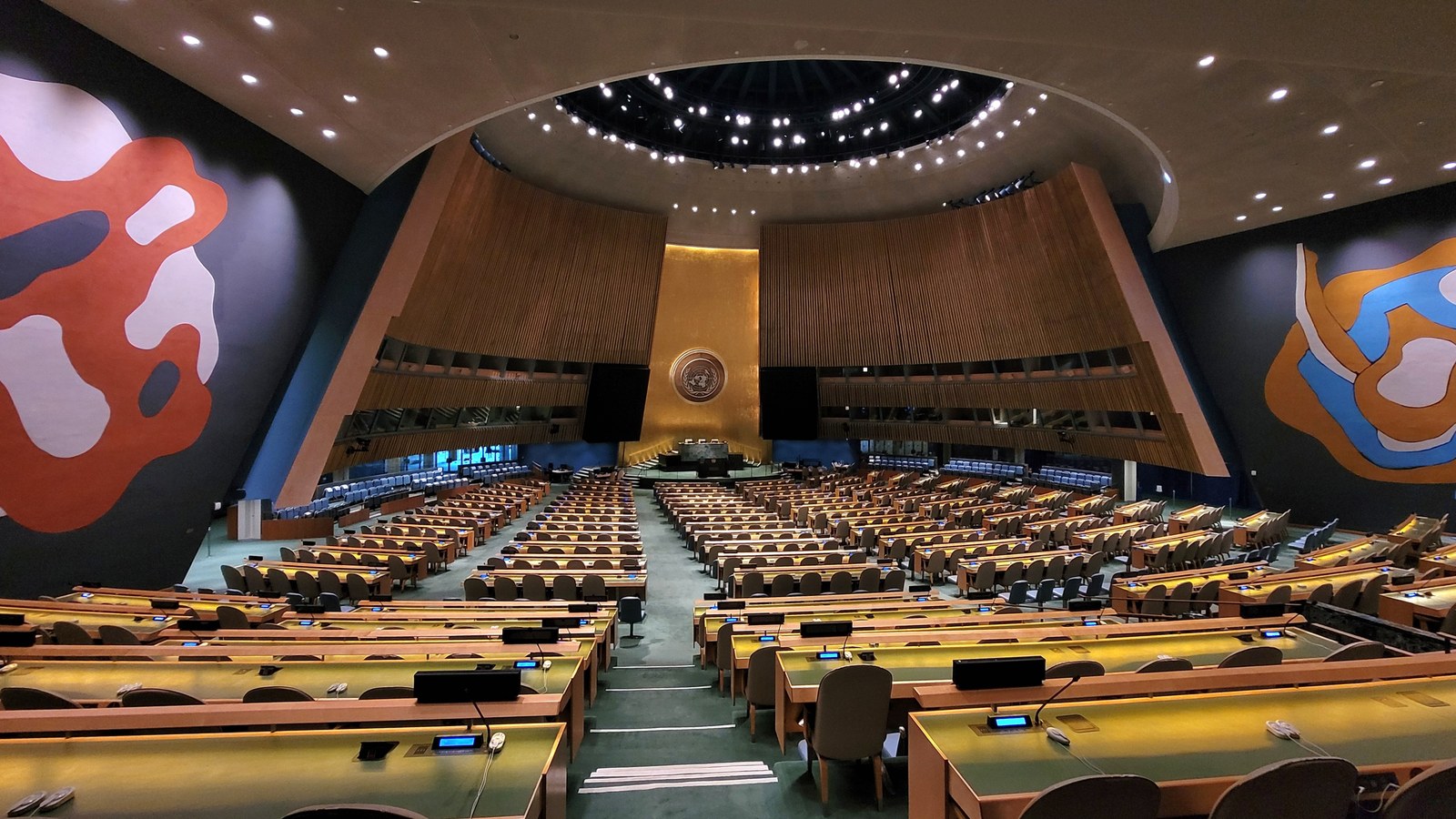
United Nations General Assembly Hall, New York. The place of adoption, not a signing ceremony. Wikimedia Commons, CC BY-SA 4.0.
For context: Convention on the Non-Applicability of Statutory Limitations to War Crimes and Crimes Against Humanity. The text: UNTS, Convention on the non-applicability of statutory limitations.











0 Comments
No comments on this article yet. Be the first!