
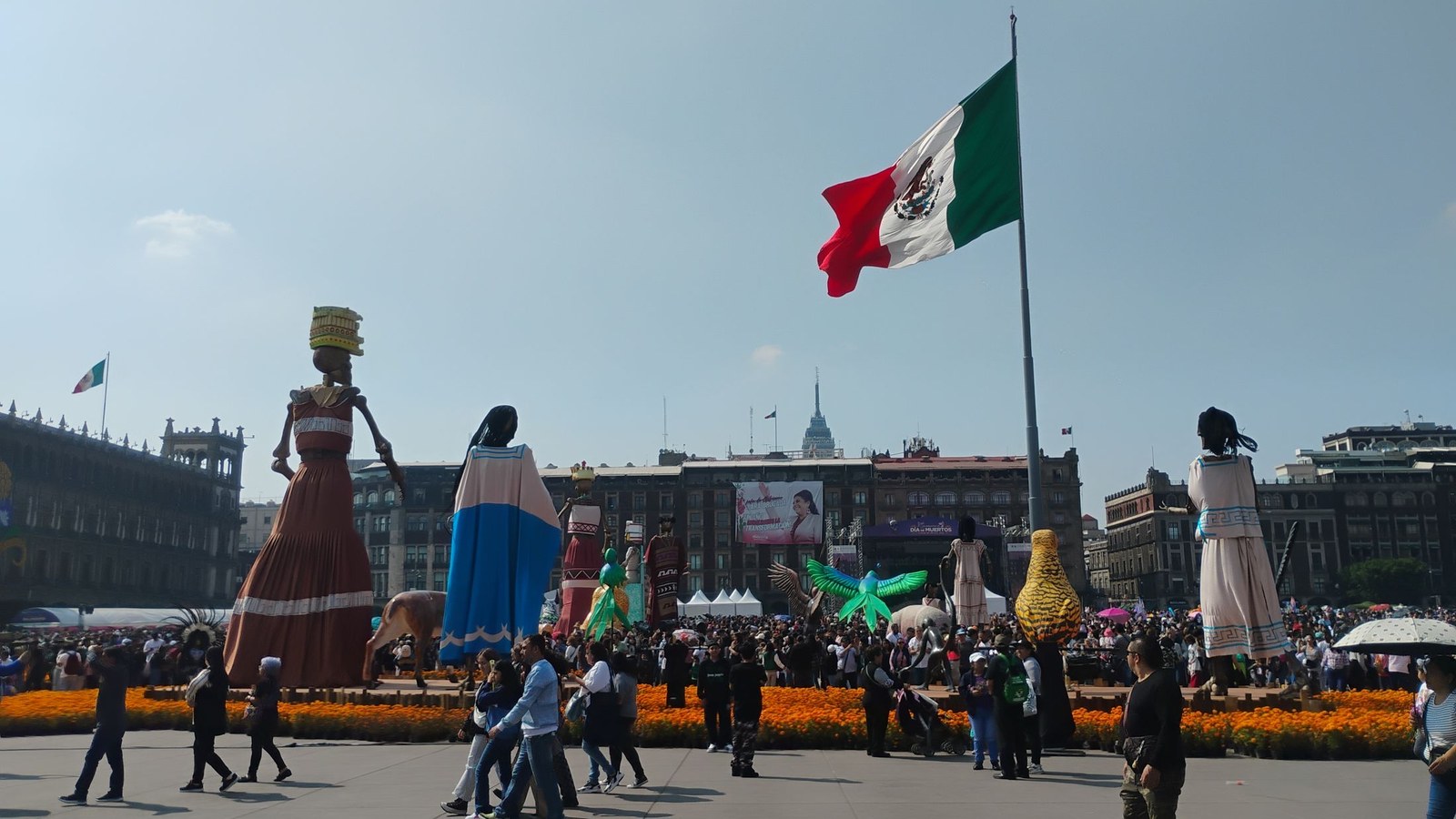
Día de Muertos is marked in Mexico and Mexican communities around 1 and 2 November. Families remember the dead through altars, flowers, candles, photographs and offerings with personal meaning.
The tradition combines Indigenous practices and Christian elements developed over time. Rituals, foods, decorations and days devoted to children or adults differ from region to region. A local practice should not be generalised to the whole country.
UNESCO has inscribed the Indigenous festivity dedicated to the dead on the Representative List of the Intangible Cultural Heritage of Humanity. The recognition concerns communities’ living practices, not only images of decorative skulls.
Cities may organise parades, exhibitions and public installations, but these do not exhaust the observance. Some cemeteries and ceremonies remain family spaces. Visitors and photographers should treat them with respect and not intrude on private ritual.
Public programmes for 2026 should be checked for each locality. Events in Mexico City, Oaxaca or Michoacán are not identical and do not replace a household ofrenda.
Día de Muertos is not Halloween. The two observances overlap in the calendar in part, but they have different origins, meanings and gestures. Reporting should keep that distinction and not reduce commemoration to a tourist show.
Image: Ferfive, Zócalo, Mexico City, 2 November 2025, CC BY 4.0, Wikimedia Commons. A public display, not a cemetery and not the 2026 observance. Cropped to 16:9.
Source consulted: Indigenous festivity dedicated to the dead — UNESCO Intangible Cultural Heritage.
0 Comments
No comments on this article yet. Be the first!