
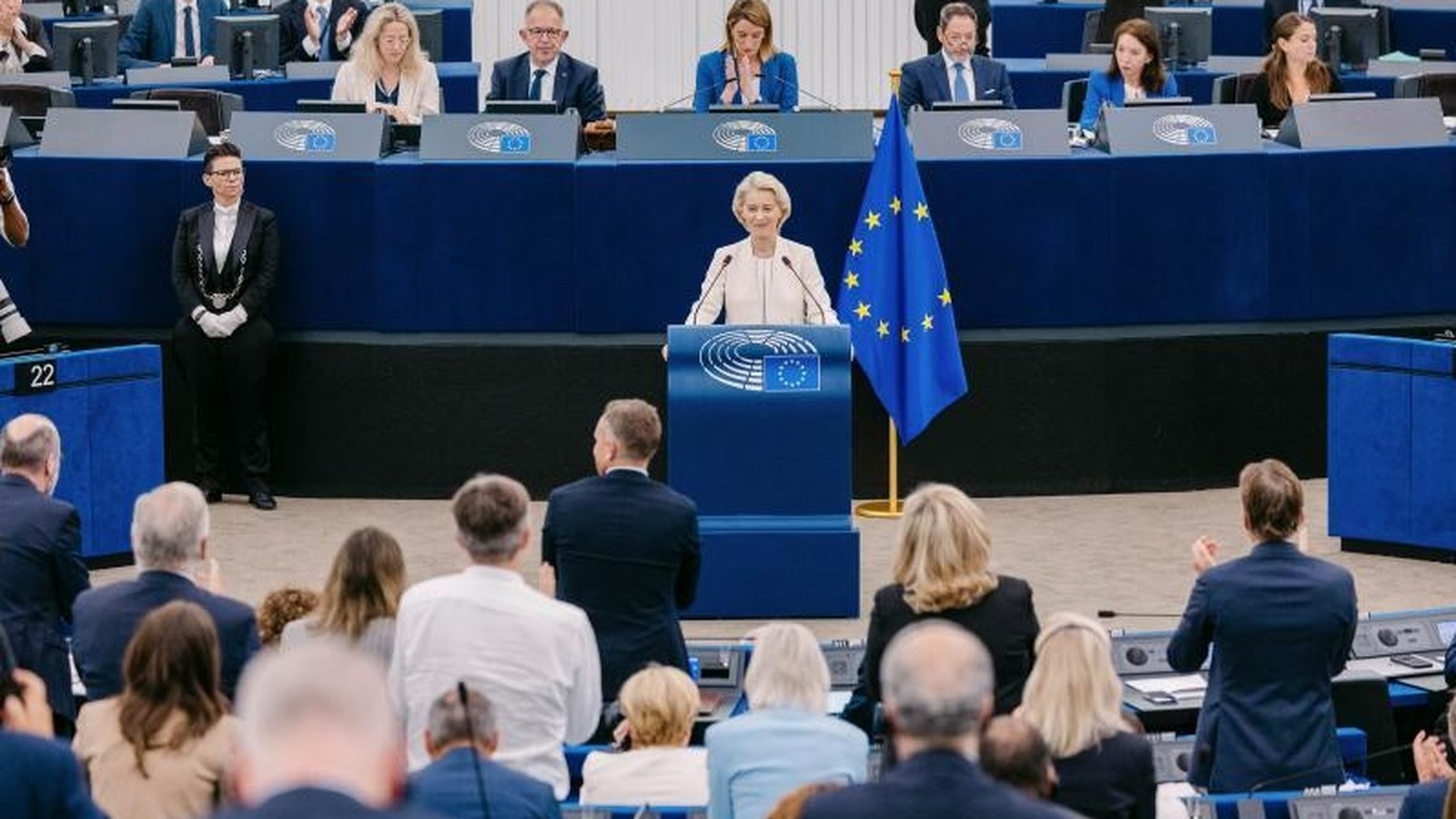
The European Union has announced an international connectivity project intended to link the South Caucasus and Central Asia directly to the European market — what Ursula von der Leyen, in her State of the Union address on 16 September 2026, called the “Middle Corridor”.
Through the Global Gateway strategy, the Commission aims to “crowd in” up to €12 billion in public and private investment. The objectives presented are to diversify routes, triple trade flows and slash freight transit times by 2030. Von der Leyen also announced a Regional Connectivity Summit to be organised with Bulgaria’s prime minister.
The €12 billion figure is not a grant already approved and paid from the EU budget. It is a target for mobilising public and private capital. Likewise, tripling trade and cutting transit times are 2030 goals, not results already achieved. The specific infrastructure projects, precise financing sources and timetable will need to be followed in later Commission and Global Gateway documents.
The stakes are both economic and strategic. Trade between Europe and Asia depends on corridors exposed to geopolitical risk and logistical bottlenecks. A more efficient trans-Caspian route would offer an additional option for moving goods. The announcement shows that infrastructure between Europe and Central Asia is rising on the Union’s trade agenda, alongside recent figures on the euro-area trade surplus.
Image: European Union, 2026 / Audiovisual Service (P-070449). Official speech photograph, not a Caucasus rail corridor. Cropped to 16:9.
Source consulted: 2026 State of the Union Address by President von der Leyen (SPEECH/26/1868).



0 Comments
No comments on this article yet. Be the first!