


On Sunday, Mediafax reported that PSD deputy Mihai Fifor, in a Facebook post, is asking NATO for a stronger response after commercial ships were hit by drones near the Romanian coast. He writes that the Black Sea “is not a periphery of European security”.
For Saturday evening, the Defence Ministry statement, quoted by G4Media, says civilian maritime authorities reported two strikes. The tanker Evia Petrol V, under the Greek flag, was hit around 21:10, about four nautical miles east-southeast of Sulina, and caught fire. Around 21:45 the bulk carrier Marsol, about five nautical miles southeast of the Sulina Canal, was hit as well, also with a fire on board. The crews put the fires out. There were no casualties. The statement does not say who sent the drones.
Fifor, in Mediafax’s account, also counts the cargo ship Larissa 1, hit the night before, near the coast. Actualul dates that strike to Friday 13 November, around 21:40, 6.8 nautical miles northeast of Sfântu Gheorghe: Palau flag, the cargo crane destroyed, no fire and no injuries. On Sunday, Defence Minister Radu Oprea wrote that three ships were hit on Saturday night and named Evia Petrol V, Marsol and Ali Najafov, according to ProTV. The two lists do not match.
Around Saturday’s strikes, the ministry described an aerial target east of Snake Island, two F-16s launched from the 86th Air Base at Fetești, and an RO-Alert message at 20:51 for eastern Tulcea county. The air alert was lifted at 21:37. Fifor says the troops followed procedure and that his argument is not about their reaction, but about allied operational support for commercial ships.
His questions, in Mediafax: who, and with what means, protects commercial navigation in the territorial waters together with Romania; what extra capabilities NATO can move; how measures already agreed can be sped up. He writes that on 20 October, at Romania’s request, the North Atlantic Council discussed Black Sea security and that NATO announced stronger maritime surveillance, with aircraft, radar, drones and information sharing. On 22 October, he says, the Supreme Defence Council looked at surveillance, counter-drone capacity and closer cooperation with allies. That is how he recounts them.
Fifor, again through Mediafax, ties Ursula von der Leyen’s visit to Bucharest on 9 November to 50 million euro for the Romanian-Bulgarian regional maritime security centre and 10 million for search and rescue. He then writes: “Five days later, two commercial ships are hit by drones in Romanian territorial waters.” The sums appear in his post.
His closing passage describes the Black Sea as the place where the consequences of the war Russia started against Ukraine, NATO’s interests, energy security and the freedom of navigation meet. He asks for an allied response “equal to” that importance, and for extra means to protect commercial ships. In the quotes Mediafax carries, he does not name the state that launched Friday’s and Saturday’s drones. Actualul notes that no Romanian authority had attributed those strikes by the time of its piece.
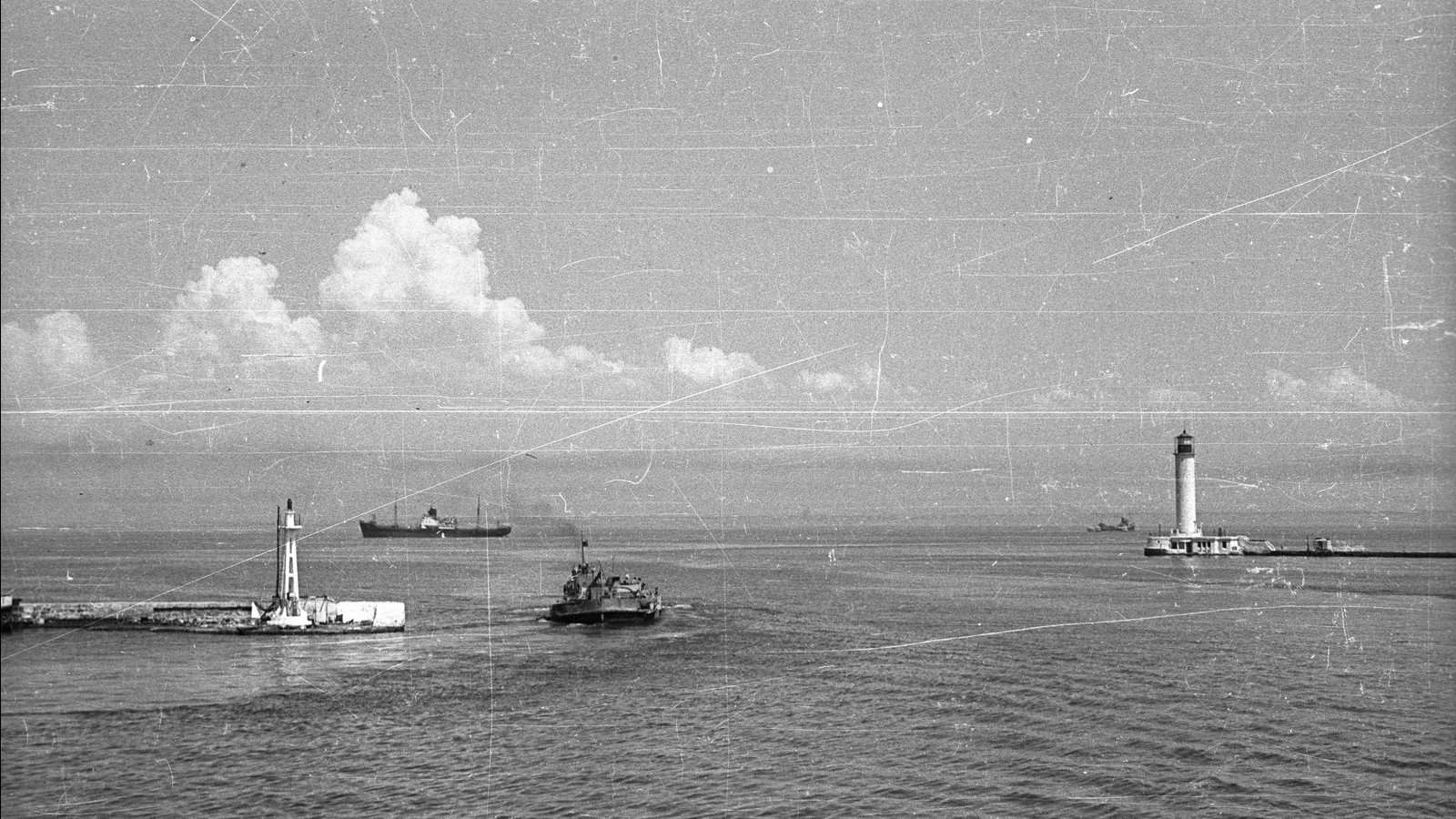
The photograph shows the mouth of the Sulina branch, where the Danube delta meets the Black Sea. It is a Fortepan archive image, on Wikimedia Commons under a CC BY-SA 3.0 licence. It is not Saturday’s ships, and it is not the fires.
Source consulted: Mihai Fifor cere un răspuns din partea NATO după atacurile asupra navelor din apele României: Marea Neagră nu este o periferie a securității europene.







0 Comments
No comments on this article yet. Be the first!