
The Greenland and Antarctic ice sheets together lost 11,309 ± 565 billion tonnes of ice between 1979 and 2023 — about 11.3 trillion metric tonnes — according to the IMBIE assessment published in Scientific Data and presented by ESA on 16 September. Some US news reports converted the figure to 12.5 trillion US tons; in metric units the reference remains 11.3 trillion tonnes. The estimated contribution to global sea level is 31.4 ± 1.6 millimetres, or about 3.14 centimetres.
The team combined 42 independent estimates from 27 satellite missions, including Landsat, CryoSat, Sentinel and GRACE. The record reaches back to 1972 for Greenland and 1979 for Antarctica. Greenland accounted for about 1.81 centimetres of sea-level rise, Antarctica for 1.33 centimetres.
About 84% of the combined loss came from glaciers speeding up and discharging ice into the ocean, not from surface melt (about 16%). Warmer ocean water can melt ice from below and change flow. The trend is not a straight line: weather and snowfall can temporarily slow losses, including an apparent pause noted for 2020–2023, which the authors link to short-term variability rather than a reversal.
The ice sheets remain the largest source of uncertainty in sea-level projections. The IMBIE dataset is an observed mass budget, not a climate model. It does not say how high the sea will be in 2100; it says how much ice was lost through 2023 and by which route — dynamics versus the surface.
Diego Fernández of ESA stressed the importance of long-running missions for testing models. The paper is “Mass balance of the Greenland and Antarctic ice sheets from the 1970s to 2023”. The figures above are the authors’ metric tonnes, not the US-ton conversion used in some press summaries.
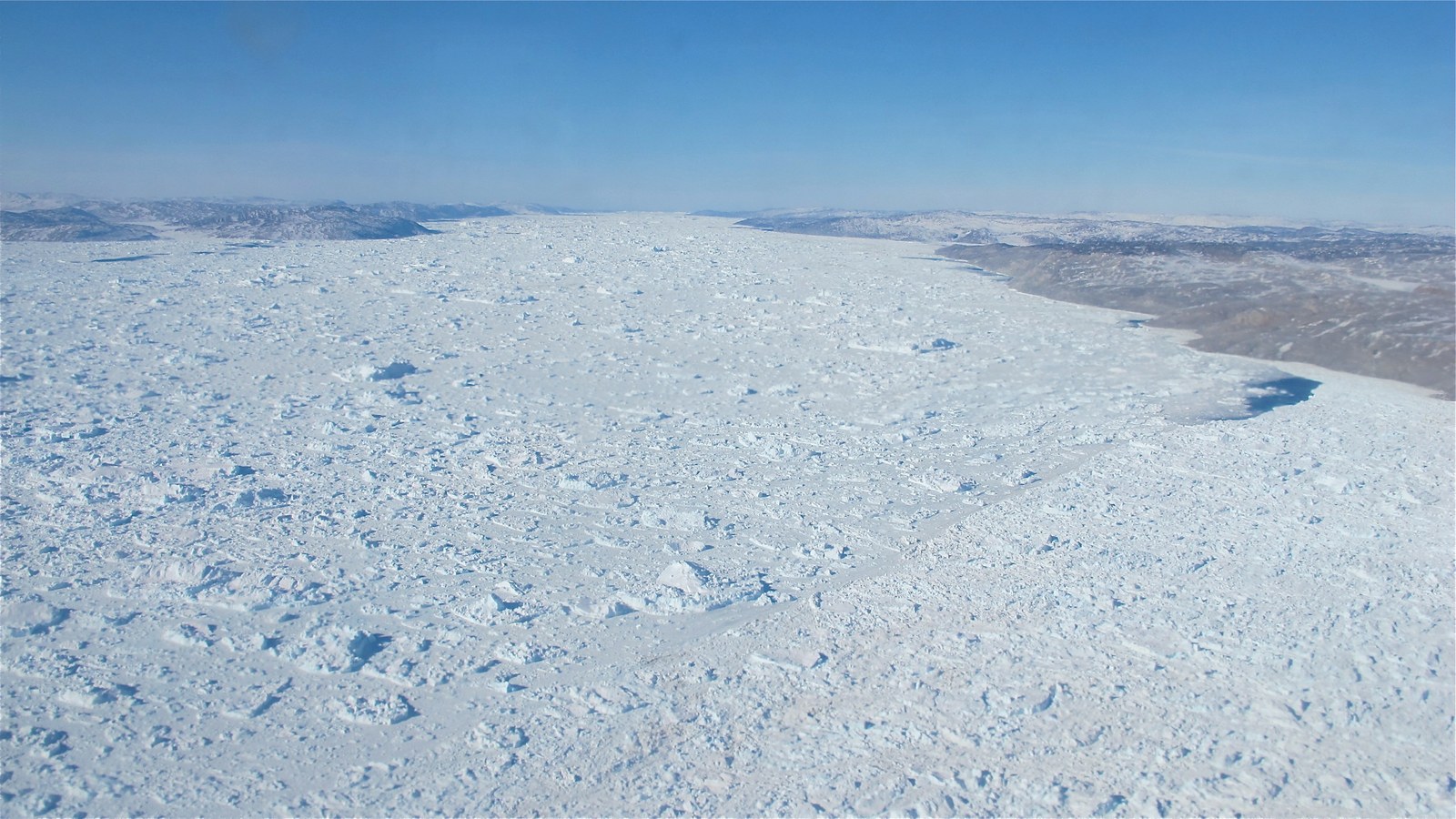
Photo: NASA / Jim Yungel, public domain. View of Jakobshavn fjord, Greenland. An illustration of the ice sheet, not an IMBIE graphic. Cropped to 16:9.
Source consulted: Faster-flowing glaciers fuel decades of polar ice loss (ESA); Mass balance of the Greenland and Antarctic ice sheets from the 1970s to 2023 (Scientific Data).









0 Comments
No comments on this article yet. Be the first!