
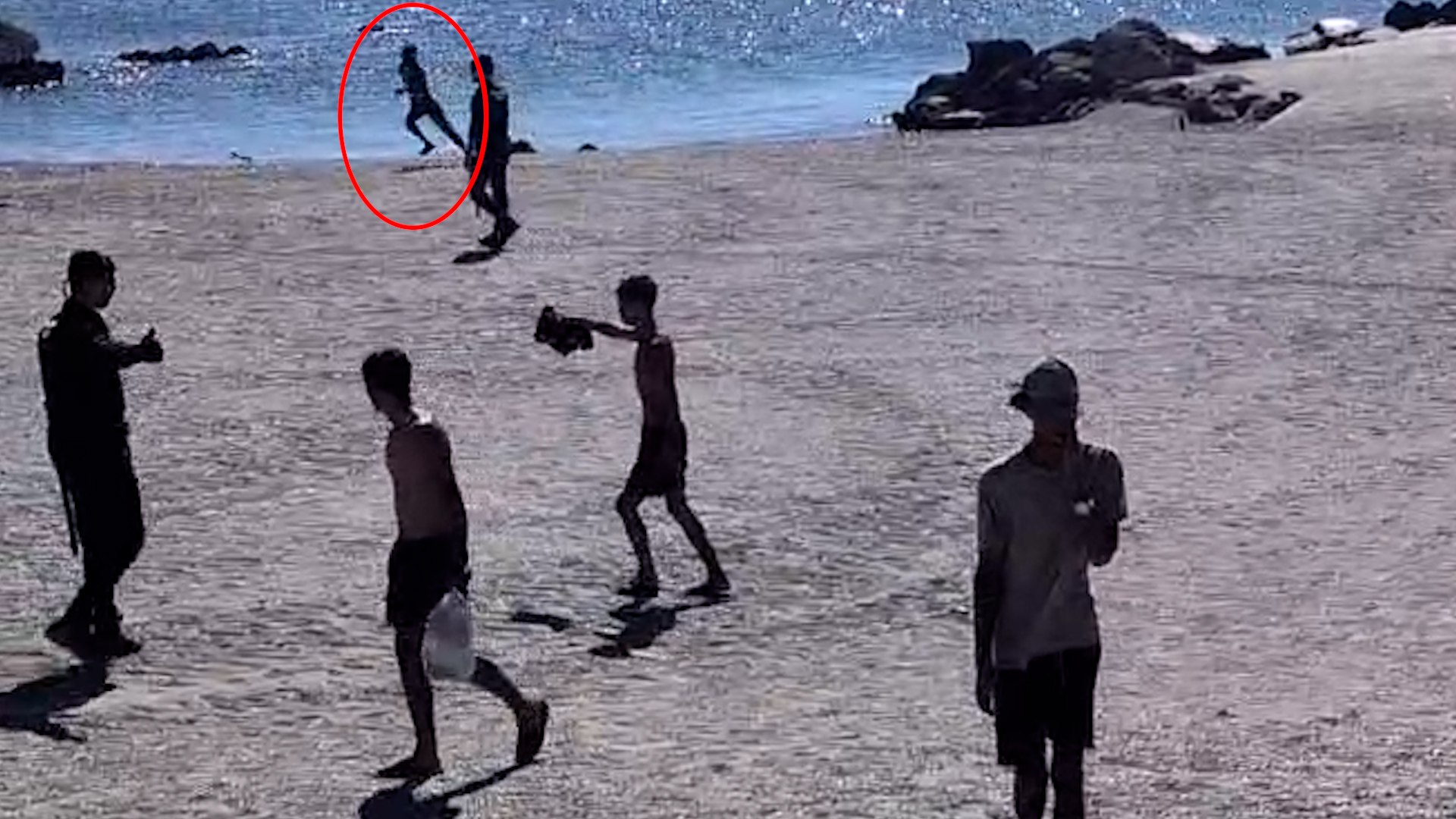
The Guardia Civil is attempting to forcibly return migrants from Ceuta, a Spanish enclave on the northern coast of Morocco, in a complex migration crisis. At 11:15, agents of the Guardia Civil implemented a plan to reduce the number of migrants who "roam" through the city. In a critical moment, a group of young Maghrebi migrants was led to the seafront, where they were surrounded by the Civil Guard.
The migrants tried to avoid their forced return, resisting and pleading for help. One individual managed to evade the operation, while others were surrounded and forcibly returned to the border. In a moment of resignation, a young man accepted the order and was led to the seafront by two Civil Guard officers.
While these events unfolded, the President of Ceuta, Juan Jesús Vivas (PP), declared on Televisión Española that there are still 6,000 migrants "roaming" through the city and who "have not yet had their needs met." He emphasized that human rights are respected in Ceuta, despite the ongoing migration crisis that seems to be eroding trust.
The migration crisis in Ceuta appears to be a contentious issue, with the presence of migrants who "roam" through the city and the forced repatriation efforts of these individuals. In a tense context, local authorities and law enforcement are trying to find solutions to maintain public order and safety, while migrants are attempting to protect their situation.
The operation to forcibly return migrants has sparked controversy and debate. Some argue that the measures taken by the Guardia Civil are necessary to maintain order, while others believe that such actions are inhumane and violate basic human rights. The situation in Ceuta highlights the broader challenges faced by European countries in managing migration flows.
The tensions surrounding the migration crisis in Ceuta have led to increased scrutiny of the Guardia Civil's methods. Human rights organizations have expressed concern over the forced returns and the treatment of migrants. The Spanish government has been under pressure to find more humane and sustainable solutions to the migration issue.
In the face of these challenges, the Spanish authorities are exploring various strategies to address the migration crisis in Ceuta. These include improving living conditions for migrants, enhancing diplomatic efforts with Morocco, and seeking international cooperation to manage migration flows more effectively.
The complex nature of the migration crisis in Ceuta has also raised questions about the role of the European Union in addressing the broader issue of migration. The situation in Ceuta is seen as a microcosm of the challenges faced by many European countries in dealing with the influx of migrants and refugees.
As the situation in Ceuta continues to evolve, there is a growing awareness of the need for a comprehensive approach to migration that balances the need for security with the protection of human rights. The ongoing efforts of the Guardia Civil and local authorities to manage the crisis highlight the challenges and complexities involved in addressing this global issue.
Source consulted: La Guardia Civil busca a los 6.000 inmigrantes que "deambulan" por Ceuta para devolverlos por la fuerza a Marruecos






0 Comments
No comments on this article yet. Be the first!