


The Mexican documentary “Aquí donde arde el fuego”, in English “Here Where the Fire Burns”, has its world premiere in the international competition of the International Documentary Film Festival Amsterdam. IDFA presents it as a 97-minute black-and-white film, in Haitian Creole and Spanish, directed by Juan Manuel Sepúlveda. The first public screening in the programme is on Sunday 15 November, at the Tuschinski. On Wednesday 18 November the screening is followed by a talk with the director. Fragua Cine produced it, with Mariana Mendivil, and it has support from FOCINE, the programme of the Mexican Film Institute.
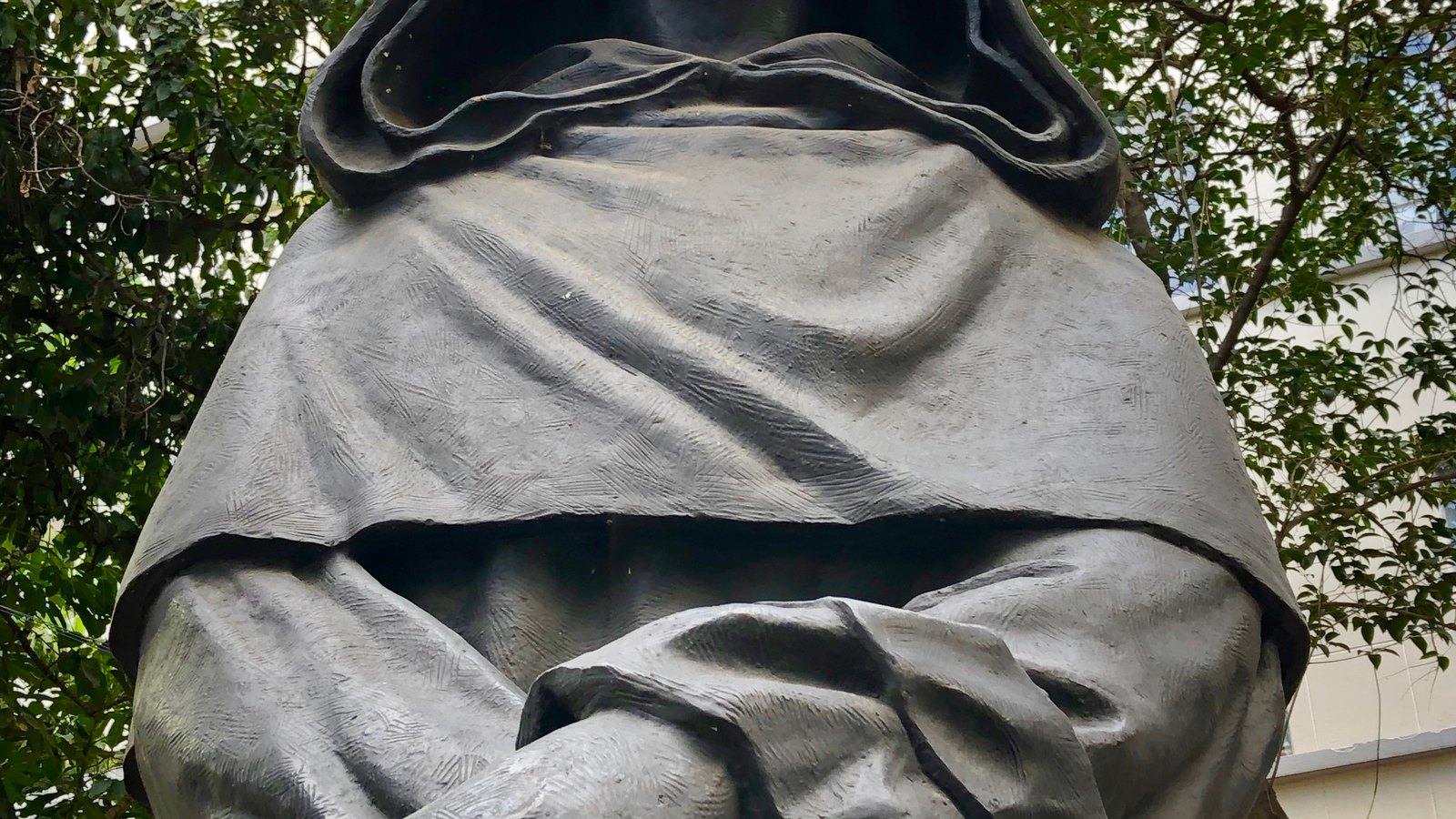
El Universal writes that in 2024 a number of Haitians were staying in Giordano Bruno square, in the Juárez neighbourhood of Mexico City, waiting for the papers that would let them continue towards the United States. IMCINE places the camp between February and June 2024. In the IDFA note, the tents are packed into a small square beneath the statue of the Italian philosopher burned at the stake in 1600. People burn incense at the foot of the statue and ask him to bless their visa applications.
Three women fleeing violence caught Sepúlveda’s attention. Gaceta UNAM names them as Mani, 29, Wisena, 39, and Roseló, 20, and writes that they left to escape violence and hunger. In the camp they cook, and the film follows their day: dishes, pots, water, rain on the tents, arguments, laughter, closeness and worry about what comes next. IDFA says the Haitians in the square had fled gang violence and poverty.
The director told El Universal that he filmed almost every day for five months, without knowing Creole, while the community did not know Spanish. “When I read that they were there, it hit me at once. I thought something interesting was happening, something that let me look at migration, a subject that has interested me in my films, even at a cosmic, metaphysical level,” he says. He wrote letters in Spanish, later translated into Creole, so they would know he made films and that he respected their effort. He did not tell them what to do and he did not interrupt their day. “It was a leap of trust. I knew that if I waited, I would have material.”
On the place itself, Sepúlveda ties the camp to the fate of Giordano Bruno: “They burned him because he said the universe has no final frontier and no absolute centre, that everything moves in space and that all heavenly bodies have a soul, and that it is their nature to move. It seemed to me a very beautiful historical irony.” The film, also in black and white, catches the walk for water in the nearby streets, a moment when one of them does not manage it, and a few verbal arguments.
El Universal also carries the way the filming fitted their needs. If someone was ill, Sepúlveda took them or went to the pharmacy. When the day came for them to be taken out of the square, people asked him what was happening and what would be done to them. The director hopes the film will also screen at Mexican festivals next year. His earlier documentaries include “La frontera infinita” and “La balada del Oppenheimer Park”.
Image: Wikimedia Commons — the Giordano Bruno monument in Mexico City, 5 February 2020 (Armando Olivo Martín del Campo, CC BY-SA 4.0). The photo shows the statue, not the 2024 camp, and it is not a frame from the film.
Sources consulted: “Aquí donde arde el fuego”, the documentary filmed without knowing the language — El Universal; Here Where the Fire Burns — IDFA; Haitian devotion to Giordano Bruno — IMCINE; Migrant resistance and love at the feet of Giordano Bruno — Gaceta UNAM.






0 Comments
No comments on this article yet. Be the first!