
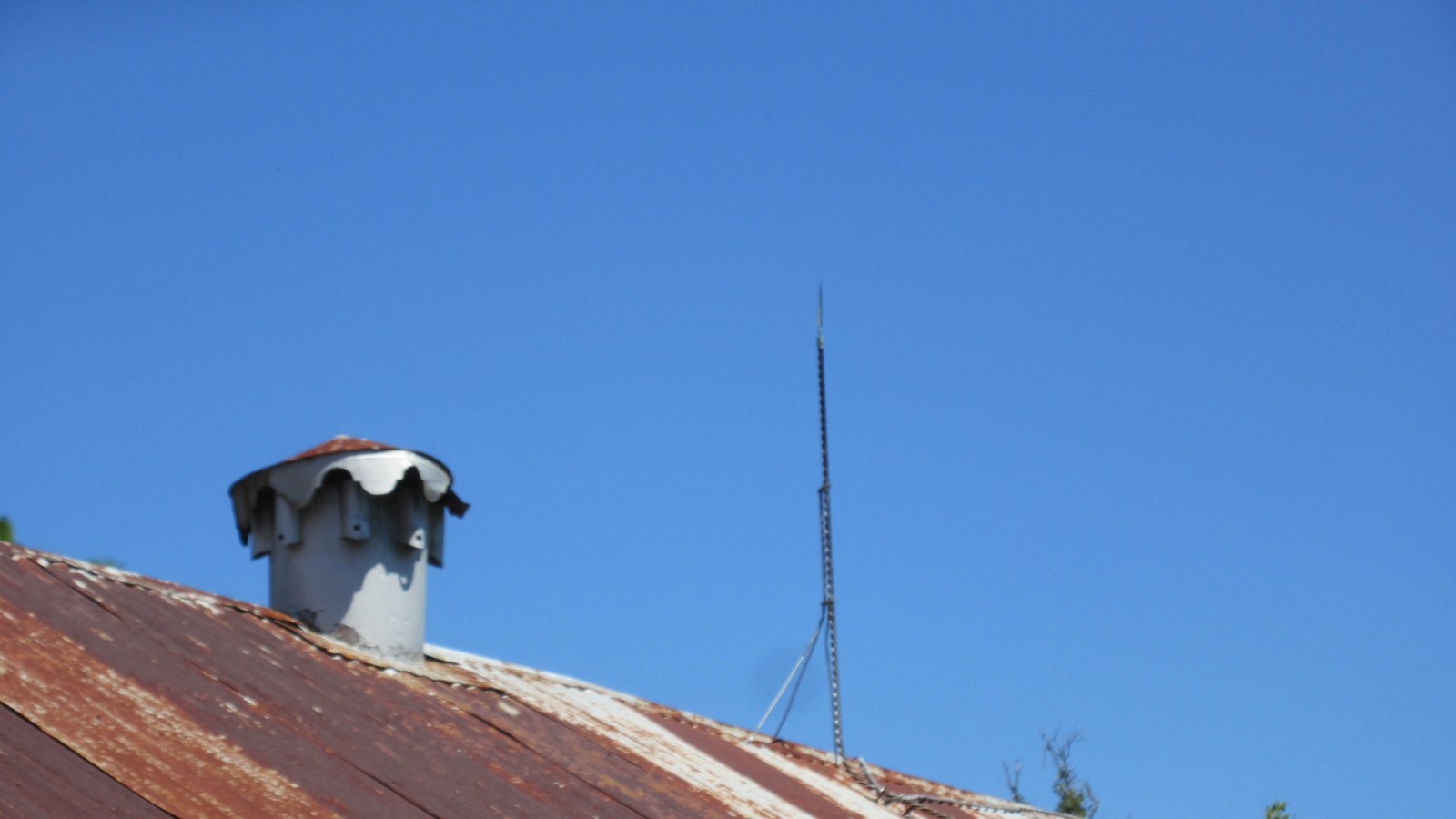
A lightning rod does not repel a strike and does not “lure” lightning like bait. It is an interception point: if a discharge reaches the building, the system offers a controlled metal path to ground instead of letting current find its own way through wood, masonry, wiring or pipes.
A complete system includes roof terminals, down-conductors, bonds between metal parts and electrodes in the soil. A rod alone, without down-leads and grounding, is not protection. In a strike the current is huge and brief; the designed path reduces the risk of fire, cracking and side flashes.
Grounding disperses energy into the soil. Equipotential bonding reduces voltage differences between metal parts. Lightning can also enter through power or data lines; surge protection therefore complements the rod without replacing it.
Design, materials, clearances and periodic checks belong to specialists and local codes. It is not an improvised installation.
In a storm the system protects the structure. People must still avoid open spaces and contact with conductive services. The National Weather Service stresses that a rod does not make a building “immune” and does not replace shelter rules.
In short: intercept, conduct, disperse — not magic and not repulsion.
Image: Infrogmation of New Orleans, lightning rod at Woodland Plantation House, LaPlace, Louisiana. Wikimedia Commons, CC BY-SA 4.0. Cropped to 16:9. Licence. Original file.
Sources consulted: U.S. National Weather Service — Lightning Rods; Encyclopaedia Britannica — Lightning rod.







0 Comments
No comments on this article yet. Be the first!