
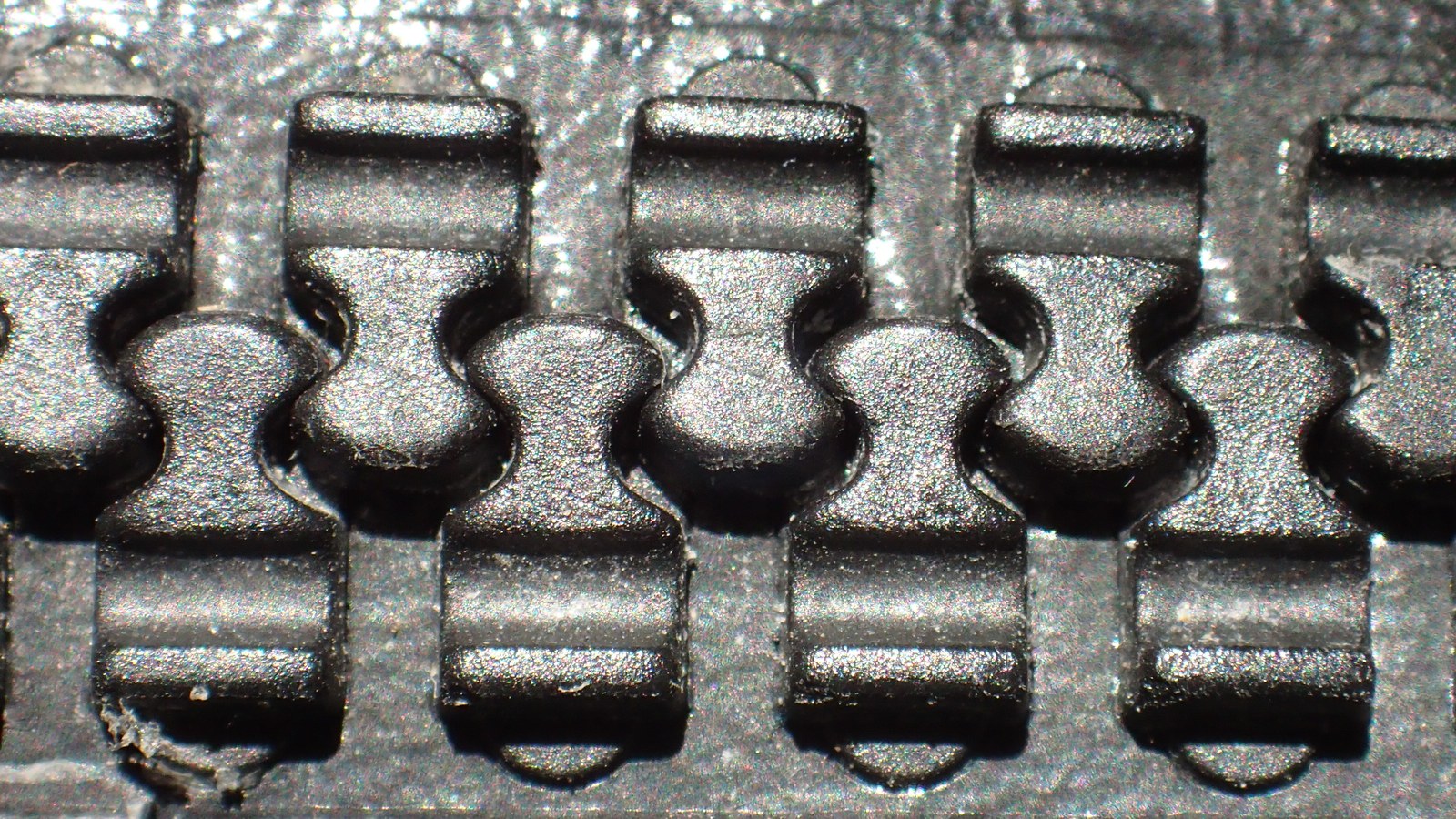
A zipper turns one pull into a sequence of couplings. The slider does not glue the teeth. It guides them along paths until their shapes lock.
Inside, the channels form a Y. On closing, the tapes enter separately through the wide side, then a wedge brings them together. Each tooth or coil is guided between elements on the opposite side.
Projections and recesses engage alternately. The join resists sideways pull because the load is shared across many elements. In reverse, the same wedge parts the rows.
There are metal teeth, moulded plastic elements and synthetic coils. The guiding principle is similar; flexibility and uses differ. Stops keep the slider on the tape. On a separating zipper, the box and pin align the base.
Jams happen when fabric enters the slider, teeth bend or the tapes are pulled unevenly. Forcing it can break the piece. Tension should be released and trapped cloth eased out slowly, without sharp tools.
If the zipper reopens behind the slider, the slider is often worn and no longer presses correctly. Replacing the slider or the whole zipper is usually safer than improvised squeezing, which can crack the metal.
Designs differ. Repair depends on type; rough handling permanently damages the slider and tape.
Image: Peter Southwood, watertight drysuit zipper teeth (plastic), not an ordinary garment coil. Wikimedia Commons, CC BY-SA 4.0. Cropped to 16:9. Licence. Original file.
Sources consulted: Smithsonian Libraries — The Up and Down History of the Zipper; National Museum of American History — Sundback zipper patent model, 1915.










0 Comments
No comments on this article yet. Be the first!