
An automatic door does not “see” a person the way a film camera does. It detects changes: radio waves, infrared light, sometimes pressure or occupancy in a defined zone. A controller turns the signal into motor motion.
Microwave radar sensors emit a weak signal and read the reflection. Movement changes the frequency or phase of the returned wave; the system treats that as an approach. They cover the area in front of the threshold well.
Active infrared sensors project beams or a field toward the floor and measure reflected light. A body that changes the pattern is read as presence. Some installations combine technologies to tell someone approaching from someone standing still.
After activation the door opens and stays open for a calculated time. Encoders track position and speed; force limits reduce injury risk. Threshold detection is essential: if a person, trolley or object is in the path, the door should stop or reopen, according to design and standards.
Dirt, rain, reflections, poor mounting or faults can cause false alarms or blind spots. Periodic inspection matters in hospitals, shops and crowded buildings. Adjustments and repairs are for competent staff, not the occasional user.
Technology and requirements differ by door type and jurisdiction. This article does not replace the manufacturer’s instructions.
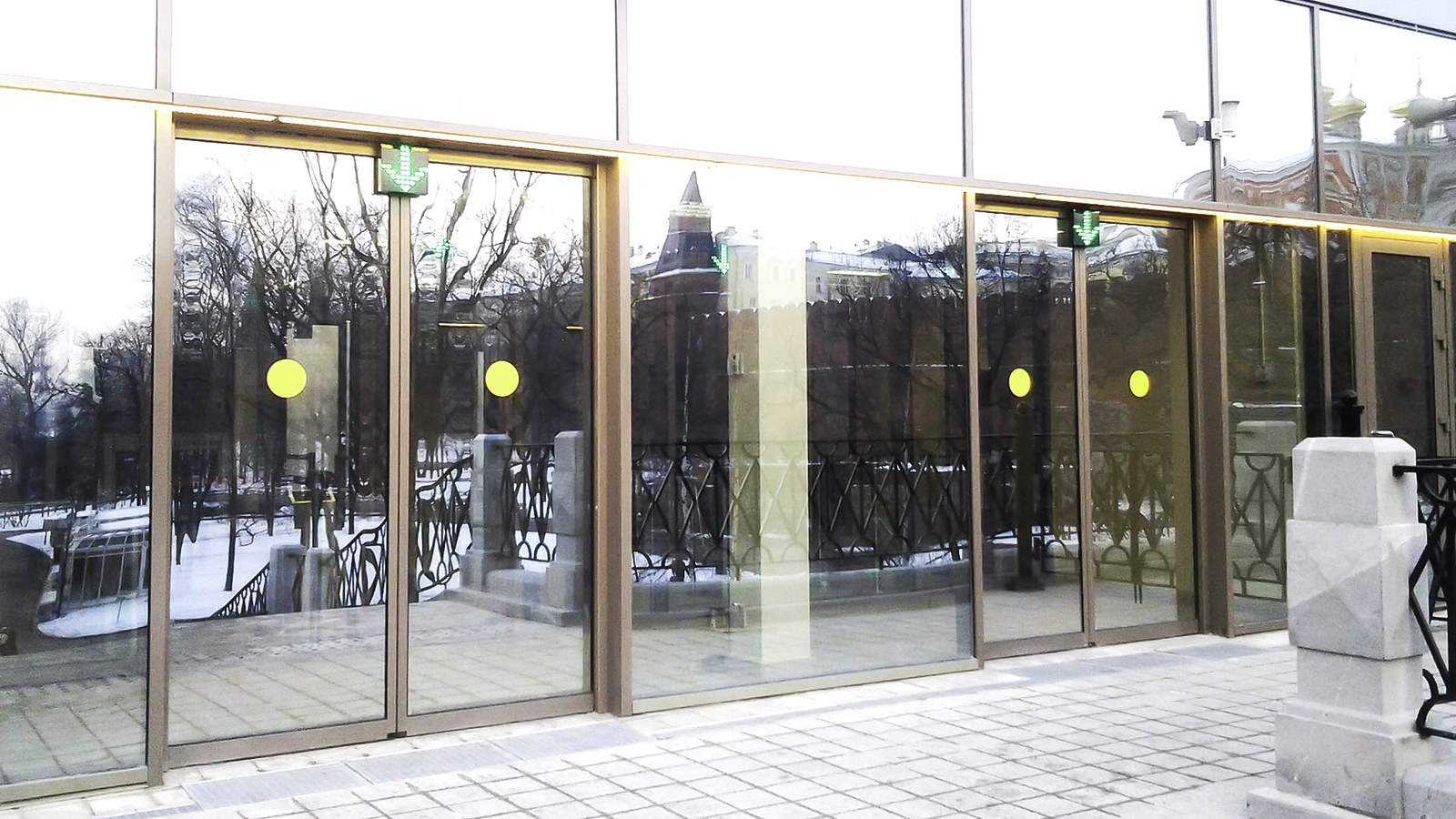
The photograph shows a sliding door at an entrance, not the sensor’s internal diagram. It illustrates the device in use, not a radar laboratory.
Image: Labanderadeadiosayer, automatic sliding doors. Wikimedia Commons, CC BY-SA 4.0. Cropped to 16:9. Licence. Original file.
Sources consulted: HSE — Powered doors and gates; Automatic Door Suppliers Association — Safety guidance; Radar | Encyclopaedia Britannica.










0 Comments
No comments on this article yet. Be the first!