


Romania’s General Inspectorate for Emergency Situations said on 21 October 2026 that the national urban search-and-rescue team RO-USAR-01 had received the international INSARAG Heavy classification. International classifiers confirmed the result after a 36-hour operational exercise run without a break. Heavy is the highest Urban Search and Rescue tier in the INSARAG methodology.
The scenario was fictional: a major earthquake in a host country called Carpatia. Every activity was simulated and served only the evaluation. The announcement does not describe a live mission under way, and it does not mean a Romanian team has already been sent to a disaster.
The evaluation took place in Ciolpani, Ilfov County, and Drăgănești, Prahova County. The base of operations was at Ciolpani, with rooms for command, rest, meals and hygiene, plus the team’s own generators and a water-treatment system. The point is autonomy for the length of a mission, not dependence on a damaged city’s infrastructure.
On the ground, rescuers searched for and located victims, broke reinforced concrete, cut metal, opened access routes and shored unstable structures. Four search-and-rescue dogs, two structural engineers and a medical component of doctors and nurses took part. IGSU did not publish a headcount for this evaluation.
The difference from Medium is operational, not ceremonial. A Medium team must be able to run a complex operation on one site. A Heavy team must have people, kit and logistics for two sites at once, each with its own support, and must sustain itself for up to ten days. The process is the INSARAG External Classification, a peer review developed under the United Nations. It is not a new treaty and it is not a deployment order.
The INSARAG calendar listed, from 19 to 23 October 2026, the ROU-01 evaluation as a Medium-to-Heavy upgrade. The team already held a Medium classification; IGSU cited the mission in Turkey after the February 2023 earthquakes as a reason to raise capacity. At the results briefing were Raed Arafat, head of the Department for Emergency Situations, Major General Marius Dogeanu of Civil Protection, Inspector General Lucian-Dumitru Marciu and First Deputy Constantin Florea.
In parallel, IGSU is running the European project “Upgrade of the Romanian USAR 01 team” (ECPP-2025-RO-USAR), 24 months from 1 October 2025. The total value is 706,446.10 euros, of which 529,834.57 euros is EU money and 176,611.53 euros is national funding. The money pays for equipment — tents, command kit, lighting, protection, communications, structural-movement detection, a drone — and is not a fee paid on 21 October for the classification certificate.
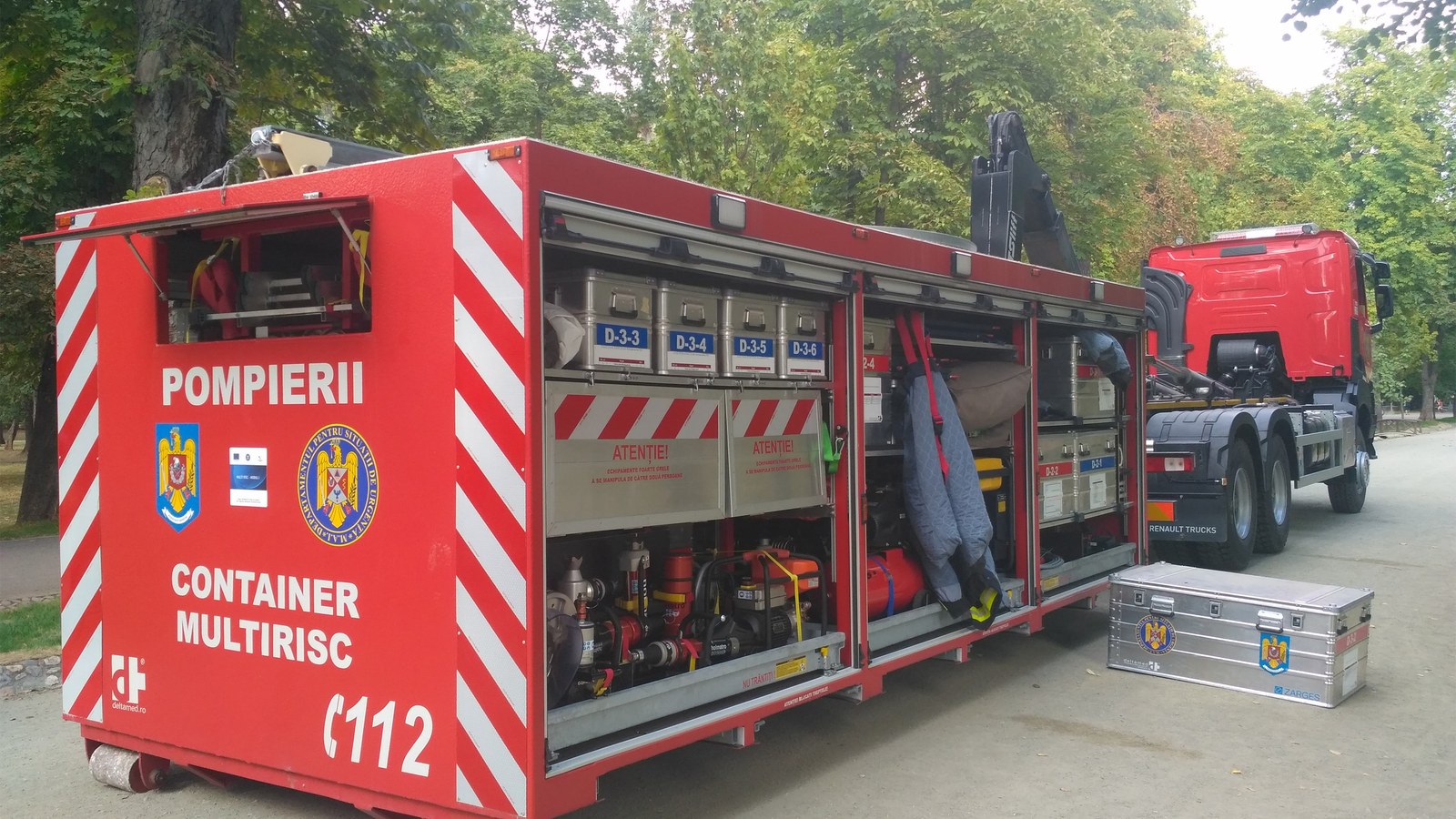
Image: Fmvh, IGSU search-and-rescue container, exhibition in Cluj, 1 April 2021, CC BY-SA 4.0, Wikimedia Commons; the kit in 2021, not this week exercise.
Sources consulted: Romania national urban search-and-rescue team internationally classified at the highest operational capacity - News.ro, 21 October 2026; Press release - General Inspectorate for Emergency Situations - AGERPRES, 21 October 2026.











0 Comments
No comments on this article yet. Be the first!