


INDEC on Wednesday published the Monthly Estimator of Economic Activity for August: +0.1% against July, seasonally adjusted, after a recalculated 2.8% drop in July. Over 12 months, −1.7%. Mining and Vaca Muerta, +11.1%. These are monthly figures. They are not an official declaration of recession, and they are not third-quarter GDP.
Clarín writes that the 0.1% advance is below what economists expected, a monthly rebound near 1% or more. The trend-cycle, the series the government prefers, went from +0.2% in July to 0% in August. In the first eight months the cumulative reading is still +1.2%, against +5.3% a year ago.
The steepest annual falls: fishing −15.7%, financial intermediation −3.8%, commerce −3.5%, industry −3.2%, transport −2.9%, construction −2.5%. The 1.7% twelve-month drop came despite mining. TN, also on INDEC, confirms the same percentages and notes that the trend-cycle has been flat for a fifth month running.
EMAE is an early indicator of quarterly GDP. In Q2, GDP fell 0.7%. Clarín reads the two Q3 months — −2.8% in July, +0.1% in August — as a quarter heading for a fall, “technically in recession,” unless September makes up strongly. That is the paper’s reading. It is not an INDEC recession statement.
July had been put at −2.9%; Wednesday’s report recalculates it to −2.8%. A revision. It erases neither August’s small plus nor the annual minus.
Source consulted: Economic activity stalled in August and failed to recover from July’s sharp fall — Clarín.
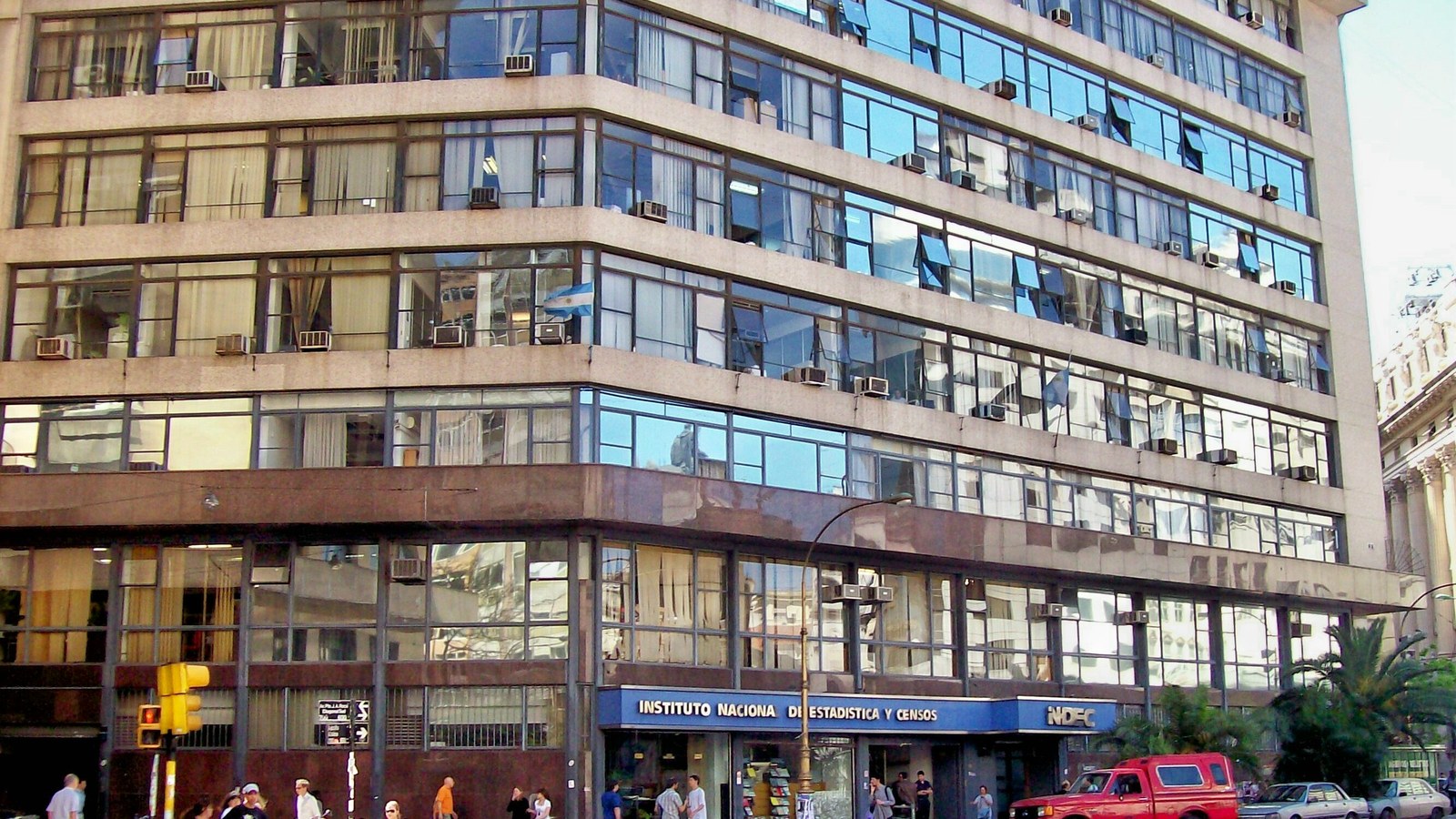
Image: the INDEC building, Av. Julio A. Roca 609, Buenos Aires, 26 October 2007, Roberto Fiadone, CC BY-SA 3.0, Wikimedia Commons. The institute, not Wednesday’s chart.
Sources consulted: Economic activity stalled in August and fell 1.7% — TN / INDEC.











0 Comments
No comments on this article yet. Be the first!