


The President of the Democratic Socialist Republic of Sri Lanka, J. R. Jayewardene, and the Prime Minister of the Republic of India, Rajiv Gandhi, signed at Colombo on 29 July 1987 the Indo-Lanka Accord, in duplicate, both texts equally authentic. It comes into force upon signature, together with the annexure. The LTTE is not a party. Official text: the treaty register of India’s Ministry of External Affairs. This is not the Thirteenth Amendment to the Sri Lankan Constitution, and not the 2002 ceasefire agreement.
Paragraphs 1.1–1.5: the unity, sovereignty and territorial integrity of Sri Lanka; a multi-ethnic and multi-lingual plural society (Sinhalese, Tamils, Muslims/Moors, Burghers); the cultural and linguistic identity of each group; the Northern and Eastern Provinces as areas of historical habitation of Sri Lankan Tamil-speaking peoples, who have lived there with other ethnic groups. Paragraph 2.2: in the interim, from the provincial-council elections to the referendum, the North and East form one administrative unit, one elected council, one Governor, one Chief Minister, one Board of Ministers. Paragraph 2.3: a referendum in the Eastern Province, on or before 31 December 1988, whether it remains linked with the North or separates; the President may postpone it. Paragraph 2.4: displaced persons may vote. Paragraph 2.5: a monitoring committee headed by the Chief Justice. Paragraph 2.6: a simple majority. Paragraph 2.8: provincial-council elections within three months, in any event before 31 December 1987; Indian observers for the North and East.
Paragraph 2.9: the emergency lifted in the East and North by 15 August 1987; cessation of hostilities throughout the island within 48 hours of signature; arms held by militant groups surrendered, under an agreed procedure, to authorities designated by the Government of Sri Lanka; the army and other security personnel confined to barracks as on 25 May 1987; surrender and confinement completed within 72 hours of the cessation taking effect. Paragraph 2.10: the same law-enforcement machinery as in the rest of the country. Paragraph 2.11: a general amnesty for political prisoners and combatants held under the Prevention of Terrorism Act and emergency laws; rehabilitation of militant youth, with India’s co-operation. Paragraph 2.14: India will underwrite and guarantee the resolutions. Paragraph 2.15: conditional on the proposals of 4 May–19 December 1986; residual matters within six weeks. Paragraph 2.16: if militant groups do not accept the framework — Indian territory not used against Sri Lanka; the Indian navy and coast guard co-operate; military assistance on request; repatriation of Indian citizens and of refugees from Tamil Nadu; security of communities in the North and East. Paragraph 2.18: Sinhala the official language; Tamil and English also official languages.
Annexure: an observer from the Election Commission of India at the referendum; an Indian observer at the provincial elections; Home Guards disbanded, paramilitary personnel withdrawn from the East and North; arms surrendered in the presence of the Sri Lanka Red Cross and the Indian Red Cross; a joint observer group from 31 July 1987; an Indian peace-keeping contingent may be invited by the President, under 2.14 and 2.16(c), if so required. Exchange of letters, the same day: Trincomalee and other ports not made available for foreign military use prejudicial to India; the Trincomalee oil tank farm as a joint venture; foreign broadcasting facilities for public broadcasting only; India to deport Sri Lankan citizens found engaging in terrorist or secessionist activity, and to provide training and supplies to Sri Lankan forces.
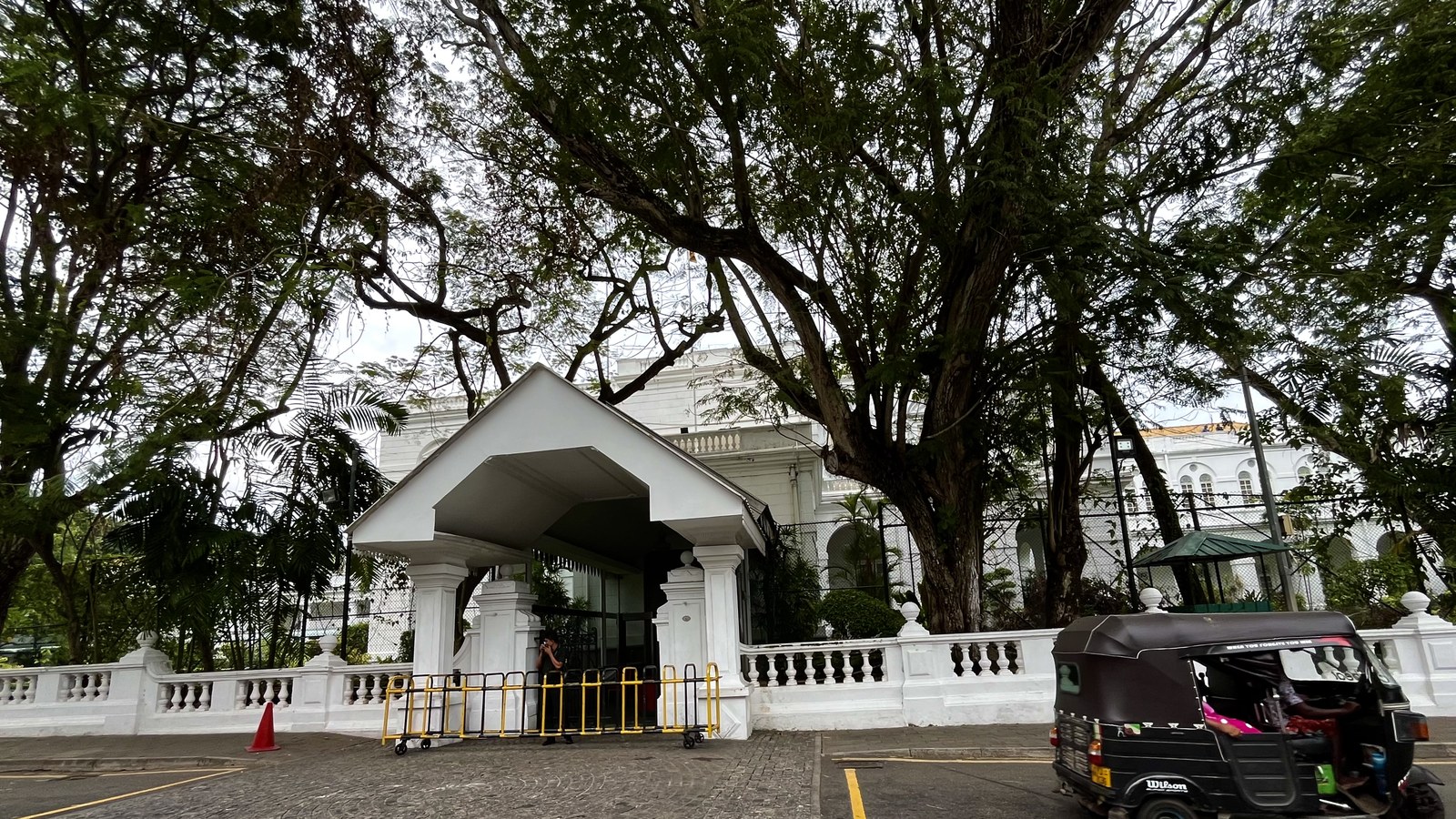
The Thirteenth Amendment and the Provincial Councils Act of 1987 follow the Accord; they are not this instrument. The IPKF was invited; it is not a signatory. The cover is the President’s House in Colombo, the presidential residence in the capital of signature.
Sources: Indo-Lanka Accord; Indo-Lanka Accord, Ministry of External Affairs of India.






0 Comments
No comments on this article yet. Be the first!