


The wood is gone. The jars remain. Off Kekova Island, on Antalya’s Mediterranean coast, at about 30 metres, Hakan Öniz and the Akdeniz University team lifted some 30 amphorae from a slope. Three stone anchors, set aside. The ship, from the cargo, would have been about ten metres. The NYT put the headline on 16 October. The BBC and New Scientist, on the 14th. Turkey’s culture ministry spoke of “the world’s oldest shipwreck”. That is a crowning. It is not a carbon-14 date.
The wood has rotted. The dating is by shape: two handles, a ridge in the middle, a flat base, like Levantine and Egyptian pottery, 2700–2400 BC, Early Bronze Age. The BBC sets the Great Pyramid beside it. Öniz: “100%”. Jon Henderson, University of Edinburgh, wants publication before a crown. Pottery comparisons span long intervals. Radiocarbon would help. No organic material survives. At Dokos, in southern Greece, a wreck of the same era is dated 2700–2200 BC. Öniz sees it as younger. Henderson: they may be contemporary.
They first saw the site in 2024, on a survey. The excavation finished earlier this month. The amphorae, Öniz says, have small variations: different workshops, different villages. A departure from the eastern Mediterranean shore, a pickup of oil or wine, a run towards Minoan Crete or towards Troy. The anchors, perhaps thrown in a storm. Currents, wind, a coast that has swallowed hundreds of ships, mostly Roman and Byzantine. Uluburun, from 1982, is Late Bronze, around 1300 BC. Kekova, if the dating holds, sits lower on the list.
Karin Sowada, of Macquarie, Australia, looked inside the jars and “nearly fainted”: a viscous, glossy residue, not spots. Olive oil, wine, tree resins, or years of reuse after unloading. The team is still analysing. Öniz, underwater, 30 minutes a dive, thinks of sailors, of shoulders, of the women who waited. Mehmet Nuri Ersoy says the pieces will go to the new Mediterranean underwater archaeology museum in Antalya, in the coming months. Henderson: what matters is not a century extra. It is a snapshot of maritime trade more than four thousand years ago.
The Mediterranean Archaeology Association, led by Öniz, has found two more Bronze Age wrecks, one Middle, one Early. Kekova, he says, is the oldest of them. The BBC writes that the site belongs to the ministry. The pieces are being conserved on the research ship. That is the work. The record can wait.
Until a journal with dates, it remains a jar shape. After a journal, Dokos remains. Anyone who mixes them turns a comparison into an Olympic record.
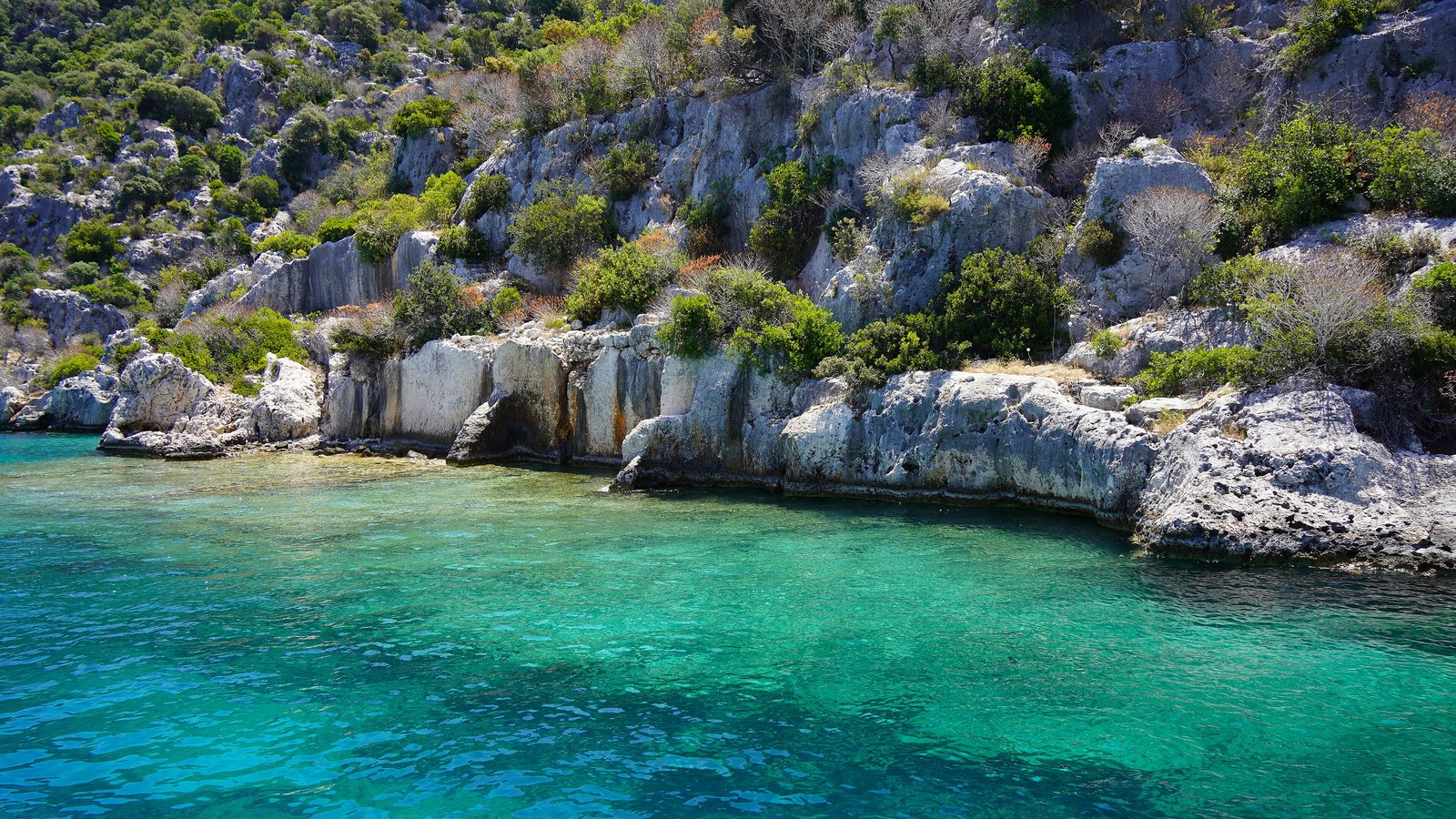
Image: JamesDavidShoots, the sunken-city ruins at Kekova, 24 June 2023, CC BY-SA 4.0, Wikimedia Commons. The photograph shows the later Lycian site visible at the surface, not the Early Bronze amphorae at 30 metres.
Sources consulted: Oldest shipwreck amphora Turkey — The New York Times; World's oldest shipwreck found off Kekova Island in Turkey — BBC News; Ancient shipwreck discovered off Turkey claimed to be world's oldest — New Scientist.











0 Comments
No comments on this article yet. Be the first!