


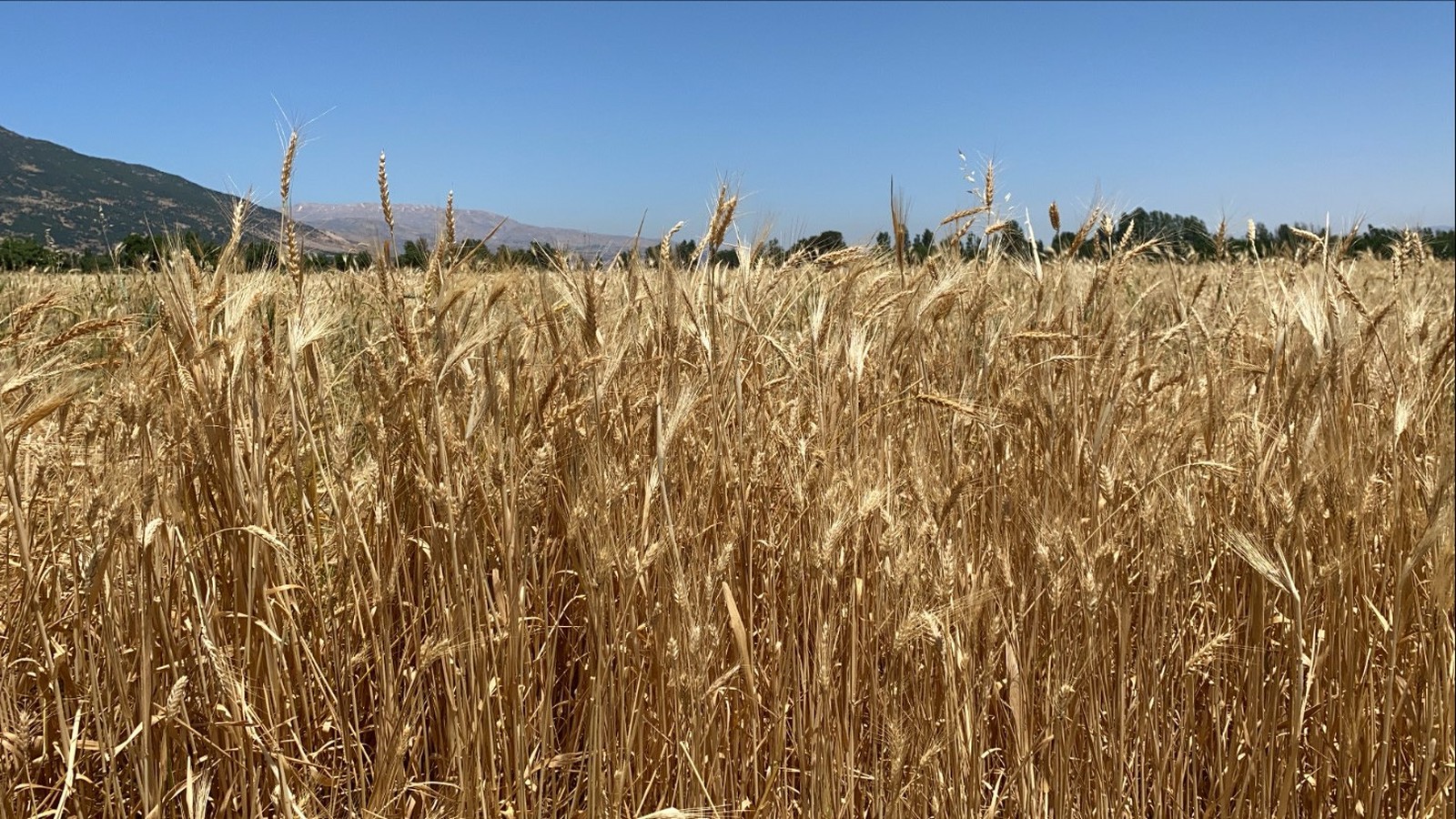
The war between Israel and Lebanon has cut into the land planted with wheat, above all in the south and the Bekaa Valley. The figures come from “Wheat in Crisis”, a study by Mariam Ibrahim of Lebanon’s National Council for Scientific Research (CNRS-L), which tracked fields from 2017 to 2025. Al Jazeera discussed the results with the author and with other researchers.
In the south, average losses of wheat-growing area were 47 percent in the 2023–2024 season and 61 percent in 2024–2025. The Bekaa plain, which accounts for about 64 percent of the country’s wheat, lost roughly 43 percent and then 57 percent of its wheat area in those two seasons, Ibrahim said. In the border town of Bint Jbeil, the study indicates that all cropland was destroyed; in the eastern district of Baalbek, about 32 percent.
Nationally, the paper in npj Sustainable Agriculture estimates that wheat area fell 34 percent in 2023–2024 and 38 percent in 2024–2025. The authors link the drop to the conflict and to displacement, which limited access to fields and sowing, especially in the south. That is not the same as a collapse of the country’s entire food supply.
Before those seasons, the planted area had grown. Ibrahim says higher wheat prices after the war in Ukraine, and the fall of the Lebanese pound, encouraged farmers to grow more: the international price showed up in local currency, and the peak came in 2022–2023. From 2023, experts quoted by Al Jazeera say the share of former wheat land left fallow rose from 9 percent to 24 percent, mostly in the south and the Bekaa.
Elias Ghadban, a food-security specialist at the Beirut firm AgriDev, draws a limit: destroying these plots does not significantly change the national balance, but it has left southern growers without a livelihood. The economic crisis and three years of war have hit small, lightly mechanised farms hardest, the ones that hold the agricultural south together.
Munira Khayyat, author of a book on the ecologies of war in southern Lebanon, told Al Jazeera that the attacks are “disrupting entire ecosystems” and advancing the chances of drought and desertification, weakening the land’s capacity to hold life. That is the researcher’s judgement, not a finding by an official body.
Al Jazeera reports that a ceasefire brokered in 2024 by France and the United States did not stop the strikes, and that from 2 March 2026 operations in the south intensified again. For small farmers, the practical question is whether they can return to the plots once the fighting eases.
Image: Wikimedia Commons — wheat field at Ammiq, in the Bekaa (Diana Salloum, CC BY-SA 4.0).
Sources consulted: Israel is ‘disrupting entire ecosystems’, including Lebanon’s wheat crop — Al Jazeera; Wheat in Crisis: Variability of Wheat Area in Lebanon 2017–2025 — npj Sustainable Agriculture.








0 Comments
No comments on this article yet. Be the first!