


Le Monde published, on 18 October 2026, extracts from “Lucie Aubrac par Lucie”, a book due on 21 October from Albin Michel. Pascal Convert gathered transcripts of recordings and unpublished texts from the family archive. The line chosen for the headline is hers: “You could feel antisemitism rising in 1940. Something had to be done.” The book covers a whole life, not only the months in “Ils partiront dans l’ivresse” (1984).
Lucie Bernard was born in Paris on 29 June 1912 and died there in 2007. She passed the history agrégation in 1938, taught in Strasbourg, met the engineer Raymond Samuel, and married in December 1939. She got him out of captivity at Sarrebourg at the end of August 1940, and they went to Lyon. That autumn, in Clermont-Ferrand, with Emmanuel d’Astier, Jean Cavaillès and Georges Zérapha, she formed the “La dernière colonne” cell, later Libération-Sud. FranceArchives and Chemins de mémoire hold the same biographical frame.
Convert, already the author of a 2011 Seuil book on Raymond Aubrac, ties a modest childhood, the Young Communists, the Quakers, journeys in Nazi Germany and in civil-war Spain, then the “army of shadows”. After the war the volume moves through decolonisation and women’s rights. Le Monde’s Saturday page does not reopen the Barbie-era accusations of the 1980s and 1990s; the institutional biographies mention them as a wound, not as a finding of betrayal.
The Lyon operation of October 1943, in which, pregnant, she took her husband from the Gestapo after Caluire, remains the best-known episode. The new book wants the rest: the teacher, the militant, the mother, the professor in Morocco and in Rome. Aubrac is the resistance name that became a family name after the Liberation.
An archive volume does not, by itself, reopen trials. Nor does it close memory arguments. It offers, if the transcripts hold, her voice over a longer span than the nine months of 1943–44. The Le Monde extracts are a preview, not the whole book.
Anyone who reduces the launch to a single 1940 sentence misses the arc: from modest Paris to Lyon, London, the Consultative Assembly and the classroom. Anyone who reads it as a bronze-heroine handout ignores that Convert contextualises, rather than canonises. On Tuesday, 21 October, the book leaves the newspaper and enters the shop.
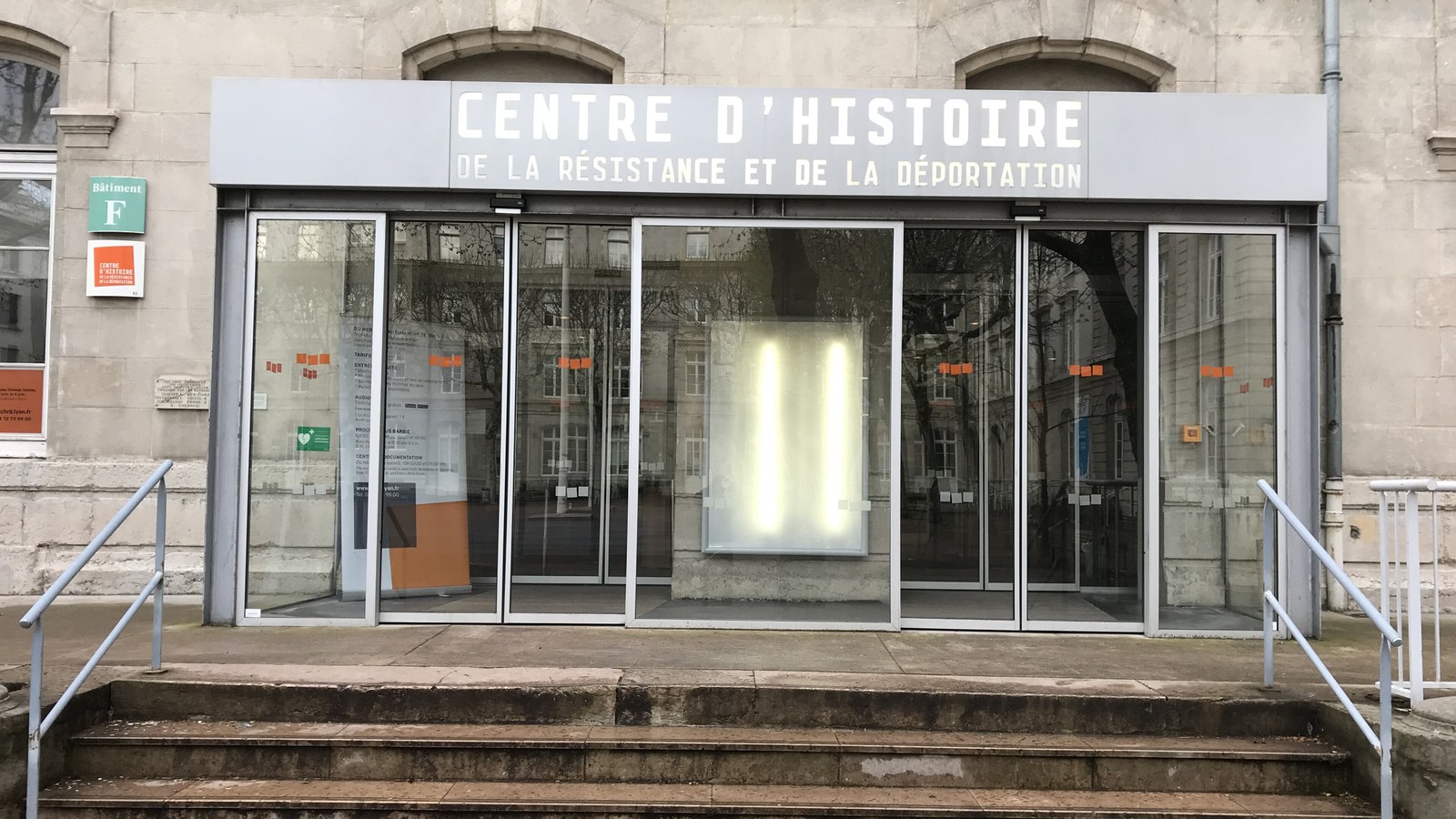
Image: Benoit Prieur, Centre d'histoire de la resistance et de la deportation, Lyon, 2018, CC0, Wikimedia Commons; archive museum, not the Albin Michel launch.
Sources consulted: Resistance fighter Lucie Aubrac's life told through her archives - Le Monde; Lucie Aubrac - Chemins de memoire.







0 Comments
No comments on this article yet. Be the first!