


Microsoft said on Saturday that services including Outlook and Teams had fully recovered after a global outage of more than 24 hours. ABC reports that it was one of the longest in the company’s history and that more than 7.4 million reports were logged worldwide. On X, the company said it had fixed the underlying issue and restored service for the customers and regions that were still affected.
On X, Microsoft also wrote that it was “deeply sorry” for the disruption caused to customers and partners. It said it was seeing a broad, stable recovery and that this was “a technical issue not related to cyber or AI / agents”. ABC notes that the company had spoken of server trouble, that the Copilot assistant was hit as well, and that it was not aware of malicious activity. In a Friday update, Microsoft said the incident was introduced by a problem during an earlier network-capacity upgrade, which surfaced after a recent network change.
An ABC report on Friday put the start at about 3:15am Australian eastern time. On Saturday the same newsroom quoted the company on an outage that began on Thursday: Thursday in the United States is Friday morning in eastern Australia. Microsoft first investigated reports “in the Americas”. It later confirmed a Microsoft 365 connectivity problem for users in any region. Microsoft 365 is the cloud subscription that includes Outlook and Teams.
The Guardian, in Henry Belot’s account, wrote that services began to return after about 18 hours and that the restoration was gradual, so it would stay stable. ABC, later on Saturday, reported a full recovery. The two clocks are not the same moment: one marks the start of the return, the other the end of it.
In Australia, Ashwin Pal, a partner at the consultancy RSM Australia, told the Guardian that some clients had switched on continuity plans, but that many firms had no fallback, and that the bill could run into the billions, especially for small businesses. He told ABC on Friday that professional-services firms could lose hundreds of thousands of dollars an hour, and that a large bank can absorb the shock more easily than a five-person accounting office. Tracey Tucker, of Regal Shower Screens in Queensland, told ABC that the lost day would cost at least 30,000 dollars. Those figures are their estimates, not an official tally.
Dr Michael Bonning, president of the Australian Medical Association, told the Guardian that some clinics had gone back to paper prescriptions, because signing in to prescribing software needs a Microsoft email. The association said on Friday that patient care had not been affected. Courts in South Australia and Victoria reported email trouble, and schools were hit too. Service NSW asked people to postpone visits to its counters. The Guardian writes that federal departments were affected as well, including national-security agencies.
Prins Ralston, chief executive of the Australian Computer Society, called for a review of critical systems that depend on a single provider. Quoted by ABC from the publication Information Age, he said: “We need to know the systems that keep this country running won’t simply fall over without notice.”
Outside Australia, ABC reports that Rachel Harrison of the British union GMB said health staff taking emergency calls could not pass on patient details in the usual way, and that a large backlog built up. In India, IndiGo and Akasa Air said on X that their support email was affected. Immigration New Zealand stopped processing all visa applications. Japan’s economy, trade and industry minister, Ryosei Akazawa, spoke of a “significant impact”, because Microsoft products are used by a vast number of people. In the City of London, auditor Yashmit Sharma told AFP that Copilot going down, and Outlook with it, was the main problem. ABC also writes that some notifications announced emails that would not open, that trading firms had delays, and that some companies could not publish their results.
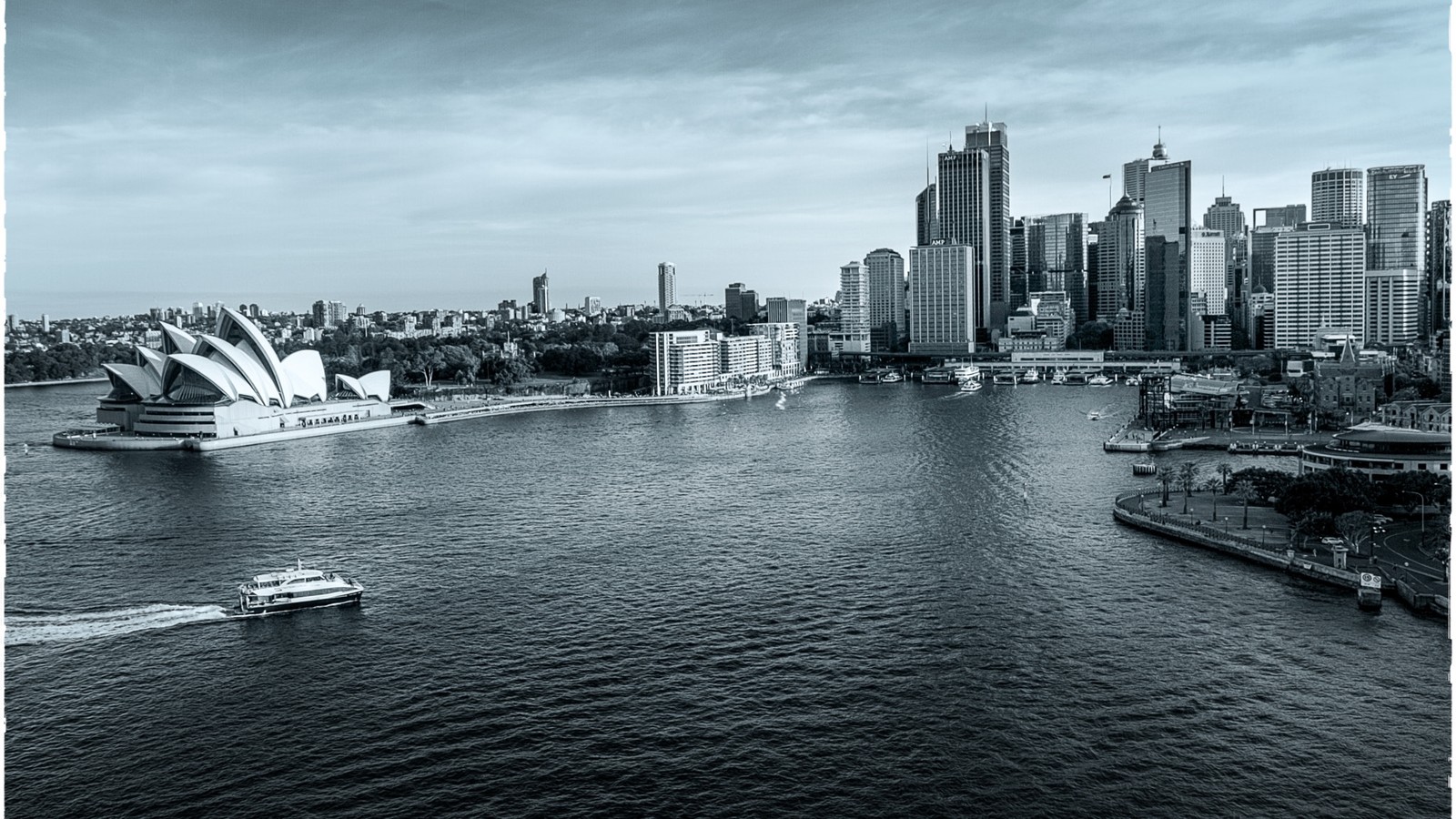
The photograph shows the Sydney Opera House and the city centre from the Harbour Bridge, not the outage and not a Microsoft office. Image: Adrian Gigante, CC BY 3.0, Wikimedia Commons.
Source consulted: Microsoft ‘deeply sorry’ for global disruption that could have billion-dollar impact on Australia, The Guardian.










0 Comments
No comments on this article yet. Be the first!