


Romania has “huge potential” for green investment, but policy and regulatory instability remains, in his view, a major problem for investors, says Gianpiero Nacci, EBRD managing director for climate strategy and delivery. The interview, published by Economedia, follows his remarks at the Climate Change Summit. The bank presents him as an Italian national, appointed in January 2025, with a background in climate policy, sustainable industry and clean energy.
In the summit slides, the Green Economy Transition series shows 76 green projects in Romania between 2021 and 2025, with €2,088 million of EBRD finance and a total project value of €6,441 million. Associated renewable capacity is put at about 1,900 MW. For 2025, the same figures place Romania at €644 million of GET finance, against €2,451 million at EU level, and at an 82 per cent green share of the bank’s annual business in the country.
On 29 January 2026 the EBRD separately reported a record €955 million across 37 Romanian projects in 2025, of which 81 per cent was green finance. That is a headline volume, not the same series as Nacci’s GET slides. Victoria Zinchuk, the bank’s Romania director, called 2025 its largest year of business here since it began investing in 1992.
Looking five to ten years ahead, Nacci puts renewable-energy storage first. He talks about batteries, pumped hydro and other forms that can give the market flexibility, alongside cost-competitive renewable plants. He does not himself confirm an outage at Cernavodă: the journalist’s question stays outside the facts we can hold.
Building renovation, he says, is a hard process, but one with effects on jobs and on value chains for equipment, materials and services. Reconverting industrial sites — logistics, commerce or housing — sits in the same urban-regeneration chapter. Electrifying mobility, and biomethane from agricultural residues or solid waste, are, in his reading, still underused potential.
The 2024–2025 renewable auctions that the EBRD supported show, according to Nacci, bid prices well below current market levels. That is an economic argument from the interview, not a tariff the bank republishes here as an official quote.
Capital “has already started flowing”, but investors go where they understand the risks. The main problem remains regulatory uncertainty: he wants a framework that does not shift with the political weather. He also points to administrative capacity — permitting and the application of the law. The private sector, in his description, is ready; the snag is often the state.
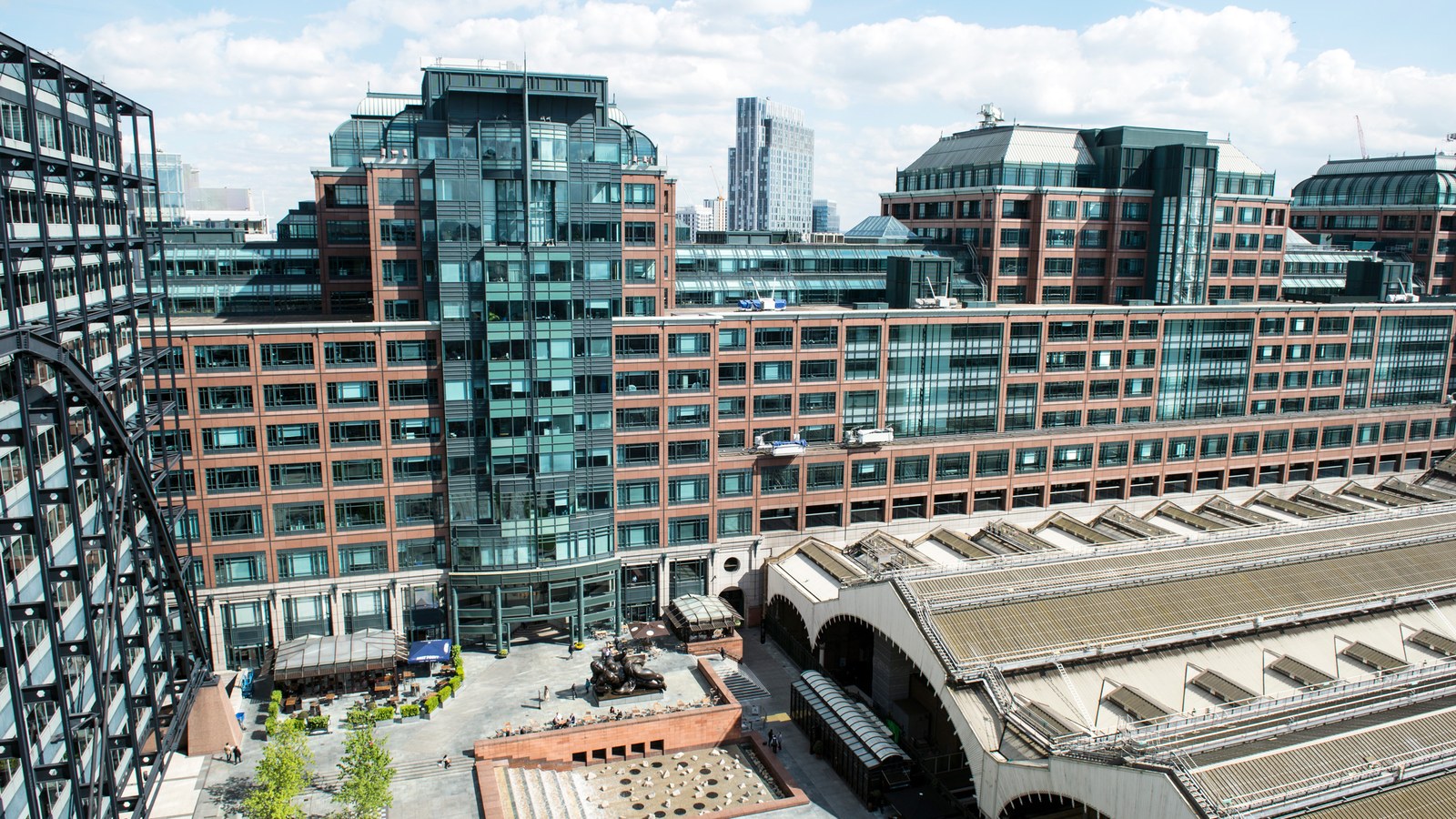
Image: EBRD/Dermot Doorly, EBRD headquarters, London, 28 April 2015, CC BY-SA 4.0, Wikimedia Commons. Not the Climate Change Summit hall.
Sources consulted: INTERVIU | Gianpiero Nacci, BERD: România are „un potențial uriaș” pentru investiții verzi — Economedia; EBRD investment in Romania hit record €955 million in 2025 — EBRD.











0 Comments
No comments on this article yet. Be the first!