
NASA and IBM have introduced an artificial intelligence model designed to analyse the lunar surface, in a project intended to help scientists work more efficiently with the very large volumes of data collected by space missions.
The open-source system, called the NASA-IBM Lunar Foundation Model, was built to identify and map lunar features such as craters, areas where ice may be stable, and formations linked to past volcanism.
The announcement was made on September 10, 2026. According to NASA, the model was trained primarily on data from the Lunar Reconnaissance Orbiter (LRO), the mission that has produced near-continuous, high-resolution coverage of the Moon. Observations from other missions were also used, including GRAIL, Lunar Prospector and JAXA’s SELENE/Kaguya. In joint NASA-IBM communications, the training set is described as bringing together more than 30 layers of data from nine instruments.
The volume of images, spectral measurements, radar observations and other lunar datasets has become a practical challenge for planetary science. Identifying geological structures or regions of interest requires comparing and interpreting these sources together. A foundation model, pre-trained on large amounts of unlabeled data, learns general patterns that can later be adapted to specific tasks without building a separate system every time.
In benchmark tests released with the launch, NASA and IBM reported improvements of up to 23 percent over widely used comparison methods for some lunar-feature identification tasks. NASA also notes that the model matched or exceeded several strong baselines across evaluated tasks, with a clear advantage in estimating polar ice stability.
Finding areas with possible ice is one of the most important applications. Permanently shadowed polar regions, especially near the south pole, can preserve ice for extremely long periods. For future crewed missions, lunar water could matter both for consumption and as a potential source of hydrogen and oxygen for life support or propellant production.
The model can also speed up crater mapping. The number, size and distribution of craters provide clues about a region’s geological history and help, in practical terms, with assessing terrain for safe landings. Another target use is detecting unusual volcanic formations, including irregular mare patches, which may clarify the Moon’s thermal evolution.
The project continues the NASA-IBM collaboration on AI models for science. The organisations previously developed the Prithvi family for Earth-observation data and other research models. The open-source release — weights on Hugging Face, code on GitHub, and integration with the TerraTorch toolkit — lets researchers and universities test and adapt the model without rebuilding it from scratch.
The launch comes amid renewed interest in lunar exploration, including NASA’s Artemis programme, which is developing technologies for a sustained human presence on the Moon. Artificial intelligence does not replace scientific analysis, but it can shorten the time needed to filter, map and prioritise regions that deserve detailed investigation.
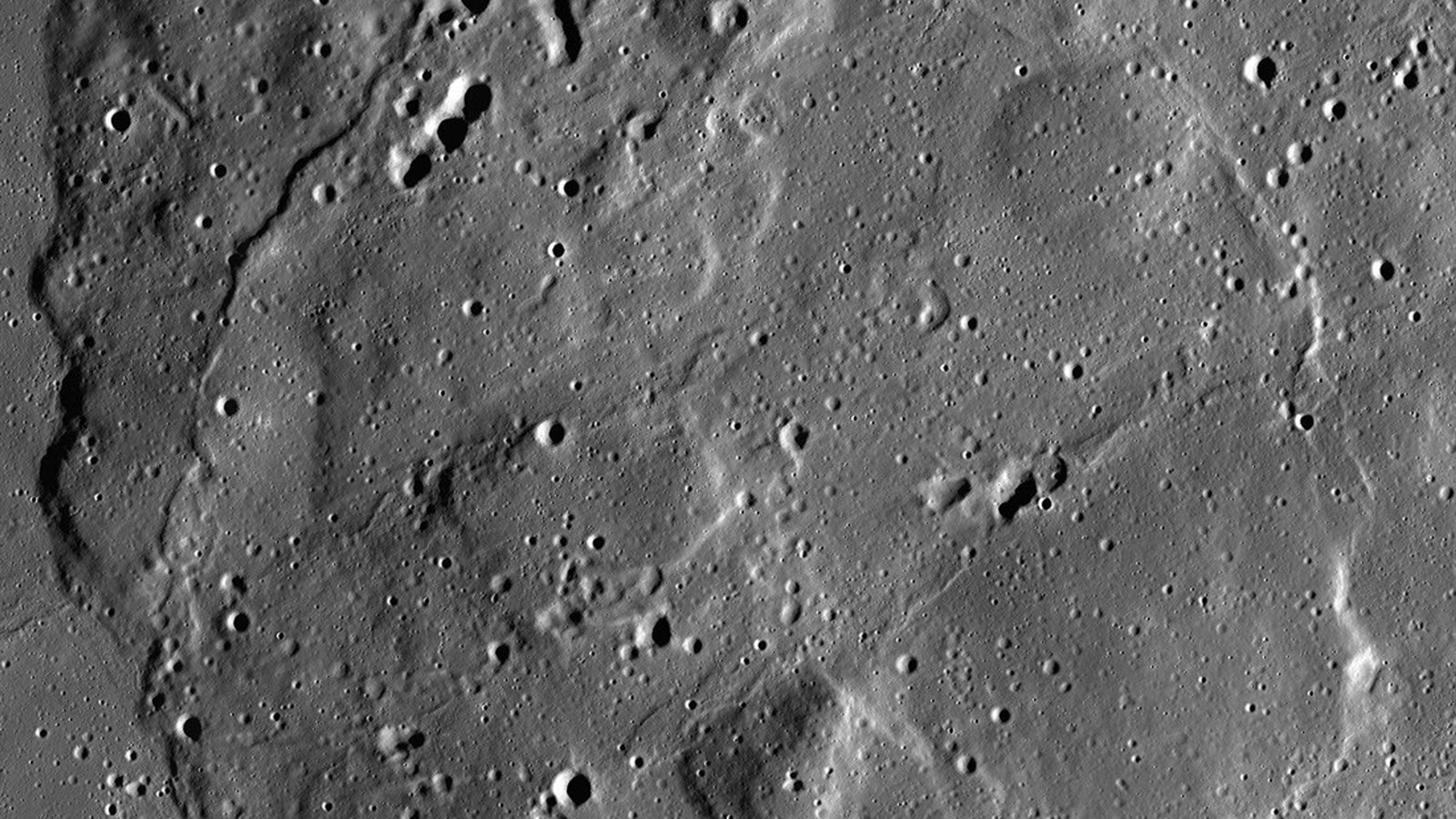
Image: NASA/GSFC/Arizona State University (LRO Narrow Angle Camera mosaic, Mons Rümker).
Source consulted: NASA, IBM Launch AI Foundation Model for Lunar Science | NASA Science









0 Comments
No comments on this article yet. Be the first!