
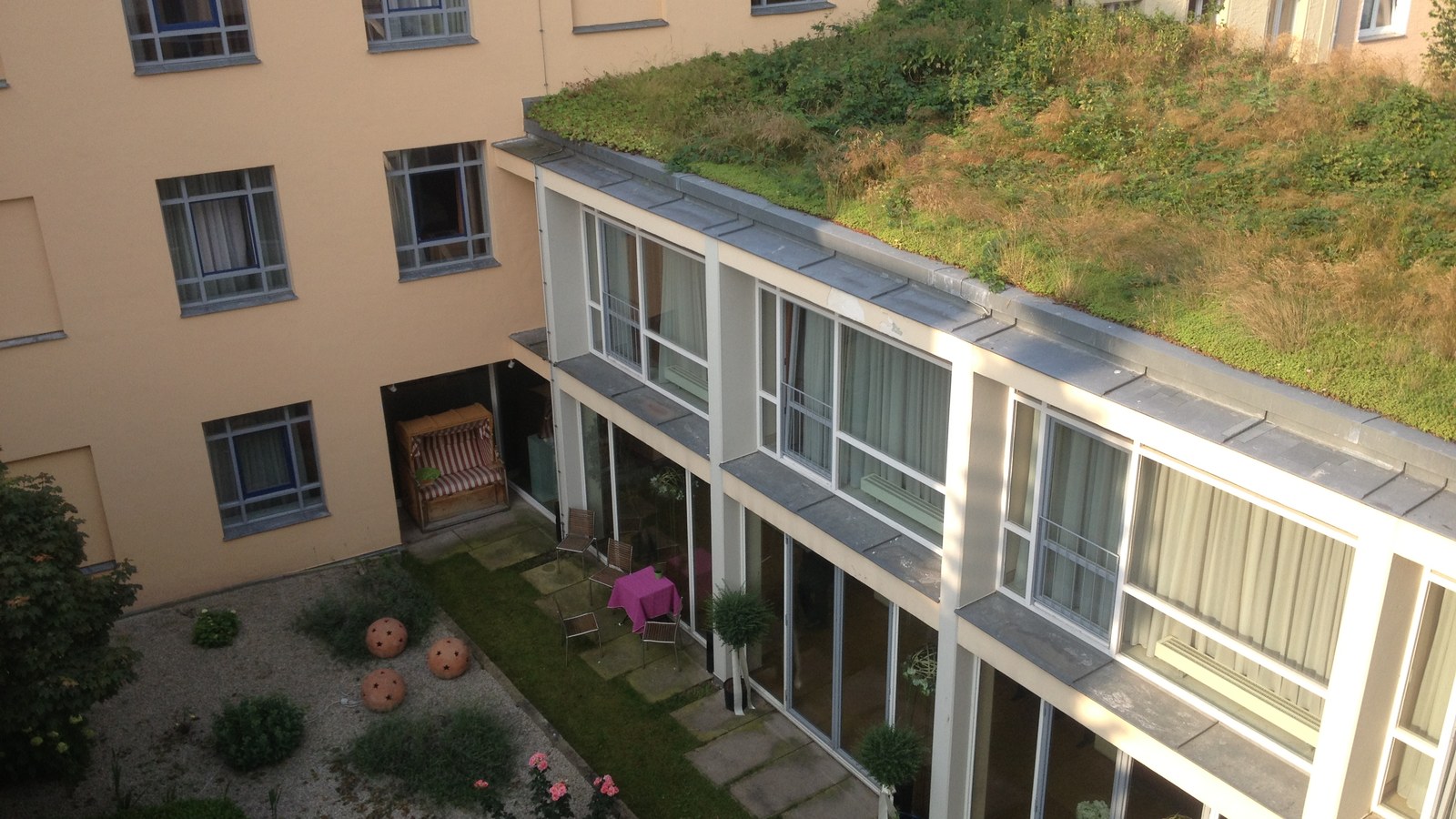
The EU-funded D4RUNOFF project, presented by CORDIS on 17 September 2026, combined sensors, risk maps and an artificial-intelligence platform to choose nature-based options against pollution from urban stormwater. Coordinator Rikke Hansen of Denmark’s VandCenter Syd describes a planning tool, not a system already installed across Europe.
Rain and snowmelt carry pollutants into rivers and sewer networks. In combined sewers often designed for events once in ten years, intense rain can trigger discharges of untreated wastewater. Climate change is making those peaks worse in some places.
Partners developed pollutant-monitoring sensors, a method for mapping risk hotspots that takes climate into account, and a platform containing more than 200 drainage strategies. Options include permeable surfaces, rainwater basins, green roofs, sustainable drainage systems and constructed wetlands.
The tools were trialled in Odense, Santander and Pontedera. In Santander, permeable paving, green roofs and gardens were compared, including the size of a wetland. In Odense, filter-soil sustainable drainage and biodiversity-friendly planting were put in place with local residents involved.
The project ran from September 2022 to February 2026, at a total cost of about €3.33 million, almost entirely from the EU budget. The results are described as replicable, but Hansen stresses that methods must be adapted to soil, climate, networks and institutions.
The CORDIS article presents research and demonstration. It does not mean the same mix of sensors and green roofs will work identically in every Romanian or European city without a local look at cost and maintenance.
Image: green roof, Hotel Sorat, Regensburg / Wikimedia Commons. An example of a vegetated roof, not a D4RUNOFF pilot in Odense, Santander or Pontedera. Cropped to 16:9.
Source consulted: Nature-based solutions for efficient urban drainage | CORDIS; D4RUNOFF | CORDIS.




0 Comments
No comments on this article yet. Be the first!