


The Articles of Agreement governing collaboration between the authorities of the United States and the United Kingdom in the matter of Tube Alloys, known as the Quebec Agreement, were signed at the Citadel in Quebec on 19 August 1943. The signatories were Franklin D. Roosevelt and Winston S. Churchill. Five clauses, typed on Citadel letterhead. It is not the Hyde Park Aide-Mémoire of 1944, nor the McMahon Act of 1946, nor the 1958 US–UK Mutual Defence Agreement.
The preamble invokes common safety in the present war, the pooling of British and American resources, and the improvidence of duplicating plants on both sides of the Atlantic. Tube Alloys was the cover name of the British atomic-energy programme. A framework of collaboration, not a technical handbook.
First: the Parties will never use this agency against each other. Secondly: they will not use it against third parties without each other’s consent. Thirdly: neither will communicate information about Tube Alloys to third parties except by mutual consent.
Fourthly: the British Government recognises that any post-war industrial or commercial advantages shall be dealt with on terms to be specified by the President of the United States to the Prime Minister; Churchill disclaims any interest beyond what the President may consider fair and just. Fifthly: a Combined Policy Committee in Washington, with American and British members and a Canadian representative (C. D. Howe), to agree the programme of work, keep the project under review, allocate limited resources and settle questions of interpretation. Scientific interchange is to be full and effective; interchange on large-scale plants is to be regulated by ad hoc arrangements approved by the Committee — a principle, not a plant itinerary.
The Agreement merged the British effort with the American project. It was secret; the British published the text in 1954 (Cmd. 9123) and the United States as TIAS 2993. On 7 January 1948 it was superseded by a modus vivendi of limited sharing among the United States, Britain and Canada.
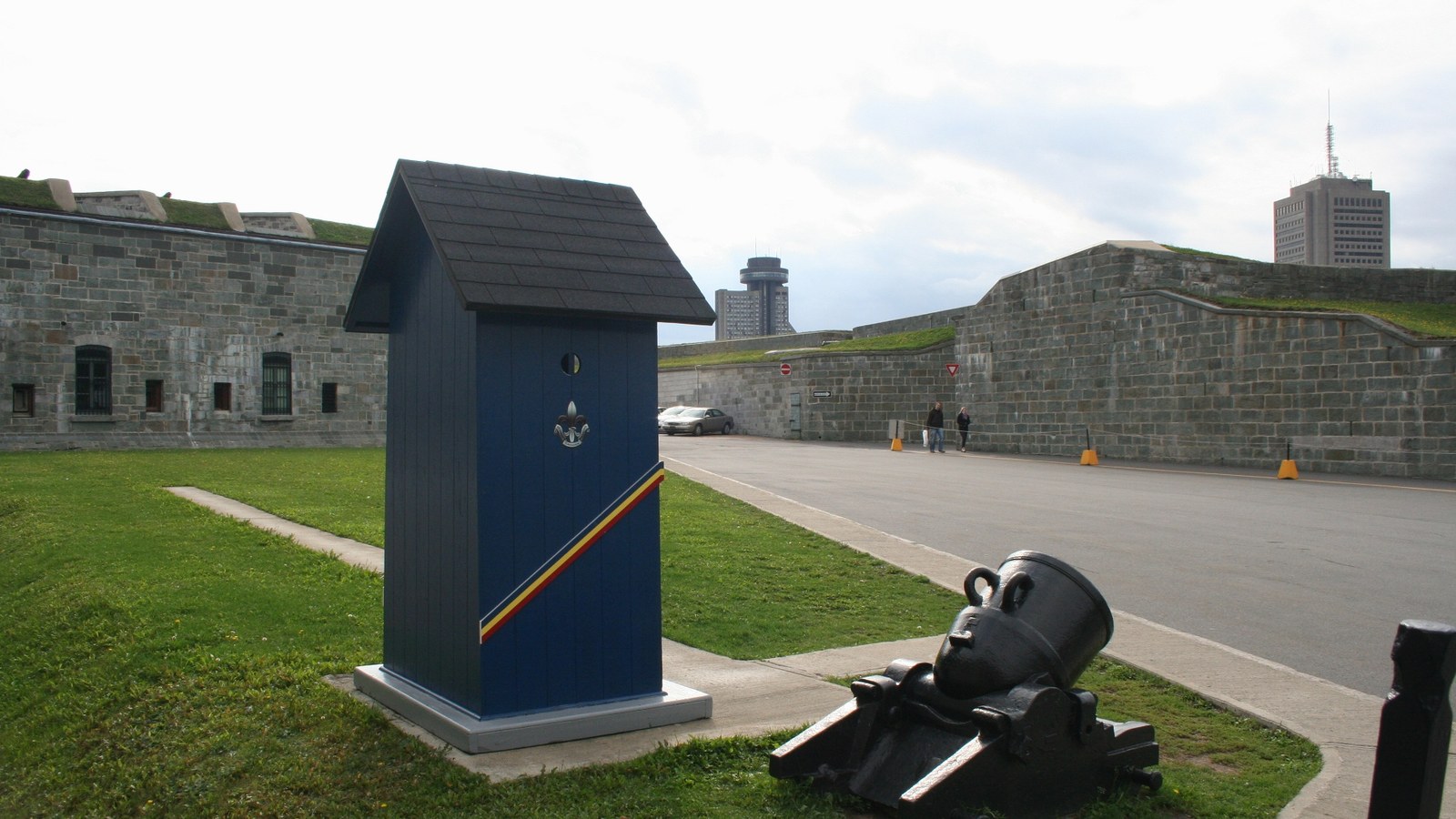
Cover: the Citadel of Quebec, the place of signature; we do not claim the room. Wikimedia Commons, free licence.
Sources consulted: Quebec Agreement; Articles of Agreement in the Matter of Tube Alloys (FRUS).











0 Comments
No comments on this article yet. Be the first!